

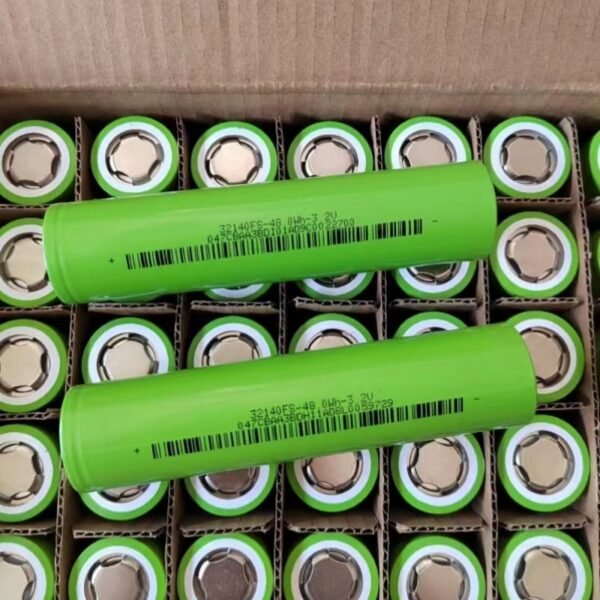
Battery Pack OEM Pain Points Solved by 21700 Cylindrical Lithium Cell Complete Solution
The battery pack manufacturing industry faces unprecedented challenges in 2026. Original Equipment Manufacturers (OEMs) struggle with inconsistent cell quality, thermal management complexities, supply chain volatility, and escalating cost pressures. The 21700 cylindrical lithium cell has emerged as a transformative solution, addressing these critical pain points through superior engineering design and manufacturing scalability. This comprehensive analysis examines how 21700 cylindrical batteries deliver complete solutions for battery pack OEMs seeking reliability, performance, and cost efficiency.
Understanding the 21700 Cylindrical Cell Advantage
The 21700 cell format represents a significant evolution from its predecessor, the 18650. With dimensions of 21mm in diameter and 70mm in length, this cylindrical battery offers approximately 35% more volume and 50% higher energy density. For OEMs, this translates directly into reduced pack complexity, fewer interconnections, and enhanced overall system reliability. The cylindrical form factor inherently provides mechanical robustness, with the steel casing offering superior protection against external impacts and internal pressure variations during operation.
Pain Point 1: Inconsistent Cell Quality and Performance Variance
One of the most persistent challenges for battery pack OEMs involves cell-to-cell inconsistency. Variations in capacity, internal resistance, and self-discharge rates create imbalance within battery packs, leading to premature degradation and potential safety hazards. Premium 21700 cylindrical cells address this through advanced manufacturing processes featuring automated quality control systems and tight specification tolerances.
Modern 21700 cells utilize nickel-rich cathode chemistries (NMC 811 or NCA) combined with silicon-enhanced anodes, delivering consistent performance across production batches. Reputable manufacturers implement rigorous grading protocols, ensuring cells within the same batch maintain capacity variance below 3% and internal resistance differences under 5 milliohms. This consistency simplifies battery management system (BMS) design and extends pack lifecycle significantly.
Pain Point 2: Thermal Management Complexity
Thermal runaway remains a critical concern for battery pack designers. The cylindrical geometry of 21700 cells provides inherent thermal advantages compared to prismatic or pouch alternatives. The circular cross-section creates natural air gaps between cells, facilitating passive cooling without additional thermal interface materials. When active cooling is required, the uniform surface enables predictable heat dissipation patterns.
Advanced 21700 cells incorporate internal safety features including pressure relief vents, thermal fuses, and ceramic-coated separators that prevent internal short circuits at temperatures exceeding 130°C. These integrated safety mechanisms reduce the burden on external thermal management systems, lowering overall pack weight and complexity while maintaining compliance with UN38.3, IEC62619, and UL1642 safety standards.
Pain Point 3: Supply Chain Volatility and Lead Time Uncertainty
Global battery supply chains continue experiencing disruption from raw material constraints to geopolitical tensions. OEMs require partners capable of delivering consistent volume with predictable lead times. Established 21700 manufacturers maintain diversified raw material sourcing, vertical integration of critical components, and strategic inventory buffers to ensure supply continuity.
Working with qualified battery manufacturers in China provides OEMs access to mature production ecosystems with comprehensive quality certifications and scalable capacity. The concentration of lithium battery manufacturing expertise in specific regions enables faster prototyping, reduced tooling costs, and accelerated time-to-market for new battery pack designs.
Pain Point 4: Cost Pressure Without Compromising Performance
Cost reduction pressures intensify as battery applications expand across electric vehicles, energy storage systems, and portable power equipment. The 21700 format delivers cost advantages through multiple mechanisms: higher energy density reduces the total cell count per pack, standardized dimensions enable automated assembly processes, and mature manufacturing infrastructure drives down per-unit costs through economies of scale.
Total cost of ownership improves further through extended cycle life. Premium 21700 cells achieve 2000+ full discharge cycles at 80% depth of discharge while maintaining 80% of initial capacity. This longevity reduces replacement frequency and warranty claims, delivering measurable financial benefits over the product lifecycle.
Technical Implementation Considerations
Successful 21700 integration requires attention to several technical parameters. Cell matching protocols must account for capacity, voltage, and internal resistance before pack assembly. BMS architecture should accommodate the specific voltage window of 2.5V to 4.2V per cell, with balancing circuits designed for the target series-parallel configuration. Mechanical design must ensure proper compression forces during module assembly while accommodating thermal expansion during operation.
For OEMs evaluating 21700 cylindrical battery cell options, comprehensive technical documentation including specification sheets, safety certifications, and test reports should be readily available from suppliers. Prototype samples enable validation testing under actual operating conditions before committing to volume production.
Partner Selection Criteria
Choosing the right manufacturing partner proves critical for long-term success. Evaluate potential suppliers based on production capacity, quality management systems (ISO9001, IATF16949), testing capabilities, and after-sales technical support. Geographic proximity to your assembly facilities may reduce logistics costs and enable faster response to quality issues.
Established manufacturers provide comprehensive support throughout the product development cycle, from initial cell selection through volume production and end-of-life management. This partnership approach minimizes development risks and accelerates market entry for new battery pack products.
Conclusion
The 21700 cylindrical lithium cell represents a mature, optimized solution for battery pack OEMs navigating today’s complex market landscape. By addressing quality consistency, thermal management, supply chain reliability, and cost pressures through superior cell design and manufacturing excellence, this format enables OEMs to deliver competitive products with confidence.
For detailed technical specifications and partnership opportunities, explore our comprehensive cylindrical battery cell offerings at https://cnsbattery.com/products-3/cylindrical-battery-cell/. Learn more about qualified battery manufacturers in China at https://cnsbattery.com/battery-manufacturers-in-china/. Contact our technical team directly at https://cnsbattery.com/contact-2/ to discuss your specific application requirements and receive customized solutions aligned with your project timeline and performance targets.


