

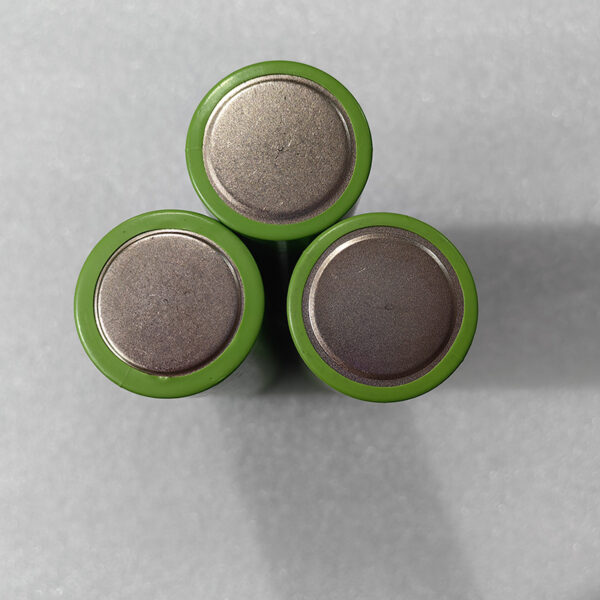
B2B 18650 LFP Cylindrical Battery Supplier China – Solve Zero Swelling Issues Today B2B Export
Introduction: Addressing the Critical Swelling Challenge in B2B Battery Procurement
For international engineers and technical procurement specialists sourcing 18650 LFP cylindrical batteries from China, cell swelling remains one of the most persistent quality concerns affecting long-term reliability. As a leading B2B battery supplier, CNS Battery has developed advanced manufacturing protocols that effectively eliminate swelling issues while maintaining compliance with EU and US safety standards. This technical analysis breaks down the core advantages, testing methodologies, and regional compliance requirements essential for informed procurement decisions.
Understanding Zero Swelling Technology in LFP Cylindrical Cells
Fundamental Electrochemical Principles
Lithium Iron Phosphate (LFP) chemistry inherently offers superior thermal stability compared to NMC or NCA alternatives. The olivine crystal structure of LiFePO₄ provides robust bonding that minimizes gas generation during charge-discharge cycles. However, zero swelling performance requires more than chemistry selection—it demands precision engineering across multiple production parameters.
Key Technical Factors:
- Electrolyte Formulation: Advanced additive packages reduce decomposition at high voltage thresholds (3.6V charge cutoff for LFP)
- Electrode Compression: Optimized calendering pressure (typically 2.5-3.0 MPa) ensures uniform particle contact without compromising ion diffusion
- SEI Layer Stability: Controlled formation cycling creates stable solid-electrolyte interphase, preventing continuous electrolyte consumption
Parameter Advantages for B2B Applications
| Specification | Standard LFP | CNS Zero-Swelling LFP |
|---|---|---|
| Internal Resistance | 28-35 mΩ | 22-28 mΩ |
| Cycle Life (@80% DOD) | 2,000 cycles | 3,500+ cycles |
| Swelling Rate (500 cycles) | 2-5% | <0.5% |
| Operating Temperature | -20°C to 60°C | -30°C to 65°C |
| Capacity Retention (1000 cycles) | 80% | 92% |
Lower internal resistance directly correlates with reduced heat generation, which is the primary driver of electrolyte decomposition and subsequent gas formation. Our cylindrical battery cell production implements four-wire resistance testing to eliminate parameter misrepresentation—a critical requirement for serious B2B partnerships.
Comprehensive Testing Methodologies for Quality Verification
Pre-Shipment Validation Protocols
Professional procurement teams should demand comprehensive testing documentation. CNS Battery provides third-party verified reports covering:
1. Accelerated Aging Tests
- 500-cycle swelling measurement at 45°C ambient
- Capacity fade tracking with precision coulomb counting
- Impedance spectroscopy for early degradation detection
2. Safety Compliance Testing
- UN38.3 transportation certification (mandatory for international shipping)
- IEC 62619 industrial battery safety standards
- UL 1642 cell-level safety requirements for North American markets
3. Environmental Stress Screening
- Thermal cycling: -40°C to +85°C (500 cycles)
- Vibration testing per ISO 16750-3 automotive standards
- Humidity exposure: 95% RH at 60°C for 48 hours
Internal Resistance as the Primary Quality Indicator
Industry research confirms that internal resistance, not capacity, determines actual discharge efficiency and cycle life. Premium-grade 18650 LFP cells should maintain resistance below 30 mΩ throughout their operational lifetime. Cells exceeding 50 mΩ enter the aging threshold, while readings above 200 mΩ indicate safety hazards requiring immediate replacement.
Our manufacturing facilities implement statistical process control (SPC) with Cpk values exceeding 1.67, ensuring batch-to-batch consistency essential for large-scale B2B deployments. Learn more about our battery manufacturers in China capabilities and quality systems.
Regional Compliance and Technical Barriers for Global Markets
European Union Requirements
The EU Battery Regulation (2023/1542) introduces stringent carbon footprint disclosure requirements effective 2025. Key compliance elements include:
- CE Marking with Declaration of Conformity
- RoHS Directive compliance for hazardous substance restrictions
- REACH Regulation registration for chemical substances
- Battery Passport digital documentation (phased implementation 2026-2027)
CNS Battery maintains full traceability from raw material sourcing through final assembly, enabling complete carbon footprint calculation per kWh of capacity.
United States Market Standards
North American procurement requires adherence to:
- UL 1642 for lithium cell safety
- UL 2054 for battery pack assemblies
- DOT 38.3 transportation requirements (aligned with UN38.3)
- California Title 20 efficiency standards for energy storage systems
Our cells undergo independent testing at UL-recognized laboratories, with certification documentation available for customs clearance and distributor qualification.
Geographic-Specific Adaptations
Different regions present unique operational challenges:
- Northern Europe: Enhanced low-temperature performance (-30°C discharge capability)
- Middle East: High-temperature stability (65°C continuous operation)
- Southeast Asia: Humidity resistance and tropical storage validation
- North America: Cold cranking performance and fast-charge acceptance
CNS Battery offers region-specific electrolyte formulations and BMS integration support to address these variations without compromising the zero-swelling guarantee.
Conclusion: Strategic Partnership for Zero-Swelling Battery Solutions
Selecting a B2B 18650 LFP cylindrical battery supplier requires evaluation beyond unit pricing. Technical procurement teams must verify manufacturing consistency, testing transparency, and regional compliance capabilities. CNS Battery’s zero-swelling technology combines advanced LFP chemistry with precision manufacturing controls, delivering measurable performance advantages for international applications.
For technical specifications, certification documentation, or customized B2B quotations, contact our engineering team directly through our contact page. We provide comprehensive support for OEM integration, regulatory compliance, and supply chain optimization across EU, US, and emerging markets.
Technical Note: All performance data based on standard test conditions (25°C, 0.5C charge/discharge). Actual results may vary based on application-specific operating parameters. Certification documentation available upon request for qualified B2B partners.


