
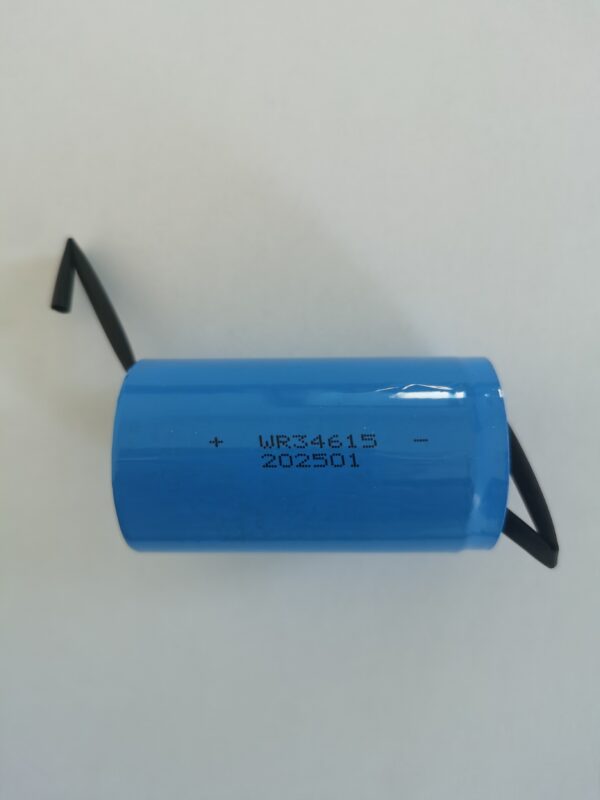
Automotive Alarm System Battery | Li-MnO₂ Li-SOCl₂ Options: A Technical Deep Dive
In the realm of automotive security, reliability is not merely a feature; it is a mandate. An automotive alarm system operates in one of the most volatile environments for electronics, subjected to extreme temperature fluctuations, constant vibration, and long periods of dormancy punctuated by high-current alarm triggers. For engineers and technical purchasers specifying power sources, the choice between Li-MnO₂ (Lithium Manganese Dioxide) and Li-SOCl₂ (Lithium Thionyl Chloride) chemistries defines the system’s lifespan and performance integrity. This analysis dissects the technical parameters, testing protocols, and regional compliance standards essential for selecting the optimal primary battery for automotive alarms in 2026.
Chemistry Fundamentals and Voltage Profiles
Understanding the electrochemical behavior is the first step in component selection.
Li-MnO₂ (CR Series) batteries operate at a nominal voltage of 3.0V. They are characterized by a stable discharge curve and low internal impedance, making them highly suitable for applications requiring moderate pulse currents. The cathode material, manganese dioxide, offers excellent safety profiles and thermal stability. In automotive alarms, where the system must wake up instantly to drive a siren or GSM module, Li-MnO₂ provides consistent voltage under load without significant depression.
Li-SOCl₂ (ER Series) batteries, conversely, offer a higher nominal voltage of 3.6V and the highest energy density among commercial primary lithium cells. The liquid cathode system allows for extremely low self-discharge rates (often less than 1% per year), enabling service lives exceeding 10 years. However, engineers must account for the “voltage delay” phenomenon, where the passivation layer on the lithium anode causes a temporary voltage drop upon initial high-current discharge. For alarm systems with infrequent but critical activation, this passivation is beneficial for shelf life but requires circuit design compensation.
Critical Performance Parameters for Automotive Applications
When evaluating options for the Automotive Alarm System Battery | Li-MnO₂ Li-SOCl₂ Options, three parameters dominate the decision matrix:
- Temperature Resilience: Automotive environments range from -40°C in cold chains to +85°C (or higher) under dashboard exposure. Li-SOCl₂ typically excels in high-temperature storage, while modern Li-MnO₂ formulations have improved low-temperature discharge capabilities. Specification sheets must guarantee operation across the full ISO 16750-4 environmental profile.
- Pulse Current Capability: Alarm triggers demand high current bursts (up to 100mA or more for short durations). Li-MnO₂ generally handles continuous and pulse loads better due to lower internal resistance. If choosing Li-SOCl₂, a hybrid layer or capacitor-assisted design is often necessary to mitigate voltage lag during the alarm trigger.
- Self-Discharge and Shelf Life: For vehicles in long-term storage, battery leakage or depletion is a critical failure mode. Both chemistries offer low self-discharge, but Li-SOCl₂ remains the industry standard for ultra-long standby applications where maintenance access is limited.
Validation and Testing Methodologies
Robust validation is non-negotiable. Technical purchasers should mandate the following testing protocols during the qualification phase:
- Load Testing: Simulate the alarm sleep-wake cycle. Measure voltage recovery time after a high-current pulse at both room temperature and -30°C.
- Environmental Cycling: Subject batteries to thermal shock tests (-40°C to +85°C) for 500 cycles to assess seal integrity and electrolyte stability.
- Storage Simulation: Accelerated aging tests at 60°C for 30 days can project 10-year shelf life performance. Monitor open-circuit voltage (OCV) drift and internal resistance growth.
Engineers should request detailed test reports from suppliers that align with IEC 60086 standards. For comprehensive product specifications and technical datasheets, visit our primary battery product page.
Regional Compliance and Geo SEO Adaptability
In 2026, global supply chains demand strict adherence to regional regulatory frameworks. A battery suitable for the European market may face barriers in North America if documentation is incomplete.
European Union (EU): Compliance with CE marking, RoHS (Restriction of Hazardous Substances), and REACH regulations is mandatory. The EU’s stringent battery directive focuses on chemical safety and recyclability. Li-SOCl₂ cells must demonstrate secure sealing to prevent electrolyte leakage, a key audit point for German and French automotive integrators.
United States (US): UL certification (specifically UL 1642 for lithium cells) is often required by insurance companies and OEMs. Additionally, Department of Transportation (DOT) regulations govern the shipping of lithium metal batteries. UN38.3 certification is the global baseline for transport safety, ensuring the battery can withstand vibration, shock, and pressure changes without thermal runaway.
Technical Barriers and CNS Adaptability:
Navigating these regional standards requires a manufacturer with deep technical barriers in quality control and certification. CNS Battery products are engineered to meet these diverse geo-specific requirements. Whether sourcing for a Detroit-based OEM or a Berlin-based security firm, the technical architecture remains consistent while the compliance documentation adapts locally. This reduces lead time and mitigates customs risks.
For engineers seeking partners who understand these nuanced regional requirements, we invite you to discuss your specific project needs. Contact our technical team directly via CNS Battery Contact Us to request samples compliant with your target market’s standards.
Conclusion
Selecting between Li-MnO₂ and Li-SOCl₂ for an automotive alarm system is a balance of pulse power requirements, energy density needs, and cost constraints. While Li-MnO₂ offers robust pulse performance and safety, Li-SOCl₂ provides unmatched energy density for long-life deployments. The decision must be underpinned by rigorous testing and a clear understanding of regional compliance standards like UN38.3, UL, and CE. By prioritizing certified, high-quality primary cells, engineers ensure that the security system remains vigilant, regardless of the environment.
