
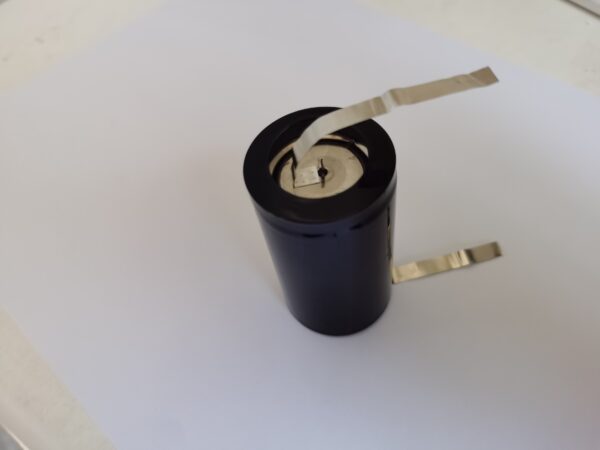
Revolutionizing Deep Space Exploration: The Lithium-Sulfur (Li-S) Battery Breakthrough
In the relentless pursuit of deep space exploration, every gram counts. For engineers and scientists at space agencies worldwide, the challenge is clear: how do we power sophisticated payloads and rovers for longer durations without exponentially increasing launch mass? The answer lies not in incremental improvements, but in a fundamental shift in electrochemistry. As a primary battery specialist, I have witnessed the limitations of traditional Lithium-Ion (Li-ion) technology in extreme extraterrestrial environments. The emergence of Lithium-Sulfur (Li-S) batteries represents a paradigm shift, offering a solution that is lighter, more energy-dense, and fundamentally more suited to the harsh realities of space.
The “Energy Density” Imperative in Aerospace
Before we dissect the technology, let’s address the core physics problem. The cost of launching mass into orbit is still prohibitively expensive. Therefore, the aerospace industry operates under a strict “mass budget.” Conventional Li-ion batteries, while reliable for terrestrial applications, are constrained by their chemistry. They typically max out at an energy density of around 250-300 Wh/kg.
To put this into perspective, if a Mars rover or a lunar lander requires 10 kWh of energy, using Li-ion might necessitate a 40 kg battery pack. In contrast, a Lithium-Sulfur battery, with theoretical energy densities exceeding 500 Wh/kg and practical developments pushing towards 400+ Wh/kg, could potentially halve that weight. This weight reduction is not just a number on a spreadsheet; it translates directly into extended mission durations or the ability to carry additional scientific instruments.
Why Lithium-Sulfur? A Technical Deep Dive
So, what makes Li-S the “holy grail” for deep space applications? Let’s break down the chemistry.
1. The Chemistry of Abundance
Unlike Li-ion batteries that rely on expensive and geopolitically sensitive metals like Cobalt and Nickel, Li-S batteries use Sulfur. Sulfur is abundant, non-toxic, and incredibly cheap. From a supply chain security standpoint, this is critical for long-term space infrastructure. For primary batteries—those designed for single-use, high-reliability discharge—this abundance allows for the construction of massive, high-capacity cells without breaking the budget.
2. The Voltage and Capacity Advantage
The theoretical specific capacity of Sulfur is approximately 1675 mAh/g, which is roughly 10 times higher than the typical cathode materials used in Li-ion batteries. When coupled with a Lithium metal anode (in a primary configuration), the cell voltage operates around 2.1V to 2.3V. While this is lower than the 3.6V-3.7V of Li-ion, the sheer mass advantage of the reactants more than compensates for the lower voltage.
3. Thermal Resilience
Space is an environment of extremes. From the scorching heat of Venusian probes to the cryogenic temperatures of the Kuiper Belt, batteries must function. Lithium-Sulfur chemistry demonstrates a remarkable ability to operate in a wider temperature range compared to aqueous or standard organic electrolyte systems. This resilience is vital for primary batteries used in deep space probes where active thermal management systems are often too heavy to be feasible.
Overcoming the “Polysulfide Shuttle”
Historically, the Achilles’ heel of Li-S technology has been the “polysulfide shuttle effect.” In simple terms, during the discharge cycle, intermediate lithium polysulfides dissolve into the electrolyte and migrate between the electrodes. This causes a loss of active material and rapid capacity fade.
However, modern advancements in nanotechnology have addressed this. By confining the Sulfur within nano-structured carbon matrices or using advanced solid-state electrolytes, we can physically trap these polysulfides. This engineering feat transforms Li-S from a lab curiosity into a robust, high-reliability primary power source suitable for the Australian Space Agency’s (ASA) most demanding missions.
Applications in Modern Space Logistics
The applications for this technology extend beyond just the probe itself. Consider the logistics of launching small satellites (CubeSats). Often, these are deployed in “sleep” mode to conserve power during the initial launch phase. A high-energy-density primary Li-S battery can act as the “master switch,” providing the initial surge of energy to boot the satellite systems without draining the secondary (rechargeable) batteries. This ensures that the moment the satellite separates from the launch vehicle, it is fully operational.
Furthermore, for planetary rovers operating in dusty environments (like Mars), solar panels can be rendered ineffective for weeks during dust storms. A backup primary Li-S battery bank could act as a “black box” power source, keeping critical heaters and communication systems alive during these periods, ensuring the rover survives to see the next sunrise.
The CNS BATTERY Advantage
At CNS BATTERY, we understand that space missions cannot afford off-the-shelf solutions. We specialize in customizing primary Lithium batteries to meet the exacting standards of aerospace engineering.
Our R&D team focuses on maximizing the volumetric and gravimetric energy density while ensuring absolute safety and reliability. We don’t just sell cells; we provide power solutions engineered for the void.
Whether you are designing a next-generation satellite or a deep space rover, our expertise in Lithium-based primary systems ensures your mission has the power it needs to succeed.
Ready to power your next mission with cutting-edge technology?
Explore our range of high-performance primary battery solutions designed for the extremes of space and industry.
Discover Our Primary Battery Range
For specific inquiries regarding custom aerospace applications or bulk procurement for space agencies, our technical team is standing by.
Contact Our Technical Sales Team
