
Here is the SEO-optimized article tailored for a professional B2B audience, specifically targeting engineers and technical procurement managers in the maritime and emergency safety sectors.
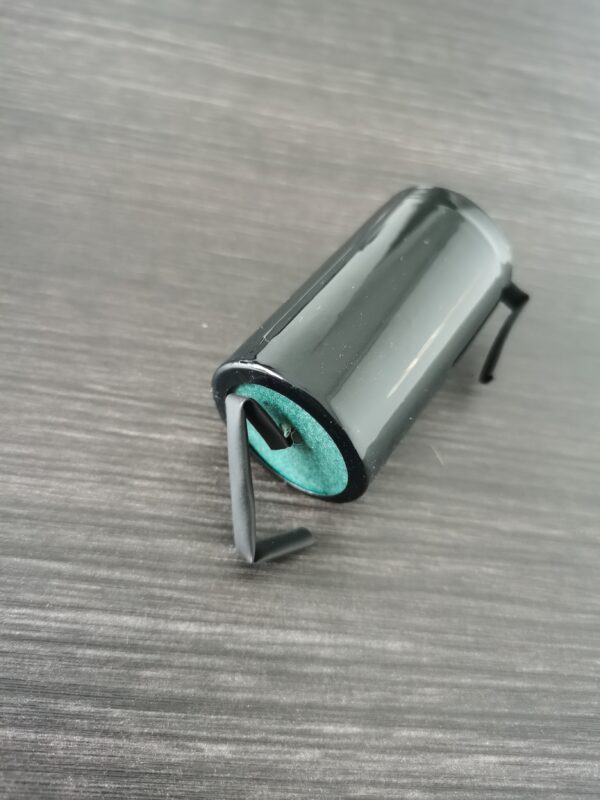
Saft LS33600 Li-SOCl₂ Battery Alternative for Marine EPIRBs
In the high-stakes world of maritime safety, the Emergency Position Indicating Radio Beacon (EPIRB) is a vessel’s last line of defense. When disaster strikes, the reliability of the primary power source is not just a technical specification; it is a matter of life and death. The Saft LS33600 has long been the industry standard for these critical units, renowned for its high energy density and stability. However, global supply chain volatility and the specific challenges of sourcing high-specification Lithium-Thionyl Chloride (Li-SOCl₂) cells have led many Original Equipment Manufacturers (OEMs) and maintenance depots to seek technically compliant alternatives.
As a primary lithium battery manufacturer, we understand that an “alternative” cannot simply be a physical drop-in; it must be an electrical and thermal engineering equivalent. This article provides a technical deep dive into the specifications of the Saft LS33600 and outlines the critical parameters engineers must verify when selecting a replacement for Marine EPIRB applications.
Understanding the Technical Profile of the Saft LS33600
Before exploring alternatives, it is essential to deconstruct the technical DNA of the Saft LS33600. This cell belongs to the Bobbin-type Lithium-Thionyl Chloride (Li-SOCl₂) family, which is distinct from the more common Spiral Wound design found in consumer electronics.
1. The Bobbin-Style Advantage
The LS33600 utilizes a bobbin construction where the anode and cathode are wound in a tight, layered coil. This design offers a significantly lower self-discharge rate compared to spiral wound cells. For EPIRBs, which often sit dormant for 5–10 years before activation, this is critical. The bobbin style minimizes voltage delay and reduces the risk of passivation issues during long-term storage.
2. Voltage and Passivation Dynamics
A key technical hurdle in replacing the LS33600 is managing the “passivation” layer. Li-SOCl₂ cells naturally form a lithium chloride film on the anode surface during storage. When a load is applied (such as when an EPIRB hits the water), this film must be breached to deliver current.
- Nominal Voltage: 3.6V
- Passivation Effect: If the replacement cell does not match the impedance characteristics of the Saft cell, the EPIRB’s transmitter may fail to draw sufficient current to break through this film, resulting in a catastrophic failure to transmit.
3. Thermal Resilience
Marine environments subject batteries to extreme thermal cycling. The Saft LS33600 is engineered to operate effectively from -55°C to +85°C. Any alternative must demonstrate equivalent thermal stability, particularly the ability to deliver high pulse currents in freezing Arctic waters, where electrolyte viscosity increases.
Critical Evaluation Criteria for EPIRB Battery Replacements
When sourcing a Saft LS33600 alternative, engineers must move beyond simple dimensional compatibility and focus on the following technical metrics to ensure EPIRB certification compliance:
- Pulse Capability: EPIRBs transmit high-power RF signals in short bursts. The replacement cell must support high pulse loads (often exceeding 1A) without significant voltage drop. Verify the cell’s internal impedance (DCR) matches the original specification.
- Hermetic Sealing: The cell must possess a robust hermetic seal (typically glass-to-metal or laser welding) to prevent electrolyte leakage or moisture ingress, which is non-negotiable in saltwater immersion scenarios.
- Long-Term Storage Capacity: Ensure the alternative has a proven low self-discharge rate, guaranteeing that after 10 years of standby, the residual capacity exceeds 90% of the rated capacity (typically 19Ah for this format).
Primary Lithium Battery Solutions for Safety OEMs
For engineers and procurement managers navigating the complexities of EPIRB maintenance and manufacturing, sourcing a technically validated alternative requires a partner with deep expertise in primary lithium chemistry.
CNS Battery specializes in high-reliability Primary Lithium Batteries engineered for mission-critical applications. Our technical team possesses the capability to analyze the specific discharge curves and thermal profiles required for EPIRB functionality, ensuring that any proposed solution meets the rigorous demands of maritime safety standards.
If you are evaluating alternatives to the Saft LS33600 for your Marine EPIRB fleet or production line, our R&D department can provide detailed technical datasheets and customized testing protocols to validate performance.
Explore our range of Primary Battery solutions designed for durability and safety, or contact our technical sales team directly for a cross-reference analysis of your specific requirements.
