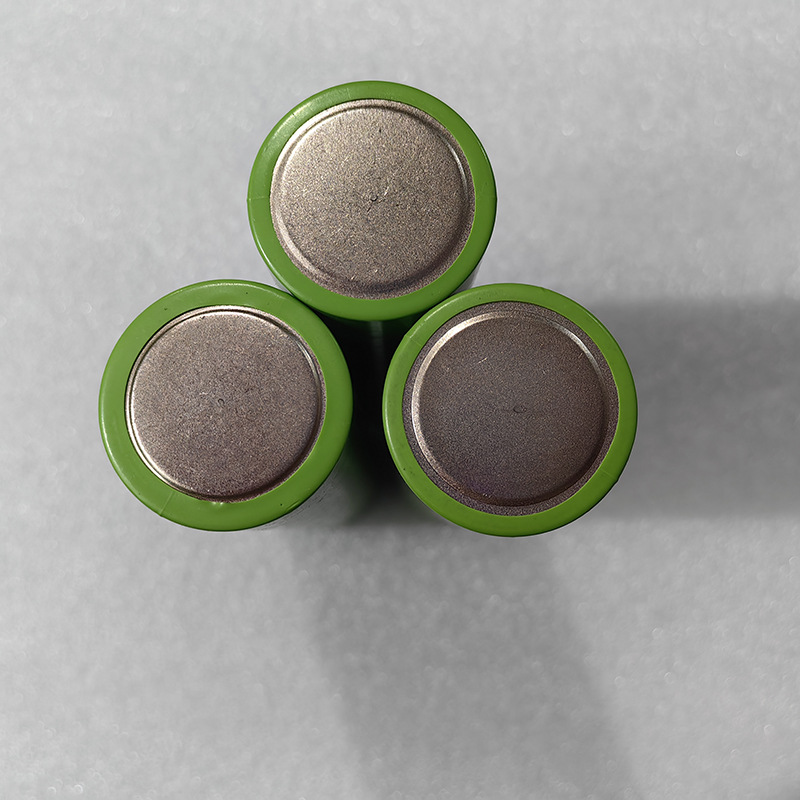
Top 5 Long Cycle Life Problems with 32700 Cells in Electric Vehicle Applications & Solutions Ideal for Manufacturers
The global electric vehicle (EV) market is undergoing a massive transformation. While high-end automotive manufacturers focus on 21700 or 4680 form factors, a significant segment of the market—particularly Light Electric Vehicles (LEVs) such as e-bikes, e-scooters, and micro-mobility solutions—is finding a sweet spot in the 32700 cylindrical cell.
As a lithium-ion battery engineer, I often see manufacturers initially drawn to the 32700 format for its high capacity and cost-efficiency. However, the transition to long-cycle-life applications is rarely seamless. Unlike consumer electronics that last 2-3 years, EV batteries are expected to endure 8-10 years or more.
Based on my experience in R&D and production, here are the top 5 technical hurdles manufacturers face when utilizing 32700 cells for long cycle life, along with the engineering solutions to overcome them.
1. Mechanical Stress & Electrode Delamination
The Problem:
The 32700 cell has a significantly larger diameter (32mm) compared to the 18650 (18mm) or 21700 (21mm). During charge and discharge cycles, the internal electrodes expand and contract. In a larger diameter cell, this mechanical stress is magnified. If not managed, this leads to electrode delamination—where the active material cracks and separates from the current collector. This is the primary killer of cycle life in large-format cylindrical cells.
The Solution:
Advanced winding tension control during manufacturing is critical. The core-to-skin tension ratio must be precisely calculated to accommodate the “breathing” of the electrode sheets. Furthermore, using a high-elasticity aqueous binder system in the electrode coating helps maintain adhesion during volume changes.
Technical Note: The volumetric expansion of NMC (Nickel Manganese Cobalt) materials can reach up to 2-3%. In a 32mm diameter, this translates to substantial radial force that must be absorbed by the separator and electrolyte.
2. Thermal Runaway Risk Due to Heat Accumulation
The Problem:
Larger cells generate more total heat, but they have a relatively smaller surface area to dissipate it compared to their volume. This “heat accumulation” effect means the core temperature of a 32700 cell can be significantly higher than its surface temperature during high-rate discharge (common in EV acceleration). High temperatures accelerate the decomposition of the solid electrolyte interphase (SEI) layer, leading to rapid capacity fade.
The Solution:
Optimizing the thermal management interface is non-negotiable.
- Electrolyte Additives: Incorporating flame-retardant additives and overcharge protection agents stabilizes the electrolyte at high voltages and temperatures.
- Thermal Design: Manufacturers must design battery packs with active cooling channels or high-conductivity potting compounds to wick heat away from the cell core.
3. Current Density Imbalance
The Problem:
In a cylindrical cell, electrons travel from the outer casing to the center. In a 32700 cell, the path length is longer. This creates a current density gradient, where the reaction rate is faster near the terminals and slower in the middle. This imbalance causes “hot spots” and uneven aging, reducing the overall effective cycle life of the cell.
The Solution:
Utilizing a multi-conductive network within the electrodes. This involves a combination of carbon black, carbon nanotubes (CNTs), and graphene to ensure uniform electron transport throughout the thick electrode layers. Additionally, reducing the electrode thickness (Coating Weight) while increasing the packing density is a delicate balancing act that extends cycle life.
4. Electrolyte Depletion & Dry-Out
The Problem:
For a battery to achieve 2000+ cycles, the electrolyte must remain stable and wet the electrodes for the entire lifespan. Due to the high energy density and large capacity of the 32700 format, the electrolyte-to-active-material ratio is often optimized for cost, leaving little margin for error. Over time, electrolyte decomposition and consumption lead to “dry-out,” increasing internal resistance until the cell fails.
The Solution:
High-precision laser welding of the cell casing ensures absolute hermetic sealing to prevent micro-leaks. More importantly, overfilling the electrolyte slightly (within safety margins) and using high-boiling-point solvents ensures that the “ionic highways” remain lubricated even after thousands of cycles.
5. Formation & Aging Process Complexity
The Problem:
The formation process (the first charge of a new cell) dictates the quality of the SEI layer. For a 32700 cell with high capacity, a standard 24-hour formation process is insufficient. Rushing this step results in a porous, unstable SEI layer that continues to consume lithium ions during cycling, causing premature death.
The Solution:
Extended formation protocols. At our facilities, we utilize a multi-stage formation process that can last up to 72 hours for high-cycle-life formulations. This slow formation allows for a dense, uniform SEI layer that acts as a protective shield for the anode.
Why Choose CNS Battery for 32700 Solutions?
Navigating these technical challenges requires more than just theory; it requires manufacturing discipline. At CNS Battery, we have engineered our 32700 cylindrical cells specifically to address the pain points of EV and Energy Storage manufacturers.
Our IFR32700-6000 model is a testament to solving these long-cycle-life problems. We utilize a robust Iron-Phosphate chemistry (Implied by IFR code) which is inherently safer and offers superior cycle life compared to standard NMC for stationary and LEV applications.
- High Capacity & Stability: With a typical capacity of 6000mAh and a nominal voltage of 3.2V, this cell is designed for deep cycle applications like EVs, E-Bikes, and UPS systems.
- Robust Performance: It features a 3C continuous discharge rate, making it suitable for applications requiring sustained power output without thermal stress.
We understand that every manufacturer has unique requirements. Whether you are building a high-endurance e-scooter or a backup power system, our R&D team is equipped to provide customized solutions that don’t just meet specifications but exceed the longevity expectations of your end-users.
Ready to solve your long-cycle-life battery challenges?
Explore our comprehensive range of Cylindrical Battery Cells engineered for performance and reliability.
Explore Cylindrical Battery Products
As a leading Lithium-ion Battery Manufacturer in China, we provide high-energy density and long cycle life solutions for global customers.
Learn More About Our Manufacturing Capabilities
For technical inquiries or to discuss a custom project, contact our engineering team today.
Contact CNS Battery Experts