

The Ultimate Guide to Weather-Resistant Batteries for Solar Lamps
In the realm of off-grid energy solutions, the performance of a solar lamp is only as good as the battery that powers it. For B2B clients, distributors, and OEMs operating in diverse climatic zones—from the scorching deserts of the Middle East to the humid tropics of Southeast Asia—the quest for a reliable, weather-resistant battery is paramount. A standard lithium-ion cell might function adequately in a temperate lab, but when exposed to heavy rain, extreme heat, or freezing cold, its performance can degrade rapidly, leading to customer dissatisfaction and high return rates.
This guide delves into the technical specifications required for a truly weather-resistant battery for solar lamps. We will explore the electrochemical advantages of specific lithium-ion formulations, the structural engineering necessary for IP67/IP68 ratings, and why cylindrical cells, particularly the 18650 and 21700 formats, are becoming the industry standard for robust outdoor lighting solutions.
1. Understanding the Environmental Challenges
Before selecting a battery, it is crucial to understand the specific environmental stressors that solar lamp batteries face daily.
Thermal Management and High-Temperature Performance
Solar lamps are often mounted on metal poles or integrated into compact housings that act as heat traps. When combined with direct sunlight, internal temperatures can easily exceed 60°C (140°F). Standard Lithium Cobalt Oxide (LCO) batteries degrade quickly under such conditions. In contrast, Lithium Iron Phosphate (LFP) and specific Nickel Manganese Cobalt (NMC) blends offer superior thermal stability. These chemistries have higher thermal runaway thresholds, ensuring that the battery does not swell, leak, or catch fire even during prolonged heat exposure.
Humidity, Rain, and Waterproofing
Moisture is the nemesis of electronics. In tropical regions, monsoon seasons bring heavy rainfall and high humidity. A weather-resistant battery system must prevent water ingress. This is typically achieved through the use of specialized casings with IP67 (immersion up to 1 meter for 30 minutes) or IP68 (continuous immersion in deeper water) ratings. The battery cells themselves must also be resistant to corrosion, particularly at the terminal ends where oxidation can break the circuit.
Low-Temperature Operation
For markets in Northern Europe or high-altitude regions, the battery must function efficiently in sub-zero temperatures. While standard lithium-ion batteries suffer from reduced ion mobility in the cold, leading to voltage drops and reduced runtime, advanced electrolyte formulations and cell designs can mitigate this “winter effect,” ensuring the lamp remains bright even in freezing conditions.
2. The Technical Superiority of Cylindrical Cells
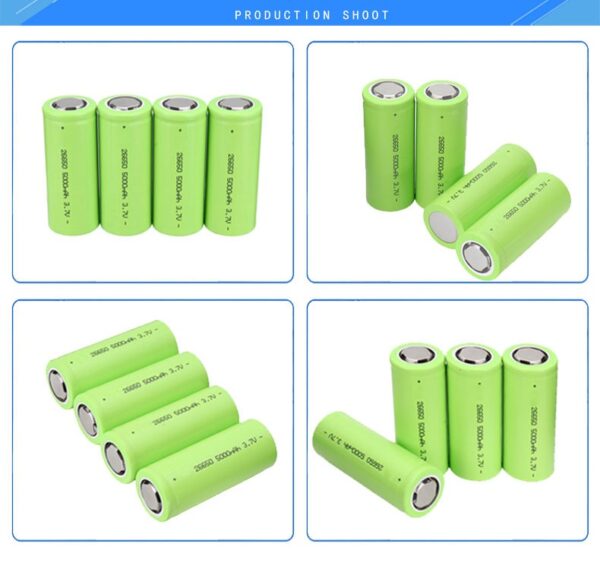
When designing a weather-resistant solar lamp, the choice of cell format is critical. While pouch and prismatic cells are common in consumer electronics, cylindrical cells (such as the 18650 and 21700) offer distinct advantages for outdoor durability.
Robust Mechanical Structure
Cylindrical cells are encased in a rigid steel or aluminum can. This hard shell provides excellent protection against physical deformation, punctures, and external pressure. In a solar lamp application, where the battery might be subjected to vibration (e.g., in windy conditions) or accidental impacts during installation, this mechanical strength is invaluable.
Superior Heat Dissipation
The cylindrical geometry allows for more efficient heat dissipation compared to flat pouch cells. Heat can radiate evenly from the surface of the can. In a tightly sealed solar lamp housing, this passive cooling capability helps maintain the battery within its optimal temperature window, preventing thermal throttling and extending the overall lifespan of the system.
High Energy Density and Long Cycle Life
Modern cylindrical cells, such as the 21700 format, offer higher energy density than their predecessors. This means more runtime in a smaller space. Furthermore, these cells are engineered for longevity. A high-quality cylindrical battery can withstand 2000 to 3000 charge-discharge cycles while retaining 80% of its capacity. For a solar lamp that charges and discharges daily, this translates to 5-7 years of reliable service, a critical factor for B2B procurement decisions focused on Total Cost of Ownership (TCO).
3. System Integration: Beyond the Cell
A weather-resistant battery is not just about the cell; it is about the Battery Management System (BMS) and the mechanical integration.
The Role of the BMS
A robust BMS is the brain of the battery pack. For solar applications, the BMS must include:
- Overcharge/Over-discharge Protection: Prevents the battery from being damaged by the fluctuating voltage of solar panels.
- Short Circuit Protection: Essential for preventing fires in the event of a wiring fault.
- Temperature Monitoring: Advanced BMS units can disconnect the load if temperatures exceed safe limits, acting as a secondary safety net.
Sealing and Potting Techniques
To achieve true weather resistance, manufacturers often employ potting techniques. This involves encapsulating the battery cells and the BMS circuitry in a silicone or epoxy resin. This “potting” process eliminates air gaps, prevents condensation from forming inside the housing, and provides a physical barrier against water and dust. It also acts as a cushion, protecting the cells from vibration.
4. Why Choose CNS Battery for Your Solar Projects
When sourcing batteries for solar lamps, reliability and consistency are non-negotiable. CNS Battery stands as a premier lithium-ion cylindrical battery manufacturer in China, offering solutions specifically engineered for the rigors of outdoor lighting.
Cutting-Edge Product Line
CNS Battery provides a comprehensive range of cylindrical cells, including the 18650, 21700, and 32700 formats. These cells are designed with high-energy density and long cycle life as standard features. Whether your application requires high power output for a security floodlight or long runtime for a garden path lamp, CNS has a cell to match. Explore the full range of Cylindrical Battery Cells to find the perfect fit for your design.
Customization and OEM Support
Understanding that every solar lamp design is unique, CNS Battery offers extensive customization services. From modifying the battery dimensions to fit specific enclosures to tailoring the discharge rate for high-lumen applications, the R&D team works closely with clients to deliver bespoke energy solutions. This level of support is crucial for B2B partners looking to differentiate their products in a competitive market.
Global Quality Standards
As a manufacturer committed to excellence, CNS Battery adheres to strict quality control protocols. The automated production lines ensure consistency across batches, eliminating the risk of defective units reaching the field. With a dedicated global customer support team, CNS ensures that inquiries are handled promptly, facilitating smooth supply chain operations.
Conclusion
Selecting the right weather-resistant battery for solar lamps is a complex engineering decision that balances chemistry, mechanics, and electronics. By choosing cylindrical cells from a reputable manufacturer like CNS Battery, businesses can ensure their products deliver the durability and performance required by customers worldwide. Do not compromise on the power source; partner with a manufacturer that guarantees reliability.
Contact Information
For consultation or to request a sample for testing, please reach out to our sales department. We are ready to assist you in finding the perfect energy solution for your next solar project.
- Address: No.53, Science Avenue, Zhengzhou, China
- Email: amy@cnsbattery.com
- Phone: +86 166 6811 2039


