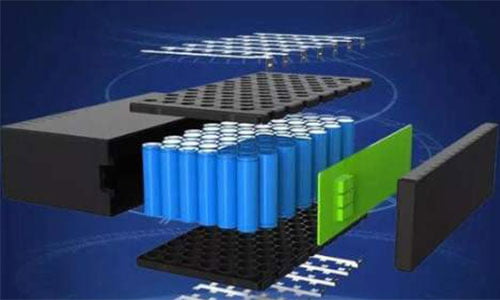
The “33135” Enigma: Why Standard Cylindrical Cells Fail in Heavy-Duty Power Tools
In the high-stakes world of industrial battery manufacturing, the model number is more than an identifier; it is a promise of performance. When discussing the 33135 Lithium Ion Cylindrical Battery, we are not merely referencing a dimension (33mm diameter, 135mm length), but a specific engineering solution designed for extreme energy density and structural integrity. However, a critical challenge persists in the global supply chain: the “Perfect Cell Matching” paradox.
Many overseas distributors and OEMs seeking a “33135” solution often receive standard off-the-shelf cells—typically repackaged 18650s or 21700s—from Chinese exporters. These fail spectacularly in Power Tools Projects due to inconsistent internal resistance and capacity grading. At CNS Battery, we define a “Perfect Match” not as a marketing slogan, but as a rigorous electrochemical and mechanical alignment of cells to meet the specific torque and runtime demands of professional-grade equipment. This article dissects why standard cells fail and how a true manufacturer approach solves these issues.
The Physics of Failure: Standard Cells vs. Power Tool Demands
Standard cylindrical cells (such as the ubiquitous 18650 or 21700) are mass-produced for consumer electronics—laptops, vapes, and low-drain devices. When these cells are exported en masse to power tool manufacturers in Europe or North America, they face an environment they were never designed for.
1. Thermal Runaway in High C-Rate Discharge
Power tools require instant bursts of energy, often demanding discharge rates of 20C, 30C, or higher. Standard cells, optimized for energy density rather than power, suffer from high internal resistance. This resistance generates excessive heat. Without perfect matching in internal impedance, one cell in a series heats up faster than its neighbors, leading to a thermal runaway event that can destroy the entire battery pack.
2. Cycle Life Mismatch
A standard 18650 might offer 300-500 cycles under ideal laboratory conditions (0.2C discharge). A professional power tool battery needs 1000+ cycles under heavy load. When cells are not perfectly graded for capacity and self-discharge rate during the manufacturing process, “cell divergence” occurs. Some cells drain faster than others, leading to over-discharge of specific units and a rapid degradation of the whole pack.
3. Mechanical Shear Stress
The 33135 format is often explored to reduce the number of cells in a pack, thereby reducing connection points. However, standard cells lack the mechanical robustness to handle the vibration and torque feedback of a hammer drill or chainsaw. Standard can materials are thin; they deform, breaking internal welds.
The CNS Battery Standard: Engineering for “Perfect Matching”
As a leading Battery Manufacturer in China with decades of R&D, CNS Battery rejects the “one-size-fits-all” export model. We understand that a “Perfect Match” requires control over the entire supply chain, from raw material sourcing to final formation.
1. Raw Material Sovereignty
Unlike trading companies that source cells from the lowest bidder on the open market, we control our chemistry. For power tool applications, we utilize specific Nickel-Manganese-Cobalt (NMC) ratios optimized for power rather than just capacity. Our proprietary coating technology ensures uniform electrode thickness, which is the first step in ensuring that every cell behaves identically under stress.
2. Automated Production & Dynamic Grading
The heart of “Perfect Matching” is our automated production line. We do not rely on manual sorting. Instead, our cells undergo dynamic grading tests where we measure not just voltage and capacity, but crucially, internal resistance (IR) under load.
- Static Grading: Sorting cells based on voltage at rest (Standard Method).
- Dynamic Grading: Sorting cells based on voltage sag and temperature rise under high current (CNS Method).
By binning cells with IR variances of less than 0.5mΩ, we ensure that when 10 cells are welded in parallel, they share the load equally. This is the definition of a “Perfect Match” for power tools.
3. Structural Reinforcement
For applications requiring the robustness of a 33135 or similar high-drain formats, we utilize reinforced steel casings and advanced safety vents. This prevents mechanical deformation and provides a fail-safe mechanism for gas ejection during over-pressure events, a critical safety feature missing in standard consumer cells.
Comparative Analysis: Competitors vs. CNS Battery
To illustrate the gap between a standard “China Export” cell and a CNS engineered solution, consider the following comparison for a typical Power Tool Project:
| Feature | Standard Export Cell (Competitor) | CNS Battery (Perfect Match) |
|---|---|---|
| Internal Resistance (IR) | High variance (±2mΩ). Causes uneven heating. | Ultra-low variance (<0.5mΩ). Dynamic grading ensures load sharing. |
| Discharge Rate | Typically rated for 5C-10C (Marketing claim). | Lab-tested for continuous 20C, pulse 30C+ (Real-world data). |
| Cycle Life @ 10C | Drops to <200 cycles due to electrode degradation. | Maintains >500 cycles due to stable crystal structure. |
| Safety Mechanism | Basic CID (Current Interrupt Device). | Enhanced CID + Anti-Explosion Valve for high-pressure release. |
| Application Fit | Suitable for low-drain devices (Flashlights, Toys). | Engineered for High-Torque Tools (Saws, Drills, Jackhammers). |
The “Perfect Match” Advantage in Real-World Scenarios
Imagine a European construction firm deploying a fleet of cordless jackhammers. Using standard cells, the maintenance department would be replacing battery packs every 3-4 months due to “dead” cells in the middle of the string. The downtime costs far exceed the initial savings from buying cheap cells.
Switching to a CNS Cylindrical Battery Cell solution changes the equation. Because our cells are perfectly matched for high-current discharge, the entire pack ages uniformly. The firm experiences:
- Zero Downtime: No single cell fails prematurely.
- Extended ROI: The pack lasts 2-3 times longer, reducing the total cost of ownership.
- Brand Protection: The tool manufacturer’s reputation for reliability remains intact.
Conclusion: Choosing the Right Partner, Not Just a Product
The search for a “33135 Lithium Ion Cylindrical Battery” or a solution for “Power Tools Projects” should not be a hunt for a commodity. It is a search for a partner with the technical capability to deliver “Perfect Cell Matching.”
While many Chinese exporters offer standard cells at low prices, only a dedicated manufacturer like CNS Battery can provide the engineering support, dynamic grading technology, and structural design necessary to prevent failure in high-stress applications.
If you are facing cell divergence, thermal issues, or short cycle life in your current supply chain, it is time to look beyond the standard export catalog. We invite global distributors and OEMs to engage with our R&D team to discuss custom solutions that meet the specific demands of your market.
Ready to solve your power tool battery challenges?
Contact CNS Battery today to discuss how our engineering expertise can provide the “Perfect Match” for your next generation of industrial tools.
Contact our technical consultants now:
Contact Information – CNS Battery
Explore our Cylindrical Battery Cell Range
Learn more about being a distinguished CNS Global Customer