
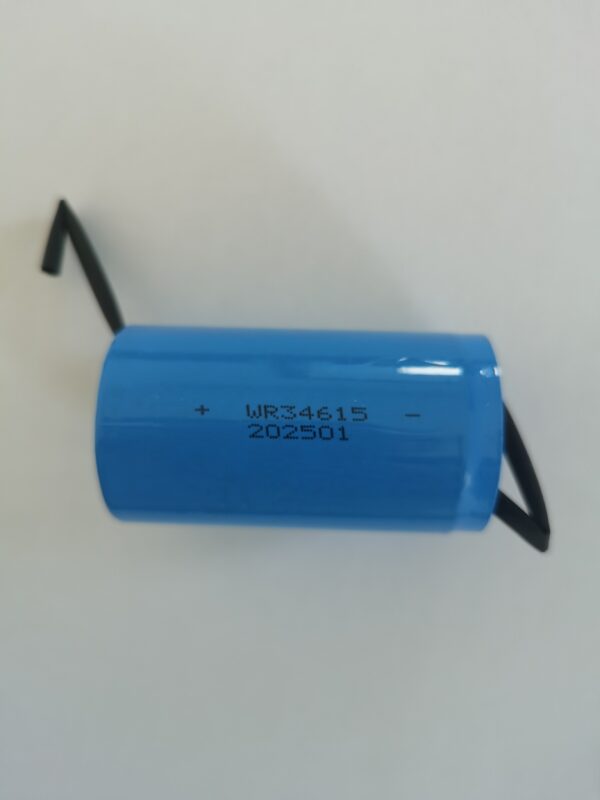
Here is the SEO-optimized article tailored for your requirements.
How to Choose the Perfect Primary Lithium Battery for Gas Meters
In the world of utility metering, reliability is not just a feature; it is a fundamental requirement. When it comes to Automatic Meter Reading (AMR) and Automatic Meter Infrastructure (AMI) gas meters, the battery is the silent guardian that ensures data integrity and valve control for over a decade. Selecting the wrong power source can lead to costly field failures, data loss, and safety hazards. As a technical expert in primary lithium batteries, I have seen firsthand how the right chemistry and design can transform a standard meter into a robust, long-life device. This guide cuts through the marketing jargon to provide engineers and procurement specialists with the hard data needed to make an informed decision for your next gas metering project.
Understanding the Core Technology: Lithium Thionyl Chloride (Li-SOCl₂)
When discussing primary (non-rechargeable) batteries for gas meters, we are almost exclusively talking about Lithium Thionyl Chloride (Li-SOCl₂) chemistry. Unlike consumer electronics that prioritize high current bursts, gas meters demand ultra-long life and extreme stability.
Why Li-SOCl₂?
This chemistry offers the highest energy density of any primary battery available today. The key metric here is energy density vs. service life. A standard ER14505M or ER26500M cell can operate in a low-temperature environment (-40°C to +85°C) for 15+ years without maintenance.
- Nominal Voltage: 3.6V
- Operating Temperature: -55°C to +85°C (Industrial Grade)
- Self-Discharge Rate: <1% per year
The electrochemical reaction between lithium metal and thionyl chloride is incredibly stable, which is why it is the global standard for static, long-duration applications like gas metering.
Key Selection Criteria for Gas Meter Applications
Choosing a battery isn’t just about picking a size; it is about matching the electrical profile of your meter to the battery’s capabilities. Here are the three critical factors you must evaluate:
1. Pulse Current Capability
Gas meters are unique because they spend 99.9% of their time in sleep mode (drawing microamps) and then wake up to transmit data (drawing amps). This “pulse” demand is the biggest stress test for a primary lithium cell.
- The Challenge: Standard Li-SOCl₂ cells suffer from Voltage Delay. When a high pulse is demanded, the voltage can sag below the operating threshold of the RF module (typically below 2.0V), causing a communication failure.
- The Solution: Look for “Low Impedance” or “Bobbin” construction cells. These are specifically engineered to minimize voltage drop during pulse discharges. For high-power RF modules (like NB-IoT or LTE-M), consider pairing the primary cell with a supercapacitor to handle the peak load.
2. Hermetic Sealing and Safety
Gas meters are installed in harsh environments—basements, underground pits, and outdoor walls. Moisture, dust, and corrosive gases are constant threats.
- Requirement: The battery must have a laser-welded hermetic seal. A standard crimp seal can allow electrolyte leakage or gas ingress over 10-15 years, leading to catastrophic failure.
- Safety: Lithium metal is reactive. Ensure the cell has built-in safety mechanisms (PTC, CID) to prevent rupture in case of external short circuits or over-temperature.
3. Temperature Resilience
Your meter might be installed in Siberia or the Sahara. The battery must perform in both extremes.
- Low Temp: At -40°C, the internal resistance of a standard cell increases significantly. You need a cell optimized for low-temperature kinetics to maintain the necessary voltage under load.
- High Temp: At +60°C and above, the self-discharge rate accelerates. High-quality cells use special additives to stabilize the passivation layer on the lithium anode, preventing premature capacity loss.
Common Battery Models and Specifications
To simplify the selection process, here is a comparison of the most common cylindrical cells used in gas metering. These are industry-standard sizes, but the internal formulation varies drastically between manufacturers.
| Model | Dimensions (Dia x Height) | Nominal Capacity | Typical Application |
|---|---|---|---|
| ER14505M | 14.5mm x 50.5mm | 2700 mAh | Compact Meters, Low-Power RF |
| ER14250 | 14.5mm x 25.0mm | 1200 mAh | Ultra-Compact Designs, Valves |
| ER26500M | 26.2mm x 50.0mm | 8500 mAh | High-Power RF, Long-Life (15-20 yrs) |
| ER17505M | 17.0mm x 50.5mm | 3600 mAh | Mid-Sized Meters, Balanced Power |
Note: The “M” suffix often denotes a modified pulse capability version, which is essential for reliable data transmission in AMR/AMI systems.
Partnering with the Right Manufacturer
Selecting the right cell is only half the battle; you need a partner who understands the nuances of your application. Generic batteries might save a few cents upfront but can cost millions in recall campaigns if they fail prematurely.
At CNS Battery, we specialize in customizing primary lithium solutions for the gas metering industry. We don’t just sell off-the-shelf cells; we work with your engineering team to analyze your meter’s load profile and environmental constraints.
Whether you need a standard Prismatic Battery Cell or a specific Cylindrical Battery Cell formulation to handle extreme pulse currents, our R&D team has the expertise to ensure your device meets its 15+ year lifespan target.
Ready to ensure your next metering project has the most reliable power source?
- Explore our Primary Battery Solutions: https://cnsbattery.com/primary-battery/
- Contact our Technical Sales Team for a Custom Consultation: https://cnsbattery.com/primary-battery-contact-us/
