
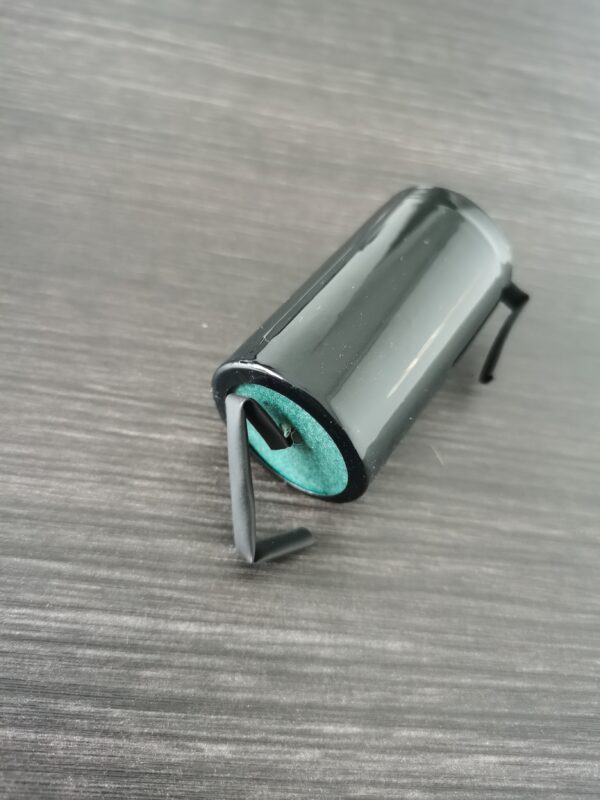
How to Choose a High-Capacity Lithium Battery for Long-Range AUVs
For engineers and project managers working on Autonomous Underwater Vehicles (AUVs), the battery is not just a power source; it is the fundamental constraint that defines the vehicle’s operational envelope. In the realm of deep-sea exploration, military surveillance, or offshore energy inspection, energy density and thermal stability are the twin pillars of mission success. Selecting a high-capacity lithium battery for long-range AUVs requires moving beyond standard commercial specifications and understanding the specific electrochemical behaviors of primary (non-rechargeable) lithium systems. This guide provides a technical deep-dive into the selection criteria, testing protocols, and material science necessary to maximize underwater endurance.
1. Understanding the Energy Density Imperative
The primary challenge in AUV design is the trade-off between payload, propulsion, and energy storage. Unlike terrestrial applications, AUVs cannot simply refuel mid-mission. Therefore, the selection of a High-Capacity Lithium Battery is critical.
- The Lithium-Thionyl Chloride (Li-SOCl₂) Advantage: For long-range missions, secondary (rechargeable) batteries often fall short due to their lower energy density. Primary lithium batteries, specifically Lithium-Thionyl Chloride chemistry, offer the highest energy density available commercially—often exceeding 500 Wh/kg. This chemistry is ideal for AUVs because it provides a stable voltage (typically 3.6V) and has an extremely low self-discharge rate, ensuring the battery is ready for deployment even after years of storage.
- Volume vs. Weight: Underwater, buoyancy is a critical factor. While Lithium-Manganese Dioxide (Li-MnO₂) batteries offer higher pulse power, Lithium-Thionyl Chloride offers the highest specific energy. Engineers must calculate the “Energy per Cubic Centimeter” rather than just “Energy per Kilogram” to ensure the battery pack fits within the hydrodynamic hull without compromising the vehicle’s trim.
2. Thermal Management in Extreme Environments
AUVs operate in environments where ambient temperatures can range from the freezing depths of the ocean to the heat generated by onboard electronics. Standard lithium batteries suffer from passivation—a build-up of lithium chloride on the anode—which can cause voltage delay and potential voltage depression during high-current pulses.
- Pulse Capability: Long-range AUVs require bursts of high current for propulsion and sonar systems. The battery must be engineered to handle high pulse loads without significant voltage drop.
- Thermal Runaway Prevention: The selection process must include a review of the battery’s thermal design. Look for cells with built-in safety mechanisms such as PTC (Positive Temperature Coefficient) devices or current interrupt devices (CID) to prevent thermal runaway in the event of a short circuit.
3. Technical Parameters and Testing Methodology
Choosing the right battery involves rigorous testing of specific parameters. Do not rely solely on manufacturer datasheets; independent validation is key.
| Parameter | Importance for AUVs | Recommended Testing Protocol |
|---|---|---|
| Nominal Capacity (Ah) | Determines total mission duration. | Discharge test at 1/3 rated current until 2.0V cutoff. |
| Pulse Voltage (at 1A) | Ensures communication and propulsion systems function during peak load. | Apply a 1-second pulse every 10 minutes; monitor voltage sag. |
| Operating Temperature | Ensures functionality in deep-sea cold. | Test at -40°C to +85°C to verify performance limits. |
| Hermetic Seal | Prevents catastrophic failure due to water ingress. | Helium leak testing to ensure <1×10⁻⁸ atm.cc/sec leakage rate. |
Testing Note: For long-range applications, it is essential to simulate the “Duty Cycle” of the AUV. This involves a mixed discharge profile that alternates between low standby currents (e.g., 0.1mA for sensors) and high pulse currents (e.g., 1A for thrusters) over an extended period.
4. The CNS Primary Battery Solution
When sourcing batteries for critical underwater applications, the technical barrier to entry is high. General-purpose batteries lack the specific engineering required for deep-sea pressure and thermal cycling. This is where the technical expertise of a specialized manufacturer becomes a necessity.
CNS BATTERY has established a high technical barrier in the primary lithium battery market through advanced material science and manufacturing precision. Their engineering approach focuses on solving the specific problems faced by AUV designers:
- Advanced Cathode Technology: CNS utilizes a proprietary carbon electrode formulation that significantly reduces the internal resistance of Lithium-Thionyl Chloride cells. This allows for higher discharge rates without the voltage delay typically associated with this chemistry.
- Pressure Compensation: Recognizing that standard cells may implode under deep-sea pressure, CNS designs cells with robust stainless steel casings capable of withstanding high external pressures, eliminating the need for bulky and buoyancy-negative pressure housings.
- Wide Temperature Resilience: Through electrolyte additive optimization, CNS batteries maintain stable performance even at sub-zero temperatures, a common failure point for standard lithium cells.
5. Geo-Compliance and Technical Standards
For global deployment, an AUV battery must meet stringent international safety and environmental standards. This is not merely a regulatory hurdle but a reflection of the battery’s inherent safety design.
- UN/DOT 38.3 Compliance: This is mandatory for the transportation of lithium batteries by air or sea. It includes tests for altitude simulation, thermal shock, vibration, and impact.
- RoHS and REACH Compliance: Essential for the European market, ensuring the battery is free from hazardous substances like lead, mercury, and cadmium.
- UL Certification: While less common for primary cells, having UL components or systems certification provides an additional layer of safety validation for the end-user.
6. Conclusion and Technical Inquiry
Selecting a battery for a long-range AUV is a high-stakes engineering decision. It requires a partner who understands the nuances of electrochemistry under pressure, not just a supplier of cells.
If you are currently facing challenges with battery life, thermal management, or pressure ratings in your AUV design, the solution lies in custom-engineered primary lithium technology. Do not compromise on standard off-the-shelf solutions when your mission profile demands a technical specialist.
For engineers requiring technical datasheets, custom design consultation, or samples for testing, please visit our Primary Battery Product Center or reach out directly to our technical sales team for a region-specific solution at our Contact Us page.
