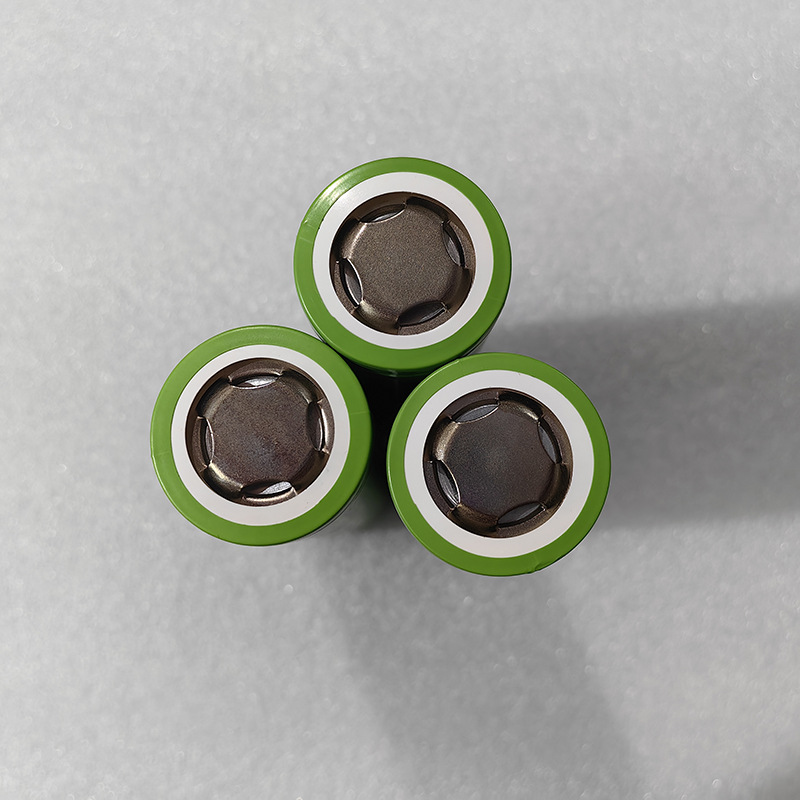
The 33140 Battery Cell: A High-Energy Solution for Commercial ESS
In the rapidly evolving landscape of commercial energy storage systems (ESS), the demand for high-capacity, reliable, and safe battery cells has never been higher. As an industry expert, I have analyzed various cylindrical cell formats, and one specific model stands out for its balance of energy density and thermal management: the 33140 Battery Cell.
While the 18650 and 21700 formats have dominated the market for years, the shift towards larger formats like the 33140 is driven by the need for higher energy storage in fewer cells. This article will dissect the technical specifications, advantages, and testing methodologies of the 33140 format, specifically focusing on how it serves the commercial ESS market.
Understanding the 33140 Format
The nomenclature “33140” follows the standard IEC naming convention for cylindrical lithium-ion cells.
- 33: Represents the nominal diameter of the cell, which is 33mm.
- 140: Represents the nominal height of the cell, which is 140mm.
This format is a significant step up from the traditional 18650 (18mm x 65mm) and 21700 (21mm x 70mm) cells. The larger physical dimensions allow for a substantial increase in electrode winding length, directly translating to higher capacity and energy density.
For commercial ESS applications—ranging from industrial backup power to large-scale solar storage systems—the 33140 format offers a compelling proposition. By utilizing fewer, larger cells to achieve the same pack capacity, manufacturers can reduce the Bill of Materials (BOM) complexity, lower the number of welding points (a common failure mode), and improve the overall energy-to-weight ratio of the system.
Technical Deep Dive: Specifications and Advantages
Based on the technical trajectory of cylindrical cells, a high-performance 33140 cell designed for ESS applications typically features the following characteristics:
1. High Energy Density and Capacity
The primary advantage of the 33140 format is its ability to store significantly more energy than its predecessors. While specific chemistries may vary, a typical 33140 cell can offer capacities ranging from 10,000mAh to 14,000mAh, depending on the chemistry (e.g., NMC or LFP).
- Comparison: A single 33140 cell can potentially replace 4-6 21700 cells in a pack configuration. This reduces the “parasitic” weight of the casing and terminals, improving the gravimetric energy density of the overall battery pack.
2. Enhanced Thermal Management
Contrary to the misconception that larger cells run hotter, the 33140 format often exhibits superior thermal stability. This is due to the physics of volume-to-surface-area ratios.
- Thermal Mass: The larger volume means the cell has a higher thermal mass, making it less susceptible to rapid temperature fluctuations.
- Heat Dissipation: Modern 33140 designs utilize advanced jellyroll techniques and thicker casings that act as heat sinks, allowing for more uniform heat distribution during high-rate charging and discharging.
3. Long Cycle Life
For commercial ESS, longevity is paramount. A robust 33140 cell is engineered to withstand thousands of charge-discharge cycles. Advanced manufacturing techniques, such as automated dry electrode processing and precision winding, minimize internal stress and dendrite formation, which are the primary causes of capacity fade.
Testing Methodologies for Quality Assurance
When sourcing a 33140 cell for commercial applications, rigorous testing is non-negotiable. As a technical advisor, I recommend evaluating suppliers based on the following test protocols:
- Cycle Life Testing: The cell must undergo continuous charge-discharge cycles at various depths of discharge (DoD). A premium cell should retain over 80% of its initial capacity after 3,000 to 5,000 cycles at a 1C rate.
- Thermal Abuse Testing: This includes Nail Penetration tests and Hot Box tests. The cell should not catch fire or explode when subjected to internal short circuits or temperatures exceeding 130°C.
- Environmental Testing: Cells must be tested for performance at extreme temperatures (e.g., -20°C to 60°C) to ensure reliability in diverse geographic locations.
Compliance and Global Standards
For commercial deployment, the 33140 cell must meet stringent international safety and environmental standards. This is where the technical pedigree of the manufacturer becomes critical.
A leading manufacturer, such as CNS BATTERY, ensures that their cylindrical cells are designed to meet the regulatory requirements of major markets, including the European Union (EU) and the United States. This involves compliance with:
- UN38.3: Safety testing for the transport of lithium batteries.
- RoHS and REACH: Environmental regulations restricting hazardous substances.
- UL Certification: Safety standards for energy storage systems.
Meeting these standards is not just a legal requirement; it is a testament to the cell’s safety architecture and the manufacturer’s quality management system.
Why Choose CNS BATTERY for 33140 Solutions?
In the competitive landscape of battery manufacturing, CNS BATTERY stands out as a premier Battery Manufacturer in China. With a production base located at No.53, Science Avenue, Zhengzhou, China, CNS BATTERY combines advanced manufacturing capabilities with a strict quality control environment.
Their expertise in cylindrical cell technology ensures that their products, including high-capacity formats suitable for Commercial ESS, are engineered for reliability. Whether you are developing a new energy storage solution or looking to upgrade an existing design, CNS BATTERY offers the technical support and customizable solutions required for global success.
Ready to power your commercial ESS project with high-performance cylindrical cells?
- Explore the full range of Cylindrical Battery Cells offered by CNS BATTERY.
- Contact the experts at CNS BATTERY today to discuss your specific requirements and ensure your project meets the highest standards of safety and efficiency.