The Ultimate Guide to Selecting 18650 Battery Cells for E-Bike Packs
In the rapidly evolving world of electric transportation, the E-Bike industry stands out as a beacon of sustainable innovation. As an industry professional, you know that the heart of every high-performance E-Bike is its battery pack. While the market is flooded with options, the 18650 battery cell remains the gold standard for manufacturers seeking a balance of energy density, reliability, and cost-efficiency.
This guide is designed for OEMs, procurement managers, and R&D engineers looking to source premium 18650 cells for E-Bike pack manufacturing. We will dissect the technical requirements, explore the specific cell chemistries suited for two-wheelers, and provide actionable procurement advice.
Why the 18650 Form Factor Dominates E-Bike Manufacturing
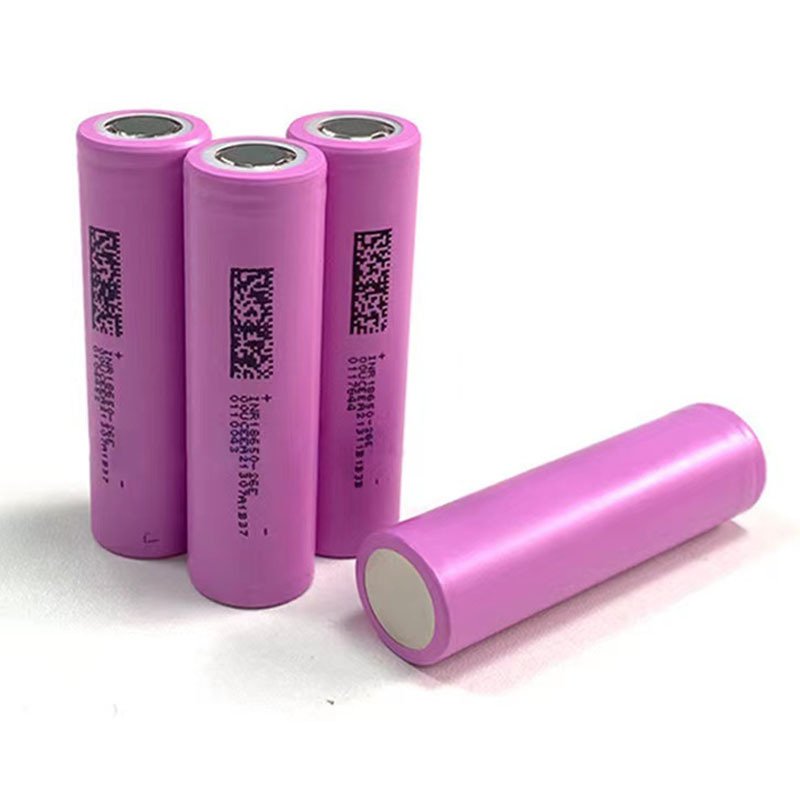
Before diving into specific models, it is crucial to understand why the 18650 cylindrical cell (18mm diameter, 65mm height) is the preferred choice for E-Bike manufacturers over pouch or prismatic formats.
- Robust Mechanical Structure: Unlike pouch cells, the steel or aluminum casing of an 18650 battery cell provides inherent structural integrity. This is vital for E-Bikes, which face constant vibration and shock on uneven roads.
- Thermal Management: Cylindrical cells offer a superior surface-area-to-volume ratio. This allows for more efficient heat dissipation during high-current discharge, a critical factor when accelerating or climbing hills.
- Manufacturing Maturity: The 18650 format has been in mass production for decades. This maturity translates to highly automated production lines, ensuring consistent quality and lower defect rates (measured in PPM – Parts Per Million).
Matching Chemistry to Application: Power vs. Energy
When selecting 18650 cells for E-Bike packs, the primary decision revolves around chemistry. You cannot optimize for both maximum range and maximum power simultaneously; you must choose the right tool for the job.
1. INR Chemistry (Nickel Manganese Cobalt Oxide – NMC)
For most modern E-Bike applications, INR cells are the optimal choice. They strike a perfect balance between energy density (for range) and power output (for torque).
- Key Characteristics: High specific energy, good thermal stability, and moderate discharge rates.
- Best For: Standard commuter E-Bikes, folding scooters, and mid-range electric motorcycles where a balance of weight and performance is required.
2. IFR Chemistry (Lithium Iron Phosphate – LFP)
If your priority is safety and longevity over light weight, IFR (or LFP) cells are unmatched.
- Key Characteristics: Exceptional cycle life (often exceeding 3000 cycles), superior thermal runaway resistance, and lower energy density (heavier packs).
- Best For: Heavy-duty commercial E-Bikes, delivery fleets, and applications where the battery is constantly cycled daily.
3. IMR/ISR Chemistry (High Power)
These cells are designed for “burst” performance.
- Key Characteristics: Very high continuous discharge rates, lower internal resistance, and slightly lower energy density compared to INR.
- Best For: High-performance sports E-Bikes, off-road electric motorcycles, and heavy-duty power tools integrated into E-Bike systems.
Technical Deep Dive: Key Parameters for E-Bike Packs
As a manufacturer, you must scrutinize the following parameters to ensure your E-Bike pack meets international safety and performance standards.
A. Cycle Life and Depth of Discharge (DoD)
The longevity of an E-Bike battery is not just about the number of charges. It is about how deeply you discharge it.
- Rule of Thumb: A cell rated for 500 cycles at 100% DoD might last 1000+ cycles if you only use 50% of its capacity. For commercial E-Bike fleets, designing the Battery Management System (BMS) to operate between 20% and 80% State of Charge (SoC) can double the pack’s lifespan.
B. Internal Resistance (IR)
This is the “hidden” spec that dictates performance. As a cell ages, its Internal Resistance increases.
- Impact: High IR causes voltage sag under load. If your E-Bike “slows down” when going uphill, it is likely due to high IR in the cells or poor interconnect welding.
- Procurement Tip: Always request the IR specification sheet from the manufacturer. A variance of more than 10% between cells in a batch can lead to premature pack failure.
C. Thermal Runaway Management
Safety is non-negotiable. Look for cells with a Ceramic Coated Separator. This acts as a “circuit breaker” at high temperatures, shutting down ion flow before thermal runaway occurs.
Case Study: Building a 48V 20Ah E-Bike Pack
Let’s apply this knowledge to a real-world scenario. You are tasked with building a 48V 20Ah pack for a mid-drive E-Bike.
Scenario 1: The Long-Range Commuter (Using INR 18650-3500mAh)
- Cell Choice: High Energy Density INR18650-3500.
- Configuration: To achieve 48V, you need a 13S configuration (13 cells in series, as 13 x 3.7V nominal = 48.1V). For 20Ah capacity, you need parallel groups. Since each cell is 3.5Ah, you need 6 cells in parallel (6P) to reach ~21Ah.
- Total Cell Count: 13S x 6P = 78 cells.
- Result: This configuration prioritizes range. The pack will be lighter than a high-power alternative, making it ideal for urban commuting.
Scenario 2: The Heavy-Duty Delivery Bike (Using INR 18650-2500mAh)
- Cell Choice: High Power INR18650-2500 (lower capacity but thicker electrodes for higher current).
- Configuration: Same 13S for voltage. However, because the cell capacity is lower (2.5Ah), you need more parallel groups to reach 20Ah. You would need 8P (8 x 2.5Ah = 20Ah).
- Total Cell Count: 13S x 8P = 104 cells.
- Result: This pack is heavier but can handle the constant high-current draw of a fully loaded delivery bike without overheating.
Procurement Strategy: Sourcing Reliable 18650 Cells
Finding a reliable 18650 Battery Cell manufacturer is often the biggest hurdle. Here is how to vet potential suppliers effectively.
1. Audit the Production Line
Do not just look at the spec sheet. Ask for evidence of:
- Automated Production: Manual winding and filling lead to inconsistencies. Automated lines ensure uniform tension and electrolyte volume.
- Formation & Aging: Quality manufacturers perform a 3-5 week formation process to weed out “infant mortality” cells.
2. Sample Testing Protocol
Before signing a Purchase Order (PO), run these tests on samples:
- Capacity Test: Verify the mAh rating under a 0.5C discharge.
- Voltage Drop Test: Apply a load simulating your E-Bike’s peak current and measure the voltage sag.
- Dimensional Check: Ensure the outer diameter and height are precise. Tolerances matter for spot welding.
3. Compliance and Certifications
For B2B clients targeting the European or North American markets, your cells must have specific certifications:
- UN38.3: Mandatory for the transport of lithium batteries.
- RoHS/REACH: Environmental compliance for the EU market.
- IEC 62133: The international standard for secondary cells and batteries containing alkaline or other non-acid electrolytes.
Conclusion: Partnering for Success
Selecting the right 18650 battery cell for your E-Bike pack is a complex engineering decision that impacts the safety, performance, and profitability of your product.
At CNS Battery, we understand that as a manufacturer, you need more than just cells; you need a partner who guarantees supply chain stability and technical support. Whether you require high-energy INR cells for lightweight scooters or robust IFR cells for industrial applications, we provide customizable solutions backed by rigorous quality management.
Do not leave your battery performance to chance. Consult with our engineering team to find the perfect match for your next-generation E-Bike design.
Ready to build your E-Bike battery pack?
Explore our full range of Cylindrical Battery Cells designed for high-performance applications: View Our 18650 Product Line.
For direct consultation with our technical sales team, please visit our contact page: Contact CNS Battery.
Looking for a reliable Battery Manufacturer in China? Learn more about our capabilities and global customer support: Learn About Our Manufacturing Expertise.