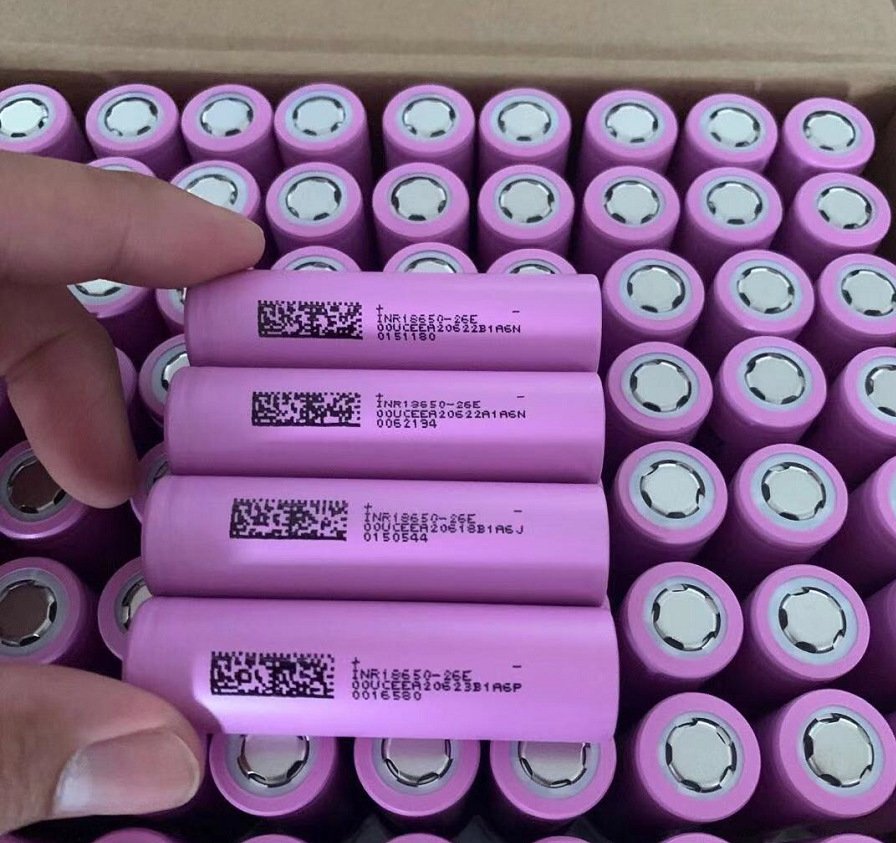
Complete BMS Compatibility Solved Solution for EV Using High-Quality 18650 LFP Cells OEM Custom Solutions
In the rapidly evolving electric vehicle (EV) and energy storage sector, the quest for the “perfect battery” often boils down to solving a complex puzzle: balancing energy density, safety, cycle life, and cost. As a professional lithium battery manufacturer, we frequently encounter a critical bottleneck for our clients—BMS (Battery Management System) incompatibility. This mismatch can render even the highest-grade cells ineffective.
This article delves into a comprehensive solution centered on high-quality 18650 Lithium Iron Phosphate (LFP) cells. We will explore how to achieve seamless BMS compatibility, the distinct advantages of 18650 LFP chemistry, and how OEM custom solutions can future-proof your energy storage projects.
The Core Challenge: BMS and Cell Synergy
Before diving into the cell specifications, it is crucial to understand why BMS compatibility is the linchpin of any battery pack. The BMS acts as the “brain,” monitoring voltage, current, and temperature to prevent overcharging, deep discharging, and thermal runaway.
When integrating 18650 LFP cells into an EV or industrial application, the primary hurdle is often the voltage curve and communication protocol. Unlike NMC (Nickel Manganese Cobalt) batteries, LFP cells have a flatter discharge curve, which requires a BMS with high-precision voltage detection algorithms. A “solved solution” implies that the manufacturer has already pre-validated the BMS firmware and hardware to work harmoniously with the specific internal resistance and voltage characteristics of the 18650 LFP cells, eliminating guesswork for the end-user.
Why 18650 LFP Cells? A Technical Deep Dive
The 18650 form factor (18mm diameter, 65mm height) is the industry standard for a reason. When combined with Lithium Iron Phosphate (LiFePO4) chemistry, it offers a unique value proposition distinct from traditional cobalt-based batteries.
1. Safety and Thermal Stability
LFP chemistry is renowned for its olivine structure, which provides exceptional thermal and chemical stability. Compared to cobalt-based cells, 18650 LFP cells are far less prone to thermal runaway, even under extreme conditions such as punctures or overcharging. This makes them the preferred choice for high-safety applications like electric forklifts, golf carts, and portable power stations.
2. Extended Cycle Life
One of the most significant advantages is longevity. While standard NMC 18650 cells might offer 500-800 cycles, high-quality LFP cells can achieve 3,000 to 5,000 cycles or more while retaining 80% of their capacity. For commercial EV operators, this translates directly into a lower Total Cost of Ownership (TCO), as the battery pack requires fewer replacements over the vehicle’s lifespan.
3. Cost Efficiency
With the removal of expensive cobalt and nickel, LFP technology offers a more stable and lower raw material cost. For B2B clients managing large fleets or energy storage projects, this price advantage is a decisive factor in maintaining profitability.
The OEM Custom Solution: Beyond the Standard Catalog
While standard cells are readily available, the “Complete Solved Solution” mentioned in the title refers to the ability to customize. Off-the-shelf cells often force engineers to compromise on voltage, capacity, or physical dimensions. A professional manufacturer provides OEM services that allow for:
- Voltage & Capacity Tailoring: Whether you need a 48V, 72V, or custom high-voltage stack for an industrial EV, the solution involves selecting the precise number of cells and configuring the BMS to match the specific Ah (Ampere-hour) rating required for the application.
- Mechanical Design: Customization extends to the physical integration. This includes designing the battery enclosure, thermal management system (heating/cooling plates), and the mechanical connection method between cells (spot welding nickel strips vs. screw connections).
- BMS Protocol Adaptation: The “solved” aspect often means the BMS is pre-programmed to communicate with the host vehicle’s CAN bus system. For example, if your EV controller requires a specific SOC (State of Charge) algorithm or communication baud rate, the OEM solution adapts the BMS to fit the vehicle, rather than forcing the vehicle to adapt to the battery.
Technical Specifications: The CNS 18650 Advantage
To illustrate the capabilities of a modern, high-quality 18650 LFP cell, let’s examine the technical benchmarks set by industry leaders. These specifications represent the “high-quality” standard required for a reliable solved solution.
| Feature | Specification | Benefit |
|---|---|---|
| Nominal Voltage | 3.2V (LFP) | Stable voltage platform, safer than 3.7V NMC |
| Cycle Life | ≥3000 Cycles | Long service life, low maintenance cost |
| Max Continuous Discharge | 3C – 10C (Varies by model) | Supports high-power tools and EV acceleration |
| Operating Temperature | -20°C to 60°C | Reliable performance in diverse climates |
| Safety Standards | Passes nail penetration,挤压, overcharge | Ultra-safe, no fire or explosion risk |
Table 1: General Technical Parameters of High-Quality 18650 LFP Cells
For instance, a high-capacity model like the INR18650-3500 (3.5Ah) provides the energy density needed for long-range e-bikes or portable solar generators, while a power-optimized model like the INR18650-2000 (2.0Ah) offers higher discharge currents suitable for heavy-duty power tools or starter batteries.
Implementation: From Design to Deployment
Implementing a “Complete Solved Solution” is a collaborative process between the manufacturer and the client.
Phase 1: Requirement Analysis
The process begins with understanding the application’s specific needs. Is it for a low-speed EV, a grid storage system, or a high-drain industrial tool? This determines the C-rate (discharge speed) and the environmental protection level (IP rating) required for the final pack.
Phase 2: Prototyping and Validation
Once the specifications are defined, the manufacturer produces a prototype pack. This involves not just assembling cells but integrating the custom BMS. Rigorous testing follows, including:
- Cycle Testing: Simulating years of charge/discharge cycles.
- Environmental Testing: Exposing the pack to extreme temperatures and humidity.
- Vibration Testing: Ensuring the pack can withstand the road conditions of an EV.
Phase 3: Mass Production and Support
After validation, the solution moves to mass production. A key aspect of the “solved” solution is ongoing technical support. If field issues arise, the OEM manufacturer provides firmware updates for the BMS or mechanical adjustments to the cell layout.
Conclusion: The Path Forward for EV Developers
In the competitive landscape of electric mobility, relying on generic battery components is a recipe for inefficiency. A Complete BMS Compatibility Solved Solution utilizing High-Quality 18650 LFP Cells offers a turnkey path to market.
By partnering with a manufacturer that offers deep OEM customization, businesses can achieve optimal performance, maximize safety, and reduce time-to-market. Whether you are developing the next generation of e-scooters or industrial energy storage, the integration of pre-validated BMS technology with robust 18650 LFP chemistry is the key to unlocking reliable, long-lasting power.
For businesses seeking to implement this technology, it is essential to engage with a manufacturer that possesses both the R&D capabilities and the production scale to deliver these custom solutions reliably.
Ready to optimize your energy storage project? Explore our comprehensive range of cylindrical battery cells and discover how our OEM custom solutions can meet your specific requirements.
Explore Our Cylindrical Battery Cell Products
Contact Our Technical Experts for a Custom Solution
Learn more about our capabilities as a leading Battery Manufacturer in China.