
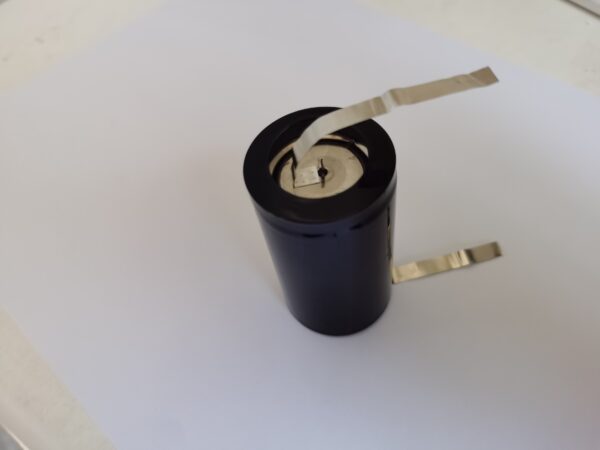
Telematics Primary Lithium Batteries | Automotive Grade Li-SOCl₂ Cell
In the rapidly evolving landscape of industrial and automotive technology, the demand for reliable, long-lasting, and maintenance-free power sources has never been higher. As a professional in the lithium battery industry, I often encounter engineers and procurement managers facing a common dilemma: finding a battery solution that can withstand extreme temperatures, operate for decades without failure, and fit into compact IoT or telematics modules.
The answer often lies not in the rechargeable lithium-ion batteries we use in phones and EVs, but in Primary Lithium Batteries, specifically the Lithium Thionyl Chloride (Li-SOCl₂) chemistry. This article delves into the technical intricacies of these cells, explaining why they are the gold standard for “Fit and Forget” applications, and how automotive-grade manufacturing ensures their reliability.
Understanding Primary Lithium Batteries: The “Fit and Forget” Solution
Unlike secondary (rechargeable) batteries, Primary Lithium Batteries are designed for a single discharge cycle. They are not intended to be recharged. This fundamental difference allows them to achieve energy densities and shelf lives that are unattainable for their rechargeable counterparts.
The core chemistry of these cells utilizes Lithium metal as the anode. Lithium is chosen because it is the lightest metal and has the most negative reduction potential, providing the highest voltage and energy density per unit weight. For applications requiring continuous, low-current drainage over a long period, the Lithium Thionyl Chloride (Li-SOCl₂) cell is the undisputed champion.
Technical Breakdown: The Li-SOCl₂ Cell
The Li-SOCl₂ cell operates on a unique electrochemical reaction. The anode is Lithium metal, while the cathode is a carbon material that catalyzes the reduction of Thionyl Chloride (SOCl₂).
The nominal voltage of a standard Li-SOCl₂ cell is 3.6V, significantly higher than the 1.5V of standard alkaline cells. This high voltage allows a single cell to often replace multiple alkaline cells in series, reducing the size and weight of the battery pack.
However, this chemistry has a distinct characteristic known as Voltage Delay. When a load is first applied to a resting Li-SOCl₂ cell, there is a temporary drop in voltage before it stabilizes. This occurs because a passivation layer (mainly Lithium Chloride) forms on the Lithium anode during storage. This layer prevents self-discharge but must be “burned off” when the circuit is closed. For applications requiring immediate high voltage, this can be a challenge, often mitigated by pairing the primary cell with a supercapacitor or a hybrid layer capacitor (HLC).
Automotive Grade: Beyond Industrial Standards
When we discuss Automotive Grade components, we are referring to a set of rigorous quality and reliability standards that exceed standard industrial requirements. In the context of Telematics Primary Lithium Batteries, achieving automotive grade means the cells must pass stringent tests for vibration resistance, thermal cycling, and long-term stability.
The “Zero Defect” Philosophy
Automotive applications, such as GPS trackers, ETC systems, or emergency call (eCall) modules, cannot afford failure. A defect in a consumer device might be an inconvenience; a defect in an automotive battery can be a safety hazard.
To achieve Automotive Grade status, manufacturers must implement a “Zero Defect” philosophy throughout the production line. This involves:
- 100% Automated Inspection: Every single cell is inspected for micro-leaks, impurities, and dimensional accuracy using high-precision machinery.
- Traceability: Every batch of cells must have full traceability, allowing engineers to track the raw materials and production parameters of every single unit.
- Extended Temperature Range: While standard industrial cells might operate from -20°C to +60°C, automotive-grade cells are tested to function reliably from -40°C to +85°C or even higher.
Why Automotive Grade Matters for Telematics
Telematics devices are often mounted on the exterior of vehicles or in the engine bay, exposing them to harsh environmental conditions. The battery must not only provide power but also act as a structural component that does not leak or swell over time. Automotive Grade Li-SOCl₂ cells are engineered with specialized safety mechanisms, such as CID (Current Interrupt Device) and ASV (Anti-Explosion Vent), to handle internal pressure build-up safely.
The Superiority of Bobbin-Type Li-SOCl₂ Cells
Within the realm of Primary Lithium Batteries, there are two main construction types for Li-SOCl₂ chemistry: Spiral and Bobbin.
While Spiral wound cells offer high pulse current capabilities, they are prone to higher self-discharge rates and are less stable over long periods. For Telematics applications, where the device might sit dormant for months before transmitting a signal, the Bobbin-Type construction is vastly superior.
Technical Advantages of Bobbin Construction
The Bobbin-Type Li-SOCl₂ Cell features a unique concentric design where the Lithium anode is a solid cylinder surrounded by a glass or ceramic seal. This design offers several critical advantages:
- Ultra-Low Self-Discharge: The hermetic seal prevents electrolyte evaporation and chemical degradation. This allows the cells to retain their charge for 15 to 20 years in storage.
- High Reliability: The lack of internal winding tension eliminates the risk of internal short circuits caused by vibration or shock—critical for Automotive Grade applications.
- Stable Voltage Profile: Bobbin cells provide a very flat discharge curve, meaning the voltage remains stable at approximately 3.6V for the vast majority of their lifespan before dropping off sharply at the end of life. This allows telematics engineers to design circuits with a wide operating voltage window without worrying about voltage sag.
Applications and Future Outlook
The marriage of Telematics and Primary Lithium Batteries is a match made in engineering heaven. From asset tracking in logistics to smart meters in remote locations, these cells are the invisible workforce keeping the IoT ecosystem alive.
As 5G and NB-IoT networks expand, the demand for smaller, more efficient, and longer-lasting power sources will only increase. The Automotive Grade Li-SOCl₂ Cell is poised to remain the dominant technology in this space due to its unmatched energy density and reliability.
For engineers designing the next generation of telematics devices, selecting a battery partner that understands the nuances of Automotive Grade manufacturing is not just a preference; it is a necessity for ensuring the longevity and safety of their products.
If you are looking for reliable Primary Lithium Batteries for your automotive or industrial telematics projects, we invite you to explore our range of high-performance solutions.
Explore our range of Primary Lithium Batteries: Product Link
Contact our technical team for automotive-grade solutions: Contact Us
