

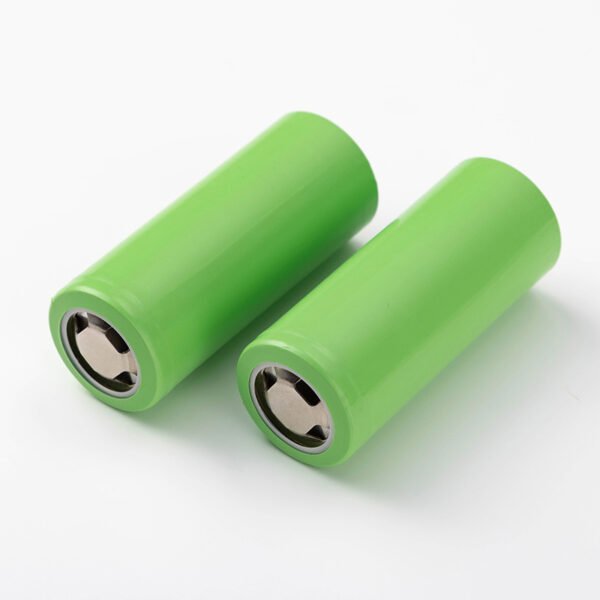
The 21700 Battery Cell: Revolutionizing Solar Storage Systems
In the rapidly evolving landscape of renewable energy, the transition from traditional 18650 cells to the advanced 21700 battery cell marks a pivotal shift in solar storage technology. For engineers and technical procurement managers in the United States and European Union markets, the demand for higher energy density, improved thermal management, and long-term reliability is non-negotiable. The 21700 format, measuring 21mm in diameter and 70mm in length, offers a superior solution for modern solar energy storage systems (ESS) by addressing the critical limitations of its predecessors.
Technical Evolution: From 18650 to 21700
The core advantage of the 21700 battery cell lies in its geometry. By increasing the diameter from 18mm to 21mm and the length from 65mm to 70mm, manufacturers achieve a significant reduction in the number of cells required within a battery pack to achieve the same energy capacity.
This geometric scaling is not merely about size; it is about efficiency. Fewer cells mean fewer connection points, which directly correlates to a lower internal resistance and a more robust structural integrity of the battery pack. For solar storage applications, where thousands of charge-discharge cycles are expected, this reduction in complexity enhances the overall lifespan and safety of the system.
Performance Parameters for Solar Applications
When evaluating a 21700 battery cell for solar integration, specific electrochemical characteristics must be scrutinized. The CNS 21700 series, for instance, is engineered specifically to meet the rigorous demands of energy storage and high-drain applications.
Key Specifications of CNS 21700 Series:
| Model Number | Nominal Capacity | Nominal Voltage | Approx. Weight | Max Continuous Discharge | Primary Application Focus |
|---|---|---|---|---|---|
| INR21700-4000 | 4000 mAh | 3.7 V | 70 g | 45A (High Power) | Power Tools, High-Discharge Solar Loads |
| INR21700-4500 | 4500 mAh | 3.7 V | 76 g | 10A | E-Bikes, Portable ESS, Small Appliances |
| INR21700-5000 | 5000 mAh | 3.7 V | 76 g | 10A | E-Bikes, Portable ESS, Residential Storage |
| INR21700-5500 | 5500 mAh | 3.6 V | 73 g | 2C | Consumer Electronics, Medium Discharge |
| INR21700-6000 | 6000 mAh | 3.6 V | 75 g | 2C | High-Capacity Consumer & Storage |
Data sourced from standard test conditions. Consult the datasheet for specific C-rate performance.
Why these parameters matter for Solar Storage:
- High Capacity (4000mAh – 6000mAh): Maximizes the energy stored per physical unit, allowing for compact solar wall units.
- Voltage Stability: The nominal voltage range (3.6V – 3.7V) ensures compatibility with standard solar charge controllers and inverters without requiring complex voltage boosting circuits.
- Power vs. Energy Balance: The INR21700-4000 is optimized for power (suitable for inverters with high surge loads), while the -5000 and -6000 models are optimized for energy (suitable for long-duration overnight storage).
Advanced Testing Methodologies
To ensure that a 21700 battery cell meets the standards required for grid-tied or off-grid solar systems, rigorous testing protocols are mandatory. At CNS, the R&D process involves multiple stress tests that simulate 10+ years of solar cycling.
Critical Test Regimes:
- Cycle Life Testing: Cells undergo charge-discharge cycles at 1C rate between 4.2V and 2.75V. The CNS 21700 cells are validated to retain over 80% of their initial capacity after 500 cycles, a standard benchmark for solar durability.
- Thermal Imaging: During high-current discharge (simulating an inverter pulling power), thermal cameras monitor the cell surface. The 21700 format exhibits superior heat dissipation compared to the 18650 due to its lower surface-area-to-volume ratio, preventing hotspots in dense solar packs.
- High & Low-Temperature Performance: Solar batteries operate in uncontrolled environments. Testing at -20°C and 60°C verifies that the cell can charge in cold winters and discharge efficiently in hot summers without thermal runaway.
Technical Advantages in Energy Storage Systems (ESS)
The integration of the 21700 battery cell into solar storage solutions provides distinct engineering advantages:
- Enhanced Energy Density: By adopting the 21700 format, solar system designers can achieve up to a 40% increase in energy density compared to 18650-based systems. This allows for sleeker, more residential-friendly solar wall units.
- Reduced BMS Complexity: With fewer cells in parallel and series configurations, the Battery Management System (BMS) has fewer nodes to balance. This reduces the points of failure and simplifies the software algorithms required for state-of-charge (SoC) estimation.
- Cost Efficiency: While the individual cell cost might be slightly higher, the reduction in mechanical housing, welding points, and wiring lowers the overall Bill of Materials (BoM) for the solar storage cabinet.
Global Compliance and Regional Adaptation
For the US and EU markets, compliance is not optional. The 21700 battery cell must adhere to stringent regional safety and environmental regulations.
- EU Market (CE, RoHS, REACH): European regulations emphasize chemical safety and environmental impact. The CNS 21700 cells are manufactured with strict control over hazardous substances, ensuring full RoHS compliance. Furthermore, the design focuses on recyclability, a key requirement under the EU Battery Directive.
- US Market (UL, UN38.3): The American market prioritizes transportation safety and fire resistance. The 21700 cells undergo UN38.3 testing for transport safety, including altitude simulation, thermal testing, and vibration. For residential solar installers in the US, the robust mechanical design of the 21700 prevents swelling and deformation often seen in lower-grade cells during prolonged float charging.
Conclusion: The Future of Solar Storage
The transition to the 21700 battery cell is not just a trend; it is a technical necessity for the next generation of solar energy storage. By offering a balance of high capacity, structural robustness, and thermal efficiency, these cells solve the core engineering challenges faced by modern solar system integrators.
For engineers seeking a reliable partner in this transition, CNS BATTERY provides a comprehensive range of cylindrical cells engineered for global standards. Whether you are developing a high-power inverter system or a residential solar wall, the technical specifications of the 21700 series offer a future-proof solution.
To consult with a technical expert regarding the integration of 21700 cells into your specific solar storage architecture, or to request a sample for laboratory testing, please visit our contact page. For a detailed overview of our cylindrical battery technology and customization capabilities, explore our product portfolio. As a leading battery manufacturer in China, we are equipped to support your global compliance and supply chain needs.


