

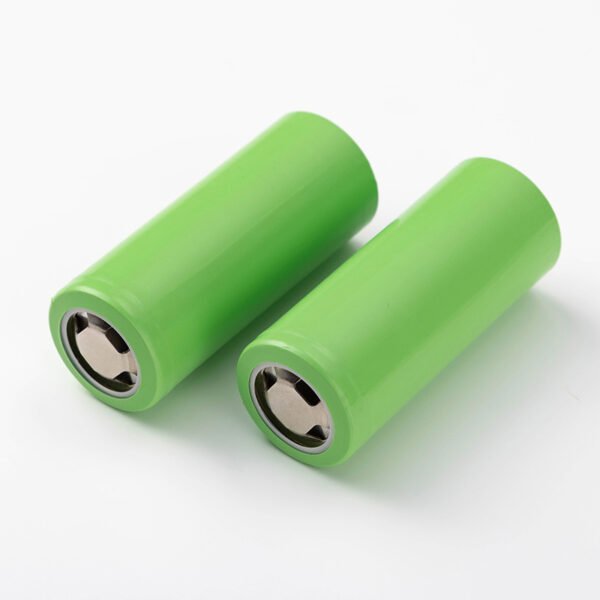
Thermal Runaway Prevention in 18650 LFP Cells for Power Tools: The Ultimate Safety Guide
When it comes to high-performance cordless power tools, the margin for error is zero. Engineers and procurement managers are constantly balancing the need for high energy density and fast charging with the non-negotiable requirement for safety. Thermal runaway—the catastrophic failure mode where a battery cell overheats and potentially catches fire or explodes—is the primary concern in heavy-duty applications.
Lithium Iron Phosphate (LFP or LiFePO4) chemistry has emerged as the gold standard for mitigating this risk. Unlike traditional NMC (Nickel Manganese Cobalt) batteries, LFP cells offer inherent thermal stability, making them the ideal choice for demanding environments. At CNS Battery, we specialize in manufacturing high-reliability cylindrical cells, including robust 18650 LFP solutions designed specifically for industrial applications like power tools.
If you are looking for a manufacturer that prioritizes safety without sacrificing performance, explore our full range of Cylindrical Battery Cells or contact us directly to consult with our engineering team.
Why LFP Chemistry is Inherently Safer
The foundation of thermal runaway prevention lies in the chemistry of the cathode material. To understand why LFP is superior for power tools, we need to look at the molecular level.
Chemical Stability and Thermal Runaway Thresholds
Traditional lithium-ion batteries, such as those using NMC or NCA (Nickel Cobalt Aluminum) chemistries, rely on cobalt-based oxides. While these offer high energy density, they are thermally fragile. When heated beyond 150°C–200°C, these materials undergo exothermic decomposition, releasing oxygen. This oxygen feeds the fire, leading to thermal runaway.
In contrast, LFP cells use a phosphate-based cathode. This olivine structure has incredibly strong P-O covalent bonds. These bonds remain stable even at temperatures exceeding 500°C. Crucially, LFP does not release oxygen during thermal events. Without this internal oxidizer, the combustion reaction cannot sustain itself.
Key Safety Comparison: NMC vs. LFP
| Feature | NMC/NCA Batteries | LFP (LiFePO4) Batteries |
|---|---|---|
| Thermal Runaway Onset | ~150°C – 200°C | >500°C |
| Oxygen Release | Yes (Exothermic reaction) | No (Structurally stable) |
| Thermal Stability | Moderate | Excellent |
| Best For | Consumer Electronics (High Energy) | Power Tools, EVs (High Safety) |
For power tools, which generate significant friction and heat during operation, this high thermal threshold is not just a feature; it is a necessity.
Engineering Safety: Beyond the Chemistry
While the LFP chemistry provides the baseline safety, CNS Battery employs a multi-layered engineering approach to ensure our 18650 cells are “Thermal Runaway Proof” in real-world scenarios. We don’t just rely on the chemistry; we harden the cell against abuse.
1. Advanced Casing and Vent Design
The 18650 cylindrical format is renowned for its mechanical strength. At CNS, we utilize high-purity, thick-walled steel casings that act as a pressure vessel. More importantly, our cells feature a精密 (precise) CID (Current Interrupt Device) and safety vent mechanism.
When internal pressure builds due to gas generation (a precursor to thermal runaway), the CID physically disconnects the internal circuit before the pressure reaches a critical explosion point. This “pressure relief” system ensures that even in the event of an internal short circuit or overcharging, the cell vents gas safely rather than rupturing violently.
2. Electrolyte Additives and Separators
We utilize ceramic-coated separators that act as a thermal barrier. If the temperature starts to rise abnormally, these ceramic layers shut down ion flow, effectively halting the chemical reaction. Combined with flame-retardant electrolyte additives, this creates a “self-extinguishing” system where the cell can withstand high temperatures without propagating fire to adjacent cells in a battery pack.
Performance Optimization for Power Tools
Safety is paramount, but a power tool battery that cannot deliver power is useless. One common misconception is that LFP sacrifices performance for safety. At CNS, our R&D focuses on high-power LFP formulations.
High Discharge Rates (C-Rate)
Power tools require bursts of high current (high C-Rate). Our specialized LFP 18650 cells are engineered with low internal resistance. This allows them to discharge at rates exceeding 10C, 15C, or even 20C continuously. This means your tool gets the torque it needs without the voltage sagging, all while maintaining the cool operating temperatures inherent to phosphate chemistry.
Fast Charging Capabilities
Modern workflows demand fast charging. Thanks to the stable voltage curve of LFP, our cells can accept high charge currents (up to 1C or 2C with appropriate BMS) without lithium plating—a major cause of internal shorts. This allows for rapid turnaround times in a warehouse or job site environment.
The CNS Battery Advantage
As a leading Battery Manufacturer in China, CNS Battery combines rigorous quality control with cutting-edge R&D. We understand that our clients in the power tool industry require more than just cells; they require a safety ecosystem.
Our Commitment to Quality:
- Automated Production: We utilize fully automated production lines to eliminate human error, ensuring every 18650 cell meets the exact same high standards.
- 100% Testing: Every single cell undergoes stringent testing for capacity, internal resistance, and self-discharge before leaving our factory in Zhengzhou.
- Customization: We don’t offer one-size-fits-all solutions. Whether you need a specific tab configuration, a custom BMS integration, or a specific discharge curve, our engineering team can tailor the solution.
Fast Shipping Guaranteed
Understanding the volatility of the supply chain, we maintain strategic stock levels to ensure Fast Shipping to global markets. We know that downtime in your production line is costly, which is why reliability extends from our cells to our logistics.
Conclusion: Partnering for Safety
Choosing an 18650 LFP cell for your power tool application is a decision that prioritizes user safety and long-term product reliability. By selecting a partner like CNS Battery, you are not just buying a commodity; you are investing in a technology partner that understands the physics of thermal runaway and how to prevent it.
If you are ready to upgrade your power tool battery systems with our high-safety, high-power cylindrical cells, we invite you to explore our Cylindrical Battery Cell product line or contact our sales engineers directly. Let us help you build a safer, more powerful future.
Ready to get started?
- Browse our technical specifications and product range: Cylindrical Battery Cell
- Contact our engineering team for a custom consultation: Contact Us

