
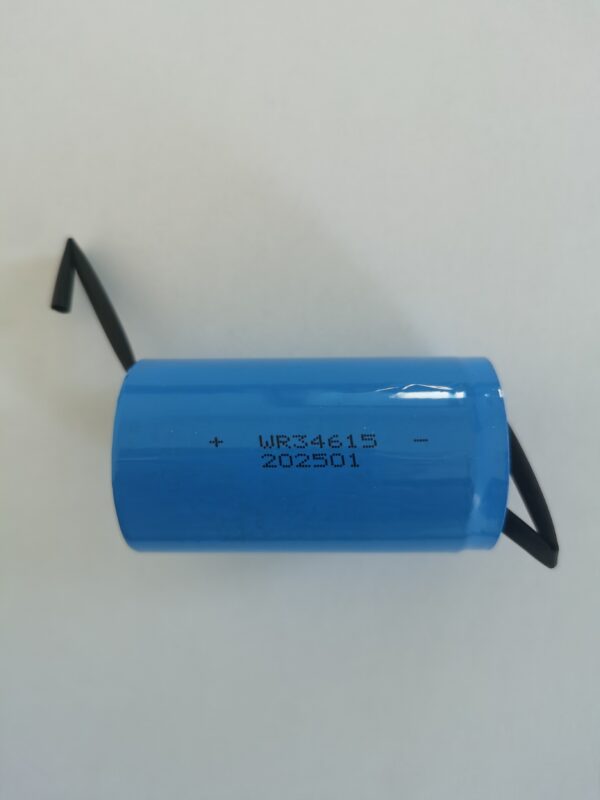
Here is the professional, SEO-optimized article tailored for the Oil & Gas industry, written from the perspective of a Lithium Primary Battery expert.
The Ultimate Guide to Lithium Primary Batteries for Oil & Gas Applications
In the harsh, unforgiving environments of the Oil & Gas sector, reliability isn’t a luxury—it’s a necessity. From downhole drilling to remote SCADA systems, the margin for error is zero. This is why Primary Lithium Batteries (non-rechargeable lithium metal batteries) have become the gold standard for powering critical instrumentation in this industry.
As a leading manufacturer, CNS BATTERY understands that these applications demand more than just energy; they require a power source that can withstand extreme temperatures, resist corrosion, and provide a stable voltage for decades without maintenance. In this guide, we will dissect the technology behind these rugged powerhouses and explain why they are the only viable solution for modern Oil & Gas exploration and monitoring.
Why Primary Lithium Batteries Dominate Industrial Applications
When we discuss Primary Lithium Batteries, we are referring to electrochemical cells where lithium metal serves as the anode. Unlike their secondary (rechargeable) counterparts, these batteries are designed for a single, continuous discharge cycle. This fundamental design choice offers distinct advantages for industrial use:
- Unparalleled Energy Density: Lithium has the highest electrochemical potential of all metals. This translates to a significantly higher energy density (up to 2x higher than alkaline batteries), allowing for smaller, lighter packs that can still deliver high power over long durations.
- Extreme Temperature Resilience: Standard batteries fail in the cold. However, lithium-thionyl chloride (Li-SOCl₂) and lithium-manganese dioxide (Li-MnO₂) chemistries can operate reliably in temperatures ranging from -55°C to +85°C (and sometimes beyond with special constructions).
- Long-Term Stability: With an annual self-discharge rate of less than 1%, a well-manufactured primary lithium battery can sit on a shelf or in a field device for 10-20 years without losing significant capacity.
Technical Note: The specific energy (Wh/kg) of Lithium-Thionyl Chloride cells can exceed 650 Wh/kg, making them the most energy-dense commercially available primary cells. This is critical for remote telemetry where battery replacement is logistically impossible.
The Chemistry Behind the Reliability
Not all primary lithium batteries are created equal. For the Oil & Gas industry, two specific chemistries are most relevant due to their voltage and temperature characteristics.
1. Lithium-Thionyl Chloride (Li-SOCl₂)
This chemistry is the workhorse for long-term, low-current applications.
- Voltage: 3.6V nominal.
- Application: Ideal for Automatic Meter Reading (AMR), Remote Terminal Units (RTUs), and downhole logging tools.
- Consideration: These cells exhibit a “voltage delay” when first activated, where the voltage takes a few minutes to stabilize. This is a critical design factor for circuit engineers.
2. Lithium-Manganese Dioxide (Li-MnO₂)
This chemistry is preferred for applications requiring higher pulse currents.
- Voltage: 3.0V nominal.
- Application: Used in gas detectors, handheld field instruments, and some drilling sensors where higher power pulses are needed.
Comparison Table:
| Feature | Lithium-Thionyl Chloride | Lithium-Manganese Dioxide |
|---|---|---|
| Nominal Voltage | 3.6V | 3.0V |
| Self-Discharge | <1% per year | <2% per year |
| Best For | Long-term, low drain | Moderate pulse power |
| Operating Range | -55°C to +85°C | -40°C to +85°C |
Critical Selection Criteria for Oil & Gas Environments
Selecting the wrong battery can lead to catastrophic data loss or safety hazards. When sourcing a Primary Lithium Battery, engineers must evaluate the following factors:
A. Pulse Power Capability
Many Oil & Gas sensors (like those in the “Internet of Things” for Oilfields) sleep for long periods and then transmit data bursts. The battery must handle high pulse currents without voltage sag. This often requires the use of hybrid capacitors or specific cell constructions to buffer the pulse.
B. Hermetic Sealing
In environments exposed to hydrogen sulfide (H₂S) or salt spray, the battery seal is paramount. A breach leads to immediate cell failure and potential leakage. High-quality primary lithium batteries utilize glass-to-metal seals (GTMS) to ensure absolute hermeticity.
C. Temperature Compensation
While lithium batteries handle cold well, their internal resistance changes with temperature. For precision instruments, the battery design may need to incorporate thermal management features or specific electrolyte formulations to maintain voltage stability across the operating range.
CNS BATTERY: Engineering Power for Extreme Conditions
At CNS BATTERY, we don’t just manufacture cells; we engineer power solutions for the world’s toughest challenges. Based in Zhengzhou, China, we are a leading Oil & Gas Primary Lithium Battery Manufacturer, dedicated to providing OEMs and system integrators with the reliability they demand.
Our Technological Edge
We understand that the Oil & Gas industry requires batteries that can survive where others fail. Our production facilities in Henan are equipped with advanced manufacturing lines that adhere strictly to ISO 9001 and IATF 16949 standards.
- Advanced Manufacturing: Our automated production lines minimize human error and ensure consistent quality control.
- Rigorous Testing: Every batch undergoes extreme environmental testing, including thermal shock, vibration, and deep discharge cycles.
- Customization: We offer customized battery packs, including specific voltage configurations, custom connectors, and integrated battery management systems (BMS) for complex telemetry units.
Why Choose CNS BATTERY?
As a direct factory, we offer competitive pricing without compromising on the quality needed for life-critical applications. Our R&D team works closely with clients to tailor solutions, whether it is a standard ER14505M cell or a custom high-temperature cylindrical pack.
If you are looking for a reliable partner to power your next generation of drilling tools or remote monitoring systems, look no further. We are committed to delivering “A Masterpiece of Craftsmanship” in every battery we ship.
For technical inquiries or to request a sample for your specific application, please visit our product center or contact our sales team directly.
Contact Us Today:
Primary Lithium Battery Product Center
Get in Touch with Our Experts
