
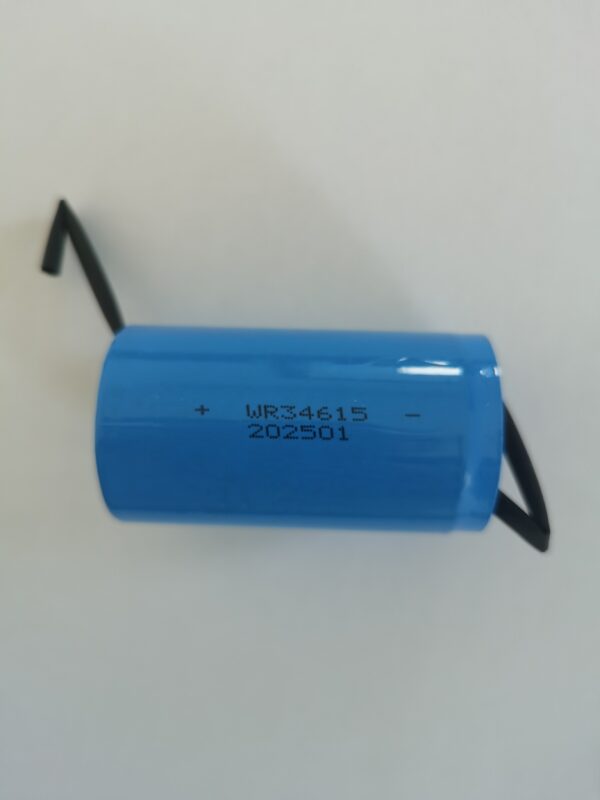
Here is the SEO-optimized article tailored for a professional B2B audience, focusing on the technical and economic benefits of Lithium-SO₂ technology.
Li-SO₂ Batteries: Reducing Emergency Equipment Maintenance Costs
In the realm of industrial safety and emergency systems, reliability is not a feature; it is the foundation. Whether it is a fire suppression system in a high-rise building or a safety cutoff valve in a chemical plant, the failure of these systems is simply not an option. However, maintaining this “always-ready” status often comes with a hidden cost: the labor, downtime, and logistics of frequent battery maintenance. As a professional lithium battery engineer, I have seen firsthand how the wrong power source can turn a safety system into a recurring operational expense.
This is where Lithium-Thionyl Chloride (Li-SOCl₂) technology emerges as a game-changer. By leveraging the unique electrochemical properties of this primary (non-rechargeable) battery chemistry, we can shift the paradigm from “constant maintenance” to “install and forget.” Let us delve into the technical specifics of how Li-SO₂ batteries drastically reduce the Total Cost of Ownership (TCO) for critical emergency equipment.
The Maintenance Burden of Conventional Chemistries
To understand the solution, we must first analyze the problem. Traditional emergency systems often rely on alkaline or lithium-ion batteries.
- Alkaline Batteries: These are inexpensive upfront but suffer from high self-discharge rates. In standby mode, they can lose 2-3% of their charge per month. This necessitates annual replacements, creating a massive logistical loop for facility managers with hundreds of sensors.
- Lithium-Ion (Li-ion): While better than alkaline, rechargeable Li-ion cells still degrade over time due to calendar aging. They require complex Battery Management Systems (BMS) to monitor cell health, adding complexity and points of failure. Furthermore, their cycle life is finite, often requiring replacement every 3-5 years in high-stress environments.
The constant cycle of testing, replacing, and recalibrating these power sources consumes significant man-hours and generates unnecessary waste.
The Technical Superiority of Li-SOCl₂ Chemistry
Li-SOCl₂ batteries operate on a fundamentally different principle than their aqueous or intercalation counterparts. This specific chemistry is renowned for its exceptionally low self-discharge rate and high energy density.
1. Ultra-Low Self-Discharge: The “Storage” Champion
The secret lies in the passivation layer. When a Li-SOCl₂ cell is at rest, a thin passivation film forms on the lithium anode. This film acts as a barrier, effectively shutting down the chemical reaction and preventing energy loss. This results in an annual self-discharge rate of less than 1%. In practical terms, this means a Li-SOCl₂ battery can sit in standby mode for 10 to 15 years without significant capacity loss. For emergency equipment, this translates to a service life that often matches or exceeds the lifespan of the electronic components they power.
2. High Energy Density and Voltage Stability
Li-SOCl₂ cells offer one of the highest energy densities among primary batteries (up to 700 Wh/kg). This allows for compact, lightweight designs that fit into tight spaces without compromising runtime. Furthermore, they maintain a stable voltage plateau (typically 3.6V) throughout most of their discharge cycle. This stability ensures that emergency sensors and transmitters operate at peak efficiency without voltage sag, which is critical for accurate signal transmission during a crisis.
3. Extreme Environmental Resilience
Emergency equipment is often deployed in harsh conditions—ranging from freezing cold storage facilities to scorching industrial rooftops. Li-SOCl₂ batteries operate reliably in a temperature range of -55°C to +85°C. Unlike aqueous electrolytes that can freeze or boil, the organic electrolyte in these cells remains stable, ensuring the system is operational when needed most.
Economic Impact: Calculating the Savings
To illustrate the financial impact, let’s consider a hypothetical scenario involving 500 emergency shut-off valves in an oil and gas facility.
| Scenario | Battery Type | Replacement Frequency | Labor & Downtime Cost (Est.) | Battery Cost (Est.) | Total 15-Year Cost |
|---|---|---|---|---|---|
| Status Quo | Alkaline / Li-ion | Every 2-3 Years | $150,000 | $50,000 | $200,000 |
| Optimized | Li-SOCl₂ | Every 15 Years | $10,000 | $30,000 | $40,000 |
Note: Figures are illustrative for technical comparison.
By switching to a long-life primary lithium solution, the facility eliminates 4-5 major maintenance cycles. The savings are not just in the cost of the cells, but in the elimination of hazardous work permits, technician travel time, and the risk of accidental system damage during servicing.
CNS BATTERY: Engineering Reliability
At CNS BATTERY, we understand that emergency systems require power sources that are more than just “batteries”—they are the last line of defense. Our engineering team specializes in customizing Primary Battery solutions to meet the exacting standards of industrial safety applications.
We do not just sell cells; we engineer power systems. Whether it is integrating specific connectors for harsh vibration environments or providing custom packaging for extreme thermal conditions, our R&D capabilities ensure that the battery is perfectly matched to the load profile of your emergency equipment. Our rigorous quality management system guarantees that every cell leaving our Zhengzhou facility meets the highest standards of safety and reliability.
Conclusion
In the industrial sector, reducing maintenance costs is not about cutting corners; it is about selecting components that maximize uptime and minimize intervention. Li-SOCl₂ batteries represent the pinnacle of “fit and forget” technology for emergency systems. By adopting this advanced chemistry, engineers and facility managers can drastically cut operational expenses while simultaneously increasing the reliability of their safety infrastructure.
If you are looking to optimize the power solution for your critical equipment, our team is ready to assist.
Contact our sales engineers today to discuss your specific requirements.
Explore our range of Primary Battery solutions designed for industrial longevity.
Learn more about our Primary Battery products.
