
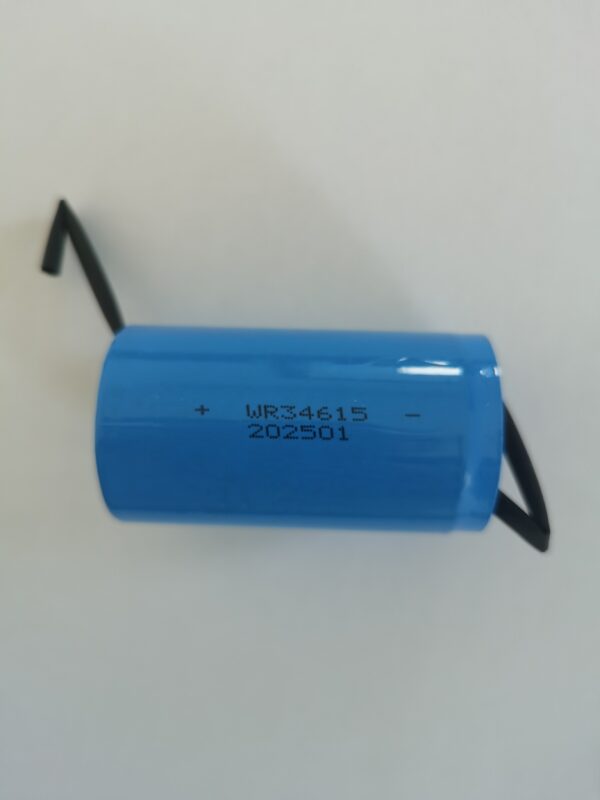
The Ultimate Guide to Railway Train Sensor Batteries: Li-SOCl₂ Anti-Vibration Solutions
In the demanding world of railway logistics and maintenance, monitoring systems are the eyes and ears of the fleet. Whether tracking temperature in refrigerated containers, measuring shock during transit, or ensuring the security of cargo doors, these sensors operate in an environment defined by constant vibration, extreme temperatures, and the need for absolute reliability. The Achilles’ heel of any sensor system is its power source. Standard batteries often fail prematurely due to mechanical stress or temperature fluctuations. This is where specialized Anti-Vibration Li-SOCl₂ (Lithium Thionyl Chloride) Cells become the definitive solution.
For engineers and procurement managers responsible for rail IoT (Internet of Things) devices, selecting the right chemistry and mechanical design is not just a technical choice; it is a financial decision impacting maintenance cycles and data integrity. This article delves into the technical specifications, design requirements, and application scenarios for primary batteries in railway train sensors.
Why Li-SOCl₂ Chemistry is the Standard for Rail Sensors
Railway sensors are often deployed in “set-and-forget” scenarios. They must operate for years without human intervention, often in unheated or refrigerated environments. Lithium Thionyl Chloride (Li-SOCl₂) batteries are the preferred choice for these applications due to their unique electrochemical properties.
1. Unmatched Energy Density
Rail sensors are frequently constrained by space, especially when retrofitting onto existing couplings, wheels, or within tight cargo locks. Li-SOCl₂ chemistry offers the highest energy density of any primary battery system available today. This allows for a compact physical footprint while storing enough energy to power wireless transmitters for 5, 10, or even 15 years.
2. Extreme Temperature Resilience
Rail transport crosses diverse climatic zones. Sensors must function reliably from the freezing winters of Northern China to the scorching summers of desert regions. Li-SOCl₂ cells operate effectively within a temperature range of -55°C to +85°C. Unlike aqueous electrolyte batteries (like alkaline), they do not freeze or leak under extreme cold, making them ideal for refrigerated rail cars.
3. Low Self-Discharge Rate
Rail sensors often enter “sleep mode” for extended periods, waking only to transmit data. Li-SOCl₂ batteries exhibit an incredibly low annual self-discharge rate (typically less than 1% per year). This ensures that the battery retains nearly all its capacity over long dormant periods, guaranteeing the sensor is operational when needed.
The Critical Challenge: Anti-Vibration Design
While the chemistry is vital, the mechanical construction is equally critical. Railway environments are subject to specific vibration standards (such as EN 50155 for railway applications) that dictate the durability of electronic equipment.
1. The Physics of Vibration
Trains generate continuous, high-frequency vibrations from wheel-rail interaction and low-frequency shocks from coupling impacts. Standard battery designs use crimped seals and internal springs. In a high-vibration environment, these springs can lose contact with the cell stack (a phenomenon known as “fretting”), causing intermittent power loss or complete failure.
2. Solid-State Construction
To combat this, Anti-Vibration Li-SOCl₂ Cells utilize a solid-state construction. Instead of relying on mechanical springs, these batteries use a “bobbin” or “lamellar” design where the electrodes are welded directly to the current collectors. This eliminates moving parts within the cell, ensuring a permanent electrical connection even under severe mechanical stress.
3. Hermetic Sealing
Rail sensors are exposed to dust, moisture, and corrosive agents. Anti-vibration cells feature a hermetic glass-to-metal seal (GTMS) or welded seal. This prevents electrolyte leakage and ingress of external contaminants, which is crucial for sensors mounted on the exterior of trains.
Application Scenarios in Rail Logistics
Understanding where and how these batteries are deployed helps in selecting the correct specifications.
1. Refrigerated Container Monitoring (Reefers)
Temperature monitoring inside refrigerated rail cars requires batteries that won’t freeze. Li-SOCl₂ cells power Bluetooth or LoRaWAN sensors that transmit temperature data hourly. Their ability to function at -40°C ensures that pharmaceuticals or perishable goods are tracked accurately without battery failure.
2. Cargo Security and Door Sensors
Sensors placed on railcar doors or locking mechanisms must detect tampering. These devices are often subjected to the harshest vibrations as they are mounted directly on the car body. An anti-vibration design ensures the sensor does not falsely report “door open” due to contact bounce caused by track vibrations.
3. Wheel Condition Monitoring
Advanced sensors attached to wheelsets monitor bearing temperature and vibration levels to predict failures. These are the most extreme environments, subject to massive centrifugal forces and shock loads. Only ruggedized, anti-vibration primary cells can survive this duty cycle.
Technical Specifications and Selection Guide
When specifying a battery for a railway train sensor project, engineers should consider the following parameters:
| Parameter | Typical Requirement | Notes |
|---|---|---|
| Nominal Voltage | 3.6V | Standard for Li-SOCl₂ chemistry. |
| Operating Temp | -55°C to +85°C | Suitable for global rail deployment. |
| Pulse Capability | > 500mA | Required for reliable RF transmission (LoRa, NB-IoT, etc.). |
| Vibration Resistance | > 20g | Must meet or exceed EN 50155 standards. |
| Shelf Life | 10-15 Years | Ensures long-term deployment without maintenance. |
Design Tip: Pay close attention to the “Voltage Delay” characteristic of Li-SOCl₂ cells. When a high pulse is drawn, there can be a brief voltage drop as the chemical reaction stabilizes. Sensors designed for these batteries often include a parallel capacitor to handle the initial pulse load.
Conclusion: Ensuring Reliability in Motion
In the railway industry, downtime is expensive, and safety is paramount. Choosing a standard consumer battery for a train sensor is a false economy. The Anti-Vibration Li-SOCl₂ Cell is engineered specifically to withstand the unique rigors of rail transport—offering the energy density for long life and the mechanical robustness for data integrity.
For technical inquiries regarding custom battery solutions for your rail sensor projects, our R&D team is available to discuss your specific requirements.
Contact Us Today
For further technical details or to request a sample, please visit our Product Center or reach out to our sales department directly at amy@cnsbattery.com. You can also submit your requirements via our Contact Us page.
