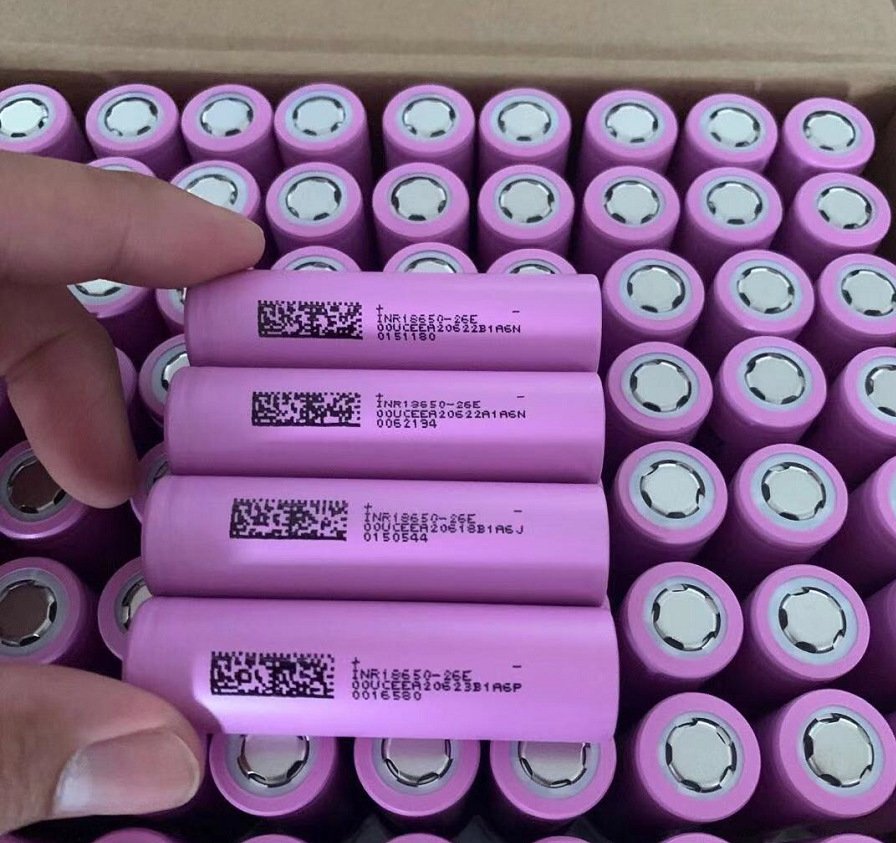
Fast Charging Without Heat: The Ultimate Guide to 18650 LFP Cells for Power Tools
The cordless power tool industry is undergoing a seismic shift. As manufacturers push for higher power outputs and “Prosumer” markets demand longer runtimes, the reliance on standard Lithium Nickel Manganese Cobalt Oxide (NMC) batteries is hitting a thermal wall. Thermal runaway and heat degradation are the silent killers of battery packs in high-drain applications.
For B2B procurement managers and R&D engineers, the transition to Lithium Iron Phosphate (LFP or LiFePO4) in the ubiquitous 18650 format is no longer optional—it is mandatory for safety and longevity. However, simply swapping chemistries introduces a new set of challenges.
This guide dissects the top 5 problems encountered when implementing fast-charging 18650 LFP cells in power tools and provides the technical solutions to ensure your product dominates the market.
Why LFP is the Future for Power Tools (But Not Without Hurdles)
LFP chemistry offers a distinct advantage: Thermal stability. With a decomposition temperature over 500°C (compared to 200°C for NMC), LFP cells do not catch fire easily. Furthermore, they offer a cycle life of over 2000 cycles, making them ideal for commercial-grade tools.
However, the 18650 form factor presents unique constraints. The small size limits the internal surface area for current collection, making heat dissipation during fast charging a significant engineering challenge. Unlike pouch or prismatic cells, the cylindrical steel can of an 18650 acts as a heat trap.
To navigate this, let’s examine the critical issues and their remedies.
Problem 1: Heat Buildup During High-Rate Charging
The Issue:
The primary complaint with fast charging is heat. When charging at rates above 1C (e.g., 3A for a 3Ah cell), internal resistance causes joule heating ($P = I^2R$). In a steel can, this heat cannot dissipate quickly, leading to temperatures exceeding 60°C. This heat degrades the Solid Electrolyte Interphase (SEI) layer, reducing cycle life.
The Solution: Thermal Engineering & Cell Chemistry
You cannot solve this with a Battery Management System (BMS) alone; the solution starts at the cell level.
- Low Internal Resistance: Select cells specifically engineered for low DCR (Direct Current Resistance). High-quality LFP 18650s should have a DCR below 25mΩ.
- Thermal Interface Materials (TIM): Do not rely on air gaps. Use thermally conductive adhesives or gap fillers between the cell can and the metal housing to act as a heat sink.
- Pulse Charging: Implement a pulse-charge algorithm in your BMS rather than constant current. This allows the cell to “cool down” between pulses.
Expert Note: Standard LFP cells often struggle with voltage plateaus, making state-of-charge (SOC) estimation difficult. Ensure your cells have a distinct voltage curve or utilize coulomb counting with high-precision shunts.
Problem 2: Mismatched Cell Pairing in Multi-Pack Arrays
The Issue:
Power tools require串联 (series) and 并联 (parallel) configurations (e.g., 4S2P). If cells are not perfectly matched, the “weakest” cell dictates the performance of the entire pack. During fast charging, mismatched cells can lead to overvoltage in one string while others are still charging, forcing the BMS to cut off prematurely.
The Solution: Strict Bin Grading
This is where sourcing from a Tier-1 manufacturer makes the difference.
- Voltage & Capacity Sorting: Cells must be sorted (graded) into narrow bins based on capacity (mAh) and open-circuit voltage (OCV). The deviation should be less than ±1%.
- Internal Resistance Matching: Beyond capacity, match cells by internal resistance. A resistance mismatch causes uneven current distribution, leading to localized hot spots.
Procuring pre-sorted cells from a reputable battery manufacturer in China ensures that the cells entering your assembly line are already optimized for high-drain applications.
Problem 3: Low-Temperature Charging Failures
The Issue:
LFP chemistry is notorious for poor performance in cold environments. Attempting to fast charge below 0°C causes lithium plating on the anode. This is not just inefficient; it is destructive. Lithium plating is irreversible and creates internal short circuits, leading to rapid capacity fade and potential safety hazards.
The Solution: Active Pre-Conditioning
- Pre-Heating Circuits: Your BMS must include a pre-heat function. Before allowing fast charging, the system should apply a low current (trickle charge) to warm the cells to at least 5°C.
- Temperature Sensors: Embed NTC thermistors directly onto the cell casings, not just in the air gaps, to get accurate core temperature readings.
Problem 4: The “Voltage Plateau” Dilemma
The Issue:
Unlike NMC cells, which have a steep voltage curve, LFP cells have a very flat discharge and charge curve (around 3.2V to 3.3V). This makes it extremely difficult for a standard BMS to determine the State of Charge (SOC) accurately based on voltage alone. An inaccurate SOC leads to either premature shutdown (wasting runtime) or deep discharge (killing the cells).
The Solution: Advanced BMS Algorithms
- Coulomb Counting + AI: Rely on high-precision current sensors (shunts) to measure every electron going in and out (Coulomb counting).
- Dynamic Calibration: Implement algorithms that perform periodic “full discharge/charge” cycles to recalibrate the SOC baseline automatically.
Problem 5: Sourcing “Fake” or Substandard Cells
The Issue:
The market is flooded with counterfeit 18650 cells. These are often recycled laptop cells repackaged as high-drain batteries. They lack the necessary safety margins and chemical stability required for power tools. Under fast charging, these cells swell, vent, or even explode.
The Solution: Direct Sourcing & Testing
- Direct from Factory: Eliminate middlemen. Work directly with manufacturers who operate under ISO 9001 and IATF 16949 standards.
- Third-Party Audits: Request test reports for cycle life, crush tests, and overcharge tests.
The CNS BATTERY Advantage: Engineered for Power
At CNS BATTERY, we understand that power tool applications require more than just energy storage; they require power delivery.
Our INR 18650-3000 and INR 18650-3200 series are specifically engineered for high-drain environments. We utilize a proprietary cathode formulation that reduces internal resistance while maintaining the thermal safety of LFP chemistry.
Why Global OEMs Choose CNS:
- Automated Production: Our fully automated production lines ensure zero human error in cell assembly, guaranteeing consistent quality.
- High Discharge Efficiency: Capable of continuous discharge currents up to 20A, our cells are built to handle the stress of fast charging.
- Customization: We don’t just sell cells; we provide solutions. Whether you need specific tabbing configurations or custom voltage profiles, we adapt to your tool design.
“We provide comprehensive cylindrical battery cells and customizable solutions for the world.”
If you are facing thermal management issues or need to source reliable 18650 LFP cells for your next generation of cordless tools, our R&D team is ready to assist.
Ready to solve your power tool battery challenges?
Explore our full range of Cylindrical Battery Cells engineered for performance and safety.
Explore Our Cylindrical Battery Solutions
For specific inquiries regarding custom specifications or bulk procurement, contact our sales team directly.
Contact Our Technical Sales Team
Copyright © 1998-2026 HENAN CNS ENERGY TECHNOLOGY CO., LTD. ALL RIGHTS RESERVED