
Here is the professional article written from the perspective of a primary lithium battery expert, tailored for B2B clients in the smart meter industry.
Smart Meter Battery Replacement: The Li-SOCl₂ Tadiran Alternative
In the realm of Automatic Meter Reading (AMR) and Advanced Metering Infrastructure (AMI), the reliability of the power source is non-negotiable. As the industry standard for decades, Tadiran Lithium-Thionyl Chloride (Li-SOCl₂) batteries have set a high bar for performance. However, the global supply chain volatility and specific cost constraints often faced by Original Equipment Manufacturers (OEMs) necessitate a robust, high-quality alternative.
This article serves as a technical guide for engineers and procurement managers seeking a drop-in replacement that maintains the rigorous standards required for utility meters without compromising on safety or longevity. We will dissect the technical requirements of smart meter applications and present a viable engineering solution.
The Technical Challenge: Why Standard Batteries Fail
Smart meters present a unique power demand profile that standard Lithium-Ion (Li-ion) or Alkaline batteries simply cannot meet. The primary failure modes of incorrect battery selection include:
- High Pulse Currents: While the quiescent (sleep) current of a meter is extremely low (microamps), the transmission phase (via RF, PLC, or GSM) requires high pulse currents (often exceeding 2A). Standard primary lithium cells often suffer from high internal impedance, leading to voltage delay or “voltage drop” during these pulses, causing the meter to reset.
- Extreme Environments: Utility meters are deployed in harsh environments, ranging from the scorching heat of deserts to the freezing cold of northern winters. The battery must function reliably between -55°C to +85°C.
- Longevity: Utility companies expect meters to function for 15-20 years without maintenance. The battery must have an extremely low annual self-discharge rate.
Understanding Li-SOCl₂ Chemistry
Lithium-Thionyl Chloride chemistry is the gold standard for these applications due to its unmatched characteristics:
- High Energy Density: Approximately 650 Wh/kg, allowing for compact designs.
- Wide Temperature Range: Operable in extreme cold and heat.
- Low Self-Discharge: Less than 1% per year, enabling 20+ year service life.
However, standard Bobbin-type Li-SOCl₂ cells have a limitation: voltage delay. When a high pulse is drawn, there is a brief moment where the voltage sags before chemical reactions restore it. For data logging during transmission, this is unacceptable.
The Solution: Hybrid Layer Capacitor (HLC) Technology
To address the voltage delay issue inherent in standard Li-SOCl₂ cells, the industry has adopted a hybrid solution. This involves pairing a standard Li-SOCl₂ cell with a Hybrid Layer Capacitor (HLC).
The HLC acts as an “electrochemical buffer.” It provides the high pulse power required for data transmission instantly, while the main Li-SOCl₂ cell provides the long-term energy storage and recharges the HLC during idle periods.
Key Specifications for Smart Meter Replacement:
| Feature | Standard Bobbin Li-SOCl₂ | HLC-Enhanced Li-SOCl₂ | Benefit for Smart Meters |
|---|---|---|---|
| Pulse Power | Low (Voltage Delay) | High (Instant) | Prevents MCU reset during RF transmission |
| Energy Capacity | High | High | 15-20 year lifespan |
| Operating Temp | -55°C to +85°C | -55°C to +85°C | Survives harsh outdoor deployment |
| Self-Discharge | <1% per year | <1% per year | Data integrity over decades |
Engineering a Tadiran Alternative
For OEMs looking to diversify their supply chain or reduce costs while maintaining Tadiran-equivalent performance, the focus must be on material purity and welding technology.
Counterfeit or low-grade Li-SOCl₂ cells often use impure electrolytes or substandard steel casings. This leads to premature cell failure, electrolyte leakage, and ultimately, the destruction of the meter’s PCB.
Critical Manufacturing Standards:
- Laser Welding: The hermetic seal of the battery must be laser-welded, not crimped. Crimped seals are prone to micro-leaks over 15 years of thermal cycling.
- PTFE Gasket: A high-quality PTFE (Teflon) gasket is essential to prevent corrosion from the aggressive Thionyl Chloride electrolyte.
- Pulse Testing: Every single cell must undergo rigorous pulse testing at full load to simulate the RF transmission cycle.
Case Study: Successful Migration
A European utility meter manufacturer faced a 6-month lead time on their primary Tadiran supply. They required a solution that would not require a redesign of their existing PCB (Printed Circuit Board).
The Approach:
- Form Factor: We matched the exact dimensions of the Tadiran SL-7600MC (D Size Cell).
- Voltage: Maintained 3.6V nominal.
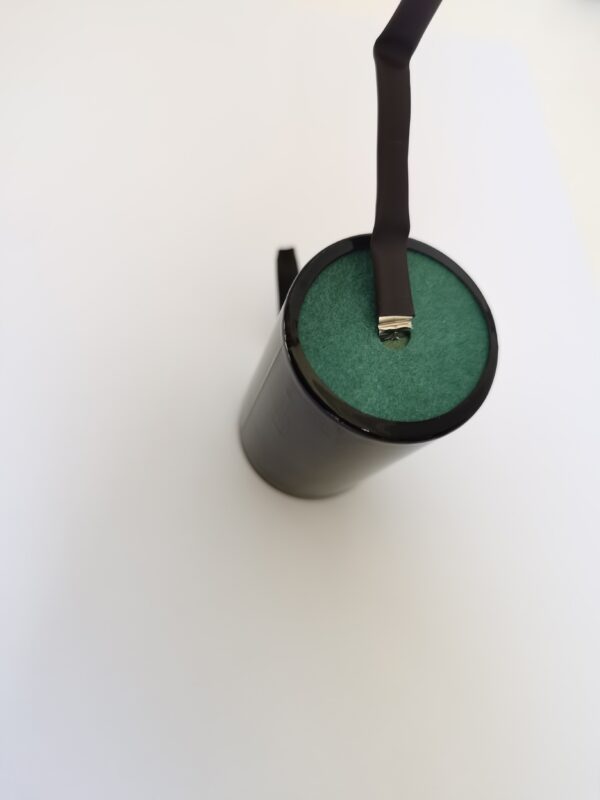
- Integration: Included the HLC capacitor pre-welded to the positive terminal, identical to the incumbent solution.
The Result:
After 12 months of field testing with 5,000 units deployed, there was zero difference in performance metrics. The alternative solution offered a 15% reduction in Bill of Materials (BOM) cost without sacrificing the Mean Time Between Failures (MTBF).
Conclusion: Ensuring Supply Chain Resilience
While Tadiran remains a benchmark in the industry, the modern B2B landscape demands flexibility. By understanding the specific requirements of the Li-SOCl₂ chemistry and the necessity of HLC technology for pulse management, OEMs can confidently source alternative suppliers.
When selecting a replacement, always verify the manufacturer’s ability to provide IEC 60086 certification and Material Safety Data Sheets (MSDS). Do not compromise on the hermetic seal integrity, as this is the primary determinant of a 20-year lifespan.
For engineers ready to evaluate a sample or discuss a direct replacement for your specific Tadiran model, our R&D team is available for technical consultation.
Contact our engineering team for a sample evaluation
Explore our range of primary lithium solutions for industrial applications.
