Here is the SEO-optimized article tailored for a technical engineering audience, focusing on the High Rate Discharge 21700 NCM cell.
High Rate Discharge 21700 NCM – 50A Peak Tested: The Engineering Benchmark
In the rapidly evolving landscape of portable power, the transition from the legacy 18650 format to the 21700 standard is no longer a trend but a necessity. For engineers and technical procurement managers working on high-drain applications—from industrial power tools to next-generation energy storage systems—the demand for a cell that balances volumetric efficiency with extreme current delivery is paramount.
This article serves as a technical deep dive into the High Rate Discharge 21700 NCM cell, specifically analyzing the engineering behind achieving a 50A Peak discharge rating. We will dissect the material science, thermal management strategies, and rigorous testing protocols that define this performance tier, using industry benchmarks to illustrate why this specification is critical for modern hardware design.
Understanding the 21700 NCM Advantage
Before analyzing the 50A peak specification, it is essential to understand the foundational advantages of the Nickel Cobalt Manganese (NCM) chemistry in the 21700 form factor.
The 21700 cell, measuring 21mm in diameter and 70mm in length, offers a significant increase in electrode volume compared to the 18650. However, simply scaling up the size does not guarantee high-rate performance. The NCM formulation allows manufacturers to tune the cathode ratio (e.g., NCM 523, 622, or 811) to prioritize either energy density or power density.
For high-rate applications, a balanced NCM ratio is utilized to ensure structural stability during rapid lithium-ion de-intercalation. The larger size of the 21700 also provides a better surface-area-to-volume ratio for heat dissipation, a critical factor when pushing cells to their 50A limits.
Decoding the 50A Peak Specification
When a datasheet lists a “50A Peak,” it is not merely a suggestion; it is the result of specific engineering tolerances. For a standard 21700 NCM cell to safely achieve this, several internal modifications are mandatory:
- Reduced Internal Impedance: High-rate cells utilize specialized conductive additives and optimized electrode porosity to minimize resistance. This reduction in ohmic loss is what allows the cell to deliver high current without instantly voltage sagging below the cutoff threshold.
- Thermal Stability: At 50A, even a small internal resistance generates significant heat ($P = I^2R$). The cell must utilize a robust electrolyte formulation that remains stable at elevated temperatures.
- Mechanical Integrity: The winding tension and canister strength must withstand the physical expansion and gas generation that can occur during extreme discharge cycles.
Rigorous Testing Methodology: Validating the 50A Claim
Spec sheets are easy to print; validation is difficult to fake. As a technical expert, I always advise scrutinizing the testing methodology. A genuine 50A Peak rating should be tested under the following conditions:
- Pulse vs. Continuous: A 50A peak is typically defined as a short-duration pulse (e.g., 10 seconds) rather than a continuous load. This simulates real-world applications like power tool torque bursts.
- Temperature Monitoring: The test must monitor the cell surface temperature. A reputable high-rate cell should not exceed 60°C-65°C during a standard 50A pulse test.
- Voltage Recovery: Post-pulse, the cell voltage should recover quickly, indicating minimal polarization and no permanent damage to the electrode structure.

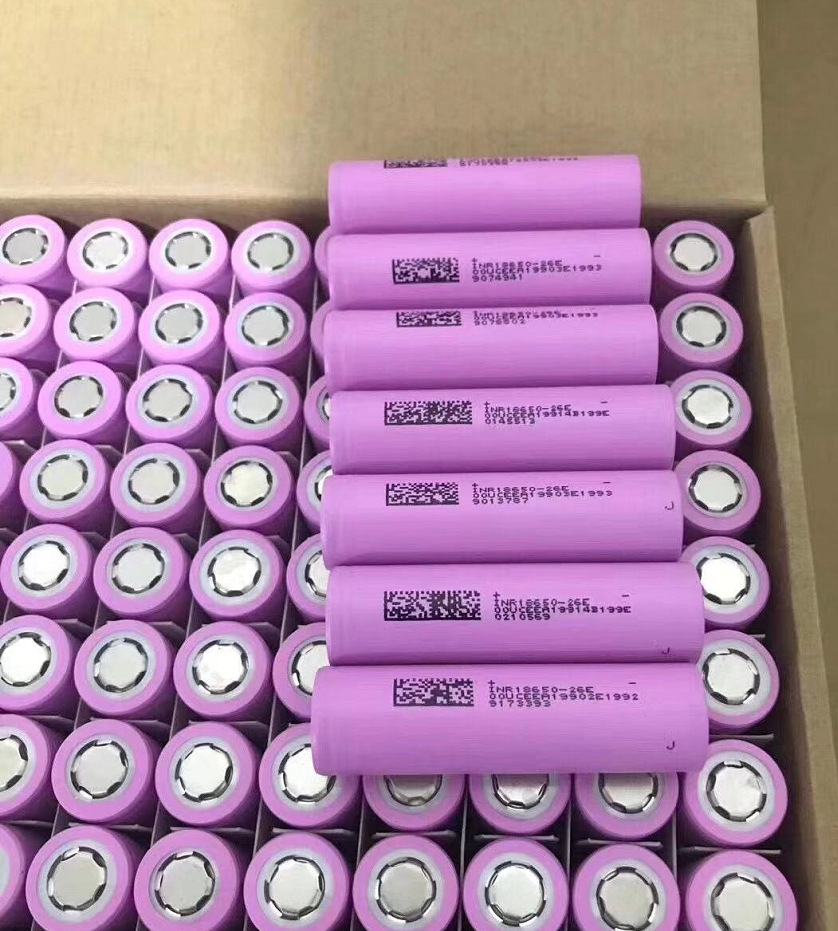
High-rate 21700 cylindrical cells designed for industrial applications.
Application-Specific Engineering & Geo-Compliance
Designing a battery pack around a High Rate Discharge 21700 NCM cell requires more than just soldering wires. For engineers in the EU and North America, compliance with regional safety standards is non-negotiable.
- Thermal Runaway Propagation (TRP) Design: When stacking multiple 21700 cells in a module, the spacing and隔热 materials must account for the higher energy density of the NCM chemistry. Proper TRP design prevents a single cell failure from cascading through the entire pack.
- UL/CE Certification: Any commercial product utilizing these cells must pass rigorous third-party safety testing. The cell manufacturer must provide comprehensive safety data sheets (SDS) and transport documentation.
Why Partner with a Specialized Manufacturer?
Selecting a High Rate Discharge 21700 NCM cell is a critical decision point in the design cycle. Generic cells often fail under sustained stress, leading to field failures and warranty claims. A specialized manufacturer provides the necessary datasheets, safety certifications, and application engineering support to de-risk your project.
If you are currently engineering a solution that requires the robust power delivery of a 50A peak-rated cell, or if you need a custom configuration to meet specific voltage or capacity requirements, it is time to consult with a specialist.
For technical inquiries, certification details, or to request a sample of our high-rate 21700 series for your R&D team, please visit our Contact Us page. Our engineering team is ready to assist global clients with the precise specifications needed to bring high-performance hardware to market.
To explore our full range of cylindrical solutions, including the High Rate Discharge 21700 NCM, visit our Product Center. As a leading Battery Manufacturer in China, we combine advanced material science with rigorous quality control to deliver cells that meet the exacting standards of international markets.