

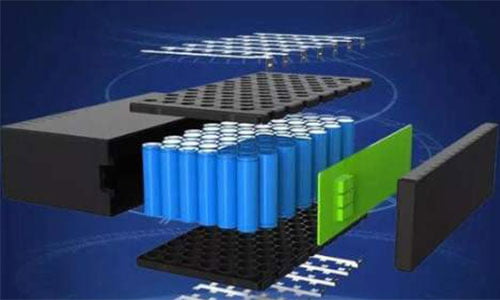
Cost Optimized Cylindrical Battery | CNS BATTERY
In the competitive landscape of energy storage and power solutions, the demand for Cost Optimized Cylindrical Batteries has never been higher. As global markets shift toward sustainable energy, manufacturers and procurement managers face the dual challenge of maintaining high performance while adhering to strict budget constraints. At CNS BATTERY, we understand that “cost-optimized” does not mean “low quality.” It means engineering efficiency, standardized production, and material science that delivers maximum value.
This guide explores how our cylindrical battery cells—specifically the 18650, 21700, and 32700 series—are designed to be the most economical choice without compromising on the technical parameters that matter to industrial applications. Whether you are designing a new line of power tools or scaling an energy storage system (ESS), choosing the right cell is the first step in supply chain optimization.
Understanding Cost Optimization in Battery Design
To truly optimize cost, we must look beyond the sticker price per unit. The total cost of ownership (TCO) for a battery includes the initial purchase price, cycle life, maintenance, and replacement frequency. A cheap battery that fails in 200 cycles is more expensive in the long run than a slightly pricier battery that lasts 1,000 cycles.
At CNS, our Cost Optimized Cylindrical Batteries achieve their economic advantage through three core engineering strategies:
- Standardized Form Factors: By utilizing the industry-standard 18650, 21700, and 32700 sizes, we leverage the massive global supply chain for manufacturing equipment and raw materials. This standardization reduces R&D overhead for custom tooling.
- Automated Production: Our facilities utilize fully automated production lines. Automation minimizes human error, reduces labor costs, and ensures consistent quality, which in turn reduces scrap rates and warranty claims.
- Material Selection: We utilize chemistries like Lithium Iron Phosphate (LFP) and optimized Nickel Manganese Cobalt (NMC) blends. These materials offer a balance of energy density and cost, avoiding the expensive raw materials (like high-cobalt formulations) unless absolutely necessary for the application.
Technical Note: The “18650” designation refers to the physical dimensions: 18mm in diameter and 65mm in length. Standardization allows for easy replacement and scalability in battery pack design.
The CNS Cylindrical Battery Portfolio
Our product line is segmented to address specific cost-performance ratios. We do not believe in a “one-size-fits-all” approach; instead, we offer a tiered solution set.
1. The Workhorse: CNS 18650 Series
For applications where space is not the primary constraint but budget is critical, the 18650 series remains the gold standard. These cells are perfect for entry-level consumer electronics, basic E-bikes, and low-cost backup power supplies.
- Key Models: Ranging from the IMR18650-1200 (1.2Ah) to the high-capacity INR18650-3800 (3.8Ah).
- Cost Benefit: Decades of manufacturing refinement have driven the price of these cells to their absolute minimum. They are easy to integrate into Battery Management Systems (BMS) due to their predictable discharge curves.
2. The Efficiency Upgrade: CNS 21700 Series
If you are looking to reduce the Bill of Materials (BOM) cost of your battery pack, the 21700 series is the answer. By increasing the size slightly, we achieve a much higher energy density.
- Key Advantage: Fewer cells are needed to achieve the same pack capacity. This means fewer BMS components, fewer welding points, and less structural housing material.
- Key Models: INR21700-4000 to INR21700-6000.
- Real-World Impact: In a power tool application, switching from 18650 to 21700 can reduce the cell count by 30%, significantly lowering assembly time and complexity.
3. The High-Density Solution: CNS 32700 Series
For stationary storage or heavy-duty industrial use, the 32700 series offers the lowest cost per kilowatt-hour (kWh).
- Key Specifications: A single IFR32700-6000 cell can deliver 6.0Ah. This massive capacity reduces the number of interconnections required in a large-scale ESS.
- Thermal Management: These cells are designed with thicker electrodes, which generate less heat during high-load discharge, reducing the need for expensive active cooling systems in your final design.
Technical Parameters: What You Need to Know
When evaluating a Cost Optimized Cylindrical Battery, it is essential to look at the data sheets. Here is a comparative breakdown of the specifications that impact your bottom line.
| Feature | Impact on Cost & Performance | CNS Engineering Approach |
|---|---|---|
| Energy Density | Higher density means smaller packs for the same power, saving on shipping and housing. | We utilize high-nickel NMC for 21700 and LFP for 32700 to maximize Wh/kg. |
| Cycle Life | Directly correlates to replacement costs. | Our standard cells are rated for 500-800 cycles (80% capacity retention), with LFP options exceeding 2000 cycles. |
| Discharge Rate | High discharge (power) cells require more expensive materials. | We offer distinct “Energy” (high capacity) and “Power” (high discharge) variants so you don’t pay for performance you don’t need. |
| Safety | Failures are the ultimate cost. | All cells undergo 100% automated testing for voltage, internal resistance, and leakage. |
Case Study: Optimizing a Power Tool Supply Chain
Let us look at a practical example of how a procurement manager might apply this knowledge.
The Scenario: A manufacturer of cordless drills is facing price pressure from competitors. Their current model uses a 5.0Ah pack made from twenty 18650 cells (2000mAh each).
The Challenge: Reduce the BOM cost by 10% without reducing runtime.
The CNS Solution:
Instead of redesigning the entire tool, the manager contacts CNS. Our engineers suggest switching to the CNS 21700-5000 cell.
- Old Design: 20 x 18650 cells = 20 welding points, 20 protection circuits, large plastic housing.
- New Design: 10 x 21700 cells = 10 welding points, 10 protection circuits, smaller housing.
The Result: By halving the cell count, the manufacturer reduced the number of BMS components, saved on labor costs during assembly, and used less plastic for the casing. Even though the 21700 cell has a slightly higher unit price, the overall pack cost dropped by 12%, exceeding the target.
Compliance and Quality Assurance
For B2B buyers, compliance is non-negotiable. A failure to meet international standards can result in massive fines and brand damage. CNS BATTERY ensures that all our Cost Optimized Cylindrical Batteries meet the following certifications:
- UN38.3: Essential for the safe transport of lithium batteries by air or sea.
- RoHS & REACH: Compliance with European environmental and chemical safety regulations.
- IEC 62133: The international standard for secondary cells and batteries containing alkaline or other non-acid electrolytes.
Our Quality Management System is ISO 9001 certified. We do not cut corners on safety testing. Every batch is subjected to overcharge, short-circuit, and nail penetration tests to ensure “Ultra-Safe” operation, a core tenet of our R&D philosophy.
How to Procure Your Optimized Solution
Selecting the right battery is a technical decision that requires partnership. If you are ready to explore how CNS BATTERY can help you reduce costs while maintaining performance, the process is straightforward.
- Identify Your Need: Determine if you need high power (for tools) or high energy (for storage).
- Review the Portfolio: Visit our Cylindrical Battery Cell page to see the full technical specifications.
- Request a Quote: Whether you need a standard model or a custom modification (OEM), our sales engineers are ready to assist.
As a leading Battery Manufacturer in China, we pride ourselves on transparency and speed. You can contact our global sales team directly via email at amy@cnsbattery.com or through our Contact Us page. We aim to respond to all inquiries within 24 hours during business days.
Pro Tip: When requesting a quote, specify your annual volume. We offer tiered pricing, and understanding your scale allows us to offer the most competitive Cost Optimized Cylindrical Battery solution for your specific volume.


