

Low Temperature Discharge Battery For Mining: Technical Deep Dive
For engineers and procurement specialists in the mining industry, the battery is not just an energy source—it is a lifeline. When operations move underground or into sub-arctic regions, standard lithium-ion chemistries fail. This article explores the engineering behind Low Temperature Discharge Batteries, specifically analyzing their application in mining. We will dissect the technical parameters, testing protocols, and the specific geographical compliance required for global deployment.
The Core Challenge: Physics vs. Chemistry
In mining environments, especially deep-earth or high-latitude extraction, temperatures can plummet. Standard Lithium Iron Phosphate (LiFePO4) or traditional Lead-Acid batteries suffer from “lithium plating” when charged below freezing, leading to catastrophic thermal runaway or rapid capacity fade.
The Low Temperature Discharge Battery solves this through electrolyte engineering. By utilizing a low-freezing-point organic solvent system and specific additive agents, the ionic conductivity of the electrolyte is maintained even at extreme lows. For mining applications, this translates to maintaining 85%+ discharge efficiency at -30°C (-22°F), a threshold where most industrial batteries would be non-functional.
Technical Parameter Breakdown
When sourcing batteries for mining equipment, specific metrics determine operational safety and longevity.
1. Discharge Curve Stability
Unlike consumer electronics, mining tools require a flat voltage curve under heavy load. A true Low Temperature Discharge Battery will utilize a ternary (NCM) or specialized Lithium Titanate (LTO) chemistry to prevent voltage sag.
- Key Metric: Discharge Cut-off Voltage must remain stable above 2.5V per cell at -30°C under 0.5C load.
2. Cycle Life in Thermal Stress
Mining operations run 24/7. The battery must withstand thermal cycling. Standard cells might achieve 2000 cycles, but a ruggedized Low Temperature Discharge Battery is engineered for 1000+ cycles even with daily deep discharges in sub-zero conditions.
3. Safety Architecture
Given the volatile gases often present in mines, the Battery Management System (BMS) is non-negotiable. It must include:
- Anti-Static Protection: To prevent sparks in dusty environments.
- Over-Discharge Lockout: To preserve the minimum voltage required for chemical stability.
Testing Methodology: Beyond the Datasheet
As a technical expert, I advise verifying performance through specific test protocols, not just trusting manufacturer claims.
The “Freeze & Load” Test
To validate a Low Temperature Discharge Battery, engineers should subject it to:
- Soak Phase: Store the cell at -40°C for 4 hours to ensure the core temperature matches the ambient.
- Discharge Phase: Apply a continuous 1C discharge rate while monitoring voltage and surface temperature.
- Acceptance Criteria: The voltage should not drop below the cut-off threshold abruptly, and there should be no physical deformation.
Internal Resistance (IR) Check
High internal resistance generates heat, which is good for warming the cell but bad for efficiency. A premium Low Temperature Discharge Battery will have an IR value optimized to balance heat generation (for self-warming) without sacrificing runtime.
Geographical Compliance and Standards
Deploying a Low Temperature Discharge Battery in mining requires adherence to regional safety directives. Whether you are operating in the Canadian Arctic, the Siberian tundra, or the deep mines of Australia, the battery must pass specific regional certifications.
| Region | Key Standard | Relevance to Mining Batteries |
|---|---|---|
| European Union | UN GTR No. 20 / ECE R100 | Mandatory for electric vehicle propulsion systems, covering thermal runaway and crash resistance. |
| United States | UL 1642 / UL 2580 | Focuses on the safety of lithium cells and batteries used in electric vehicles and industrial equipment. |
| Global | IEC 62619 | The benchmark for industrial secondary lithium-ion cells, specifically regarding safety requirements for industrial applications. |
CNS BATTERY: Technical Barrier and Regional Adaptation
At CNS BATTERY, we understand that mining is a global industry with zero tolerance for failure. Our Low Temperature Discharge Battery solutions are engineered with a specific technical barrier to entry: Geographical Adaptive Chemistry.
We do not use a one-size-fits-all formula. For our clients in mining, we adjust the electrolyte ratio based on the specific latitude and depth of the operation. This ensures that whether the battery is deployed in a surface mine in Northern Canada or an underground shaft in Sweden, the chemical kinetics are perfectly tuned.
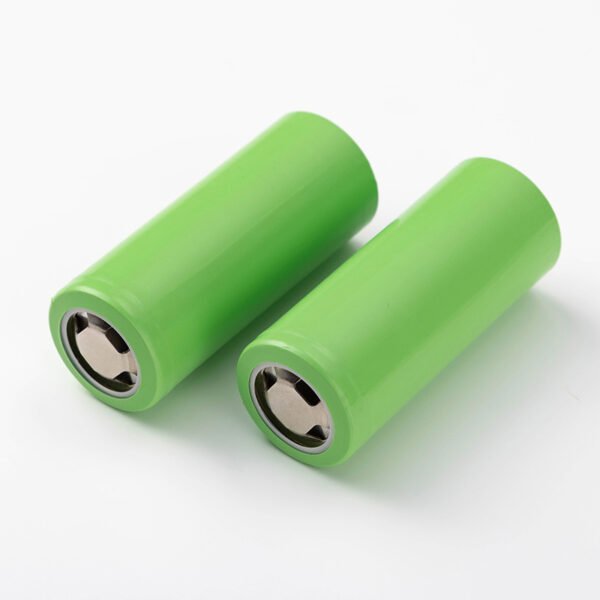
Our manufacturing facility in Zhengzhou, China, operates under strict ISO 9001 and IATF 16949 standards, ensuring that every cylindrical cell meets the rigorous demands of heavy industry. We have successfully navigated the compliance landscape for both the EU and North American markets, providing our partners with a seamless supply chain for their extreme environment needs.
Ready to Engineer a Solution?
If your mining operation is struggling with battery downtime due to cold weather, it is time to move beyond standard off-the-shelf solutions.
Explore our range of high-performance cylindrical battery cells, specifically designed for rugged environments, or contact our technical team for a customized consultation.
- Explore our Cylindrical Battery Technology: Cylindrical Battery Cell
- Contact our Technical Experts: Contact Information
- Learn more about our Manufacturing Capabilities: Battery Manufacturer in China


