

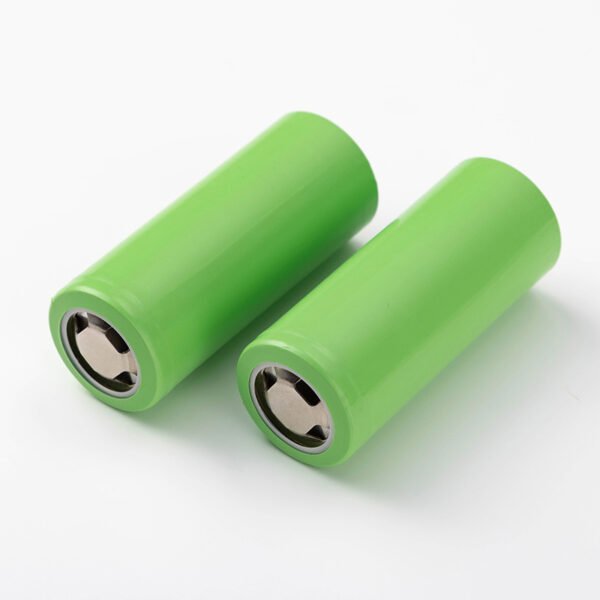
18650 LFP Cylindrical Battery for EV – High Reliability Solve Today
In the rapidly evolving landscape of electric mobility, the demand for batteries that offer uncompromised safety, longevity, and cost-efficiency has never been higher. While the industry often chases the latest high-nickel chemistries for maximum range, a paradigm shift is occurring. More electric vehicle (EV) manufacturers are returning to the roots of cylindrical technology, specifically utilizing 18650 LFP (Lithium Iron Phosphate) cells.
As a professional blogger in the lithium battery sector, I have witnessed the transition from early consumer electronics applications to the rigorous requirements of modern transportation. The question for B2B stakeholders today isn’t just about energy density; it is about Total Cost of Ownership (TCO) and safety compliance. This article delves into why the 18650 LFP Cylindrical Battery is the high-reliability solution for today’s EV market, blending technical analysis with practical industry insights.
The Resurgence of LFP in Cylindrical Form
For years, the narrative suggested that LFP technology was outdated due to its lower energy density compared to NMC (Nickel Manganese Cobalt) batteries. However, recent advancements in cell engineering and the inherent stability of the Lithium Iron Phosphate chemistry have reversed this trend. For commercial EVs, logistics fleets, and entry-level passenger vehicles, LFP offers a compelling value proposition.
Unlike pouch or prismatic cells, the 18650 cylindrical format provides superior mechanical stability and thermal management. The small form factor of the 18650 cell (18mm diameter, 65mm height) allows for efficient heat dissipation, a critical factor in preventing thermal runaway—a major concern in high-power applications.
Technical Advantages of 18650 LFP
To understand why this specific cell format is gaining traction, let’s break down the core technical advantages:
- Intrinsic Safety: The P-O bond in the LFP cathode is much stronger than the M-O bond in metal oxides. This means that even under extreme conditions (overcharging, short-circuiting, or physical puncture), LFP cells do not release oxygen, significantly reducing the risk of fire or explosion.
- Cycle Life: Where traditional NMC cells might offer 1,000 to 2,000 cycles, high-quality 18650 LFP cells can achieve over 3,000 to 5,000 cycles while retaining 80% of their capacity. This longevity directly translates to fewer battery replacements and lower maintenance costs for fleet operators.
- Cost-Effectiveness: By eliminating expensive and scarce metals like Cobalt and Nickel, LFP chemistry reduces the raw material cost of the battery pack by approximately 20-30%. Combined with the mature, high-yield manufacturing process of the 18650 format, this results in a significantly lower price per kWh.
Addressing the “Energy Density” Myth
A common critique of LFP technology is its lower volumetric energy density. However, for many B2B applications, this is a non-issue. Consider the use case of Logistics Electric Vehicles (LEV) or Golf Carts. These vehicles have predictable routes, fixed charging schedules, and ample space for battery installation.
In these scenarios, the robustness of the 18650 LFP cell outweighs the need for extreme compactness. Furthermore, the cylindrical design allows for flexible module design. Engineers can arrange 18650 cells in honeycomb patterns to maximize space utilization, mitigating the volumetric disadvantage.
Why Choose a China-Based Battery Manufacturer?
When sourcing 18650 LFP cells for EV applications, partnering with a specialized manufacturer in China offers distinct advantages. China dominates the global supply chain for Lithium Iron Phosphate, controlling the majority of the raw material processing and cell production equipment manufacturing.
Partnering with a Battery Manufacturer in China provides access to:
- Vertical Integration: From raw material refinement to final pack assembly, Chinese manufacturers often control the entire supply chain, ensuring material purity and traceability.
- Advanced Automation: The scale of the Chinese EV and energy storage market has driven the development of highly automated production lines, ensuring consistency and reducing human error.
- Regulatory Compliance: Leading Chinese manufacturers adhere to international standards such as UN38.3, IEC62133, and MSDS, ensuring that products meet the legal requirements for import into Europe, North America, and Australia.
CNS BATTERY: Engineering High-Reliability Solutions
In a market flooded with generic suppliers, CNS BATTERY stands out as a manufacturer dedicated to high-reliability solutions. With nearly three decades of experience (since 1998), CNS has evolved from a consumer battery producer to a specialized provider of cylindrical cells for industrial and automotive applications.
Key Product Features
CNS offers a comprehensive range of 18650 LFP cells designed specifically for the rigors of EV use. Their product line emphasizes the “High Reliability” aspect mentioned in our title, focusing on three pillars: Power, Energy, and Longevity.
The following table highlights the core specifications of CNS’s 18650 LFP series, demonstrating their suitability for various EV segments.
| Model | Capacity (Ah) | Nominal Voltage | Max. Discharge Current | Primary Application |
|---|---|---|---|---|
| INR18650-2000 | 2.0 Ah | 3.7 V | 20C | Power Tools, High-power UPS |
| INR18650-2600 | 2.6 Ah | 3.7 V | 3C | Household Appliances, 3C Devices |
| INR18650-3000 | 3.0 Ah | 3.7 V | 20A | Power Tools, Garden Tools |
| INR18650-3300 | 3.3 Ah | 3.6 V | 9.9A | E-bikes, Smart Home, Energy Storage |
The CNS Advantage for EV Manufacturers
- Automated Production Lines: CNS utilizes fully automated production equipment to manufacture their cylindrical cells. This automation ensures that every cell meets strict dimensional tolerances, which is critical when assembling hundreds of cells into a battery pack. Variance in cell size can lead to structural stress and failure points in a pack.
- Ultra-Safe Chemistry: Leveraging the inherent stability of LFP, CNS batteries are engineered to operate safely in extreme temperatures. Whether facing the scorching heat of a desert climate or the freezing cold of a northern winter, these cells maintain structural integrity.
- Customization Capabilities: Recognizing that no two EV designs are the same, CNS offers OEM/ODM services. Whether you need a specific discharge curve for a high-performance scooter or a compact energy solution for a portable medical EV device, they provide customized cylindrical battery solutions.
Solving Today’s EV Challenges
The “High Reliability Solve Today” isn’t just a marketing slogan; it is a response to the current market volatility. Raw material prices fluctuate, and safety regulations tighten annually. By adopting 18650 LFP technology from a proven manufacturer like CNS, EV companies can de-risk their supply chain.
If you are looking to source high-quality Cylindrical Battery Cells for your next project, or if you need to consult with an expert about transitioning to LFP chemistry, reaching out to the right partner is the first step.
Expert Tip: When evaluating suppliers, always request third-party test reports on cycle life and thermal stability. Don’t just take the datasheet at face value—ask for samples to test in your specific application environment.
Connect with a Specialist
For B2B inquiries, technical consultations, or to request a sample of our 18650 LFP cells, please contact our sales team directly. We are equipped to handle global distribution and provide the technical support necessary to integrate our cells into your EV design seamlessly.
- Product Range: Explore our full selection of Cylindrical Battery Cells.
- Manufacturer Details: Learn more about our capabilities as a leading Battery Manufacturer in China.
- Contact Us: Get in touch with our experts today at amy@cnsbattery.com or via WhatsApp at +86 166 6811 2039. You can also visit our Contact Page for more information.
By choosing the right 18650 LFP technology partner, you are not just buying cells; you are securing the future reliability of your electric vehicle.


