Optimizing BOM Costs: Tiered Pricing Strategies for Industrial Cylindrical Lithium Batteries
In the competitive landscape of industrial electronics and energy storage, the bill of materials (BOM) cost directly impacts a product’s market viability. For engineers and procurement managers sourcing power solutions, the quest is not merely for the cheapest component, but for the optimal balance of Total Cost of Ownership (TCO) and performance. CNS Battery addresses this challenge head-on with a sophisticated tiered pricing strategy for our cylindrical lithium-ion cells.
Unlike consumer-grade retail models, our B2B approach segments pricing based on technical specifications, volume requirements, and customization complexity. This ensures that an OEM developing a high-drain power tool accesses different cost structures and performance tiers than a manufacturer producing low-cost consumer toys. By understanding these tiers, you can select the precise cell chemistry and form factor that aligns with your project’s financial and functional goals.
The Technical Foundation: Decoding Cylindrical Cell Chemistries
Before diving into pricing structures, it is essential to understand the chemical architectures that define our product tiers. The performance and cost of a cylindrical cell are primarily determined by its cathode chemistry. At CNS Battery, we engineer cells across three primary chemical families, each serving distinct market segments:
- Lithium Nickel Manganese Cobalt Oxide (INR / NMC): This is the workhorse of modern energy storage. NMC chemistry offers a balanced blend of high energy density and thermal stability. It is the preferred choice for Electric Vehicles (EVs), Energy Storage Systems (ESS), and high-end consumer electronics. Due to the inclusion of nickel and cobalt, these cells typically occupy a mid-to-premium pricing tier but offer the longest cycle life.
- Lithium Manganese Oxide (IMR): Prioritizing safety and high discharge rates over maximum capacity, IMR cells are renowned for their thermal stability. They are the standard for power tools, medical devices, and applications where safety is non-negotiable. These often fall into a competitive mid-range pricing tier due to their robust safety profile without the high energy density premiums.
- Lithium Iron Phosphate (IFR / LFP): While less common in standard small cylindrical formats, our IFR variants (such as the 32700 size) offer exceptional cycle life and safety, primarily used in industrial backup power and specialized EV applications. These cells often present a unique value proposition in the high-volume tier due to their longevity.
Understanding these chemical distinctions allows procurement teams to avoid over-specifying (paying for energy density they don’t need) or under-specifying (risking field failures), thereby optimizing the initial cost tier.
Tier 1: Standardized High-Volume Solutions (The 18650 & 21700 Series)
For applications requiring rapid time-to-market and strict budget adherence, our standardized cylindrical cells represent the most accessible pricing tier. This tier leverages the economies of scale from mass production to deliver the lowest unit cost.
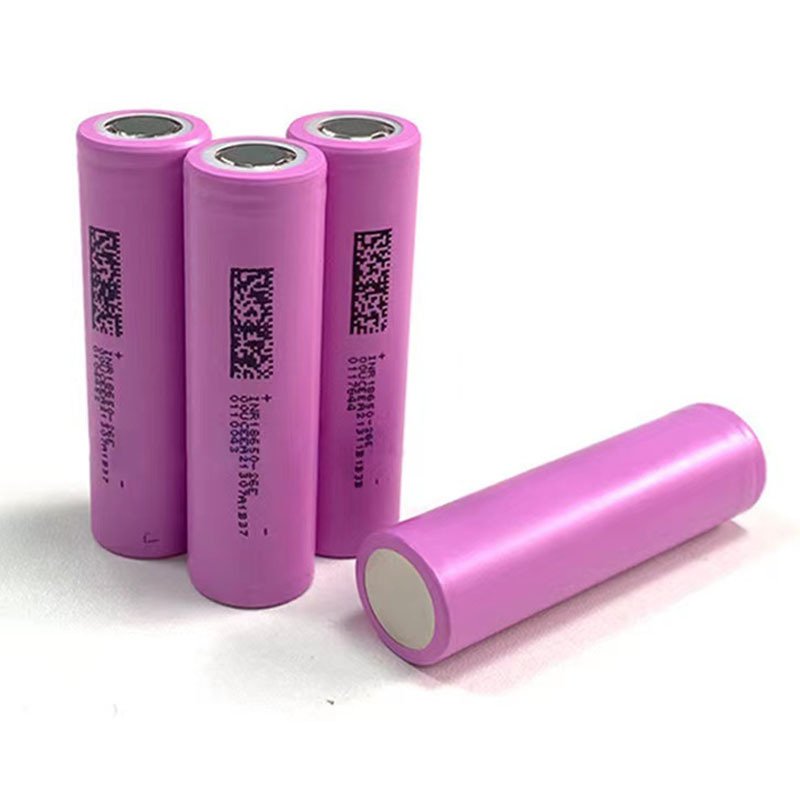
The 18650 format remains the industry standard, offering a vast range of specifications from the compact IMR18650-800 (0.8Ah) suitable for small electronics, up to the high-capacity INR18650-3500 (3.5Ah) designed for e-bikes and power tools. Within this tier, pricing scales linearly with capacity and discharge rating. For example, a high-power INR18650-2000 (20C discharge) will command a slightly higher price than a standard energy cell due to the specialized electrode engineering required for rapid ion transfer.
The evolution to the 21700 format marks a significant shift in cost efficiency. By increasing the diameter to 21mm and length to 70mm, we achieve a higher energy density per cell. This means that for the same battery pack voltage, fewer cells are required. Fewer cells translate to reduced Battery Management System (BMS) complexity, fewer welding points, and lower assembly labor costs. Consequently, while the unit cost of a 21700 cell may be higher than an 18650, the Tier 1 pricing strategy for this format often results in a lower overall pack cost for high-energy applications like electric scooters and portable power stations.
Tier 2: Performance & Specialized Engineering (The 32700 & High-Discharge Series)
When standard specifications cannot meet the demands of extreme environments or specialized industrial use, we enter Tier 2 pricing. This tier is characterized by “customization premiums” and “performance premiums.”
The 32700 cylindrical cell is a prime example of a Tier 2 solution. With a massive diameter of 32mm, these cells are engineered for “super capacity” applications. The IFR32700-6000, for instance, offers 6.0Ah in a single cell—double the capacity of many standard 18650s. This tier is specifically designed for industrial UPS systems, heavy-duty EV conversions, and large-scale energy storage where minimizing the cell count is critical for system reliability.
Pricing in this tier reflects the advanced thermal management engineering required. Larger cells generate more internal heat, necessitating proprietary cooling geometries and high-temperature electrolytes. Additionally, high-discharge variants (such as the ISR18650-2200 series) fall into this tier. These cells utilize thick electrodes and specialized separators to handle currents exceeding 20A continuously. The price structure here rewards volume but acknowledges the R&D investment in safety and power density.
Tier 3: Fully Customized Development (ODM/OEM Solutions)
Beyond off-the-shelf products lies Tier 3: the realm of fully customized cylindrical lithium batteries. This is not merely a price point; it is a partnership model. For clients with unique physical constraints, proprietary chemistries, or specific environmental certifications, our pricing is project-based and negotiated.
This tier involves our R&D team working directly with your engineering department to modify:
- Form Factor: Adjusting the height or diameter within the cylindrical constraint.
- Tab Configuration: Customizing the placement and material of the electrical tabs for automated assembly lines.
- Discharge Curves: Tailoring the voltage profile to match specific motor controllers.
While this tier has the highest initial engineering cost, it often yields the greatest long-term return by eliminating wasted space in the end product and maximizing efficiency. It is the strategic choice for global brands looking to differentiate their hardware.
Strategic Procurement: Matching Your Project to the Right Tier
Selecting the wrong tier can lead to budget overruns or product failures. A consumer electronics startup should prioritize Tier 1 for its predictable costs and fast delivery. Conversely, a manufacturer of industrial floor scrubbers must invest in Tier 2 for the durability and high current required.
At CNS Battery, our mission is to provide transparency across these tiers. Whether you are exploring the high-volume potential of our Cylindrical Battery Cell lineup or require a consultation on a custom project, our team is equipped to guide you through the technical and financial landscape.
To consult with our engineering team and receive a tier-specific quotation for your next project, please visit our Contact Us page. Let us help you engineer a power solution that fits both your technical requirements and your financial blueprint.
Contact Information
Product Center
Battery Manufacturer in China