

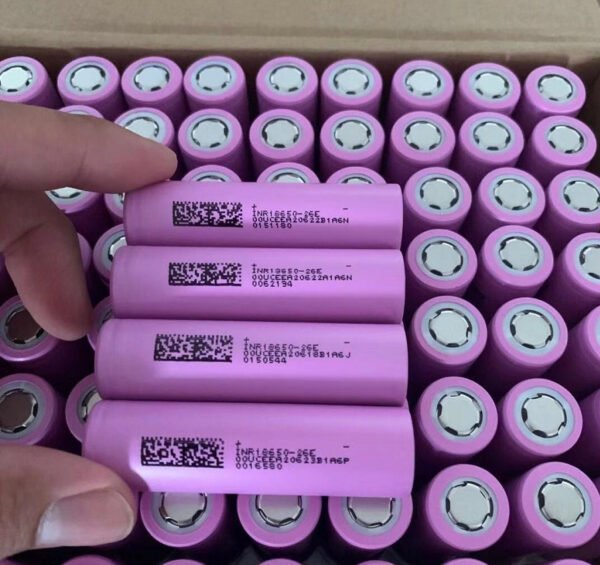
BIS Certified Cylindrical Lithium Battery Cell | For India Market | CNS BATTERY
In the rapidly evolving Indian energy storage landscape, the demand for high-performance, compliant lithium solutions has never been higher. For engineers and procurement managers navigating the complexities of the Indian market, sourcing a BIS Certified Cylindrical Lithium Battery Cell is no longer just a regulatory checkbox—it is the cornerstone of market entry and brand trust.
As a seasoned technical blogger and advisor to global OEMs, I often emphasize that the Indian market requires a unique blend of rugged durability and strict regulatory adherence. The BIS (Bureau of Indian Standards) certification, specifically under IS 16046 and IEC 62660 standards, acts as the gatekeeper for quality. This article dissects the technical anatomy of a BIS-compliant cylindrical cell, moving beyond the marketing hype to deliver the hard data you need to evaluate suppliers effectively.
Decoding the BIS Certification for Cylindrical Cells
Before diving into the electrochemistry, let’s clarify what “BIS Certified” truly means for a cylindrical cell. It is not merely a sticker on the box; it is a rigorous validation of the cell’s safety margins under extreme conditions prevalent in India.
For a cylindrical cell to pass BIS scrutiny, it must demonstrate resilience against:
- Thermal Abuse: Performance under high-temperature cycles (critical for Indian summers).
- Mechanical Stress: Vibration and shock resistance (essential for Indian road conditions in EVs).
- Electrical Safety: Protection against overcharge, short circuits, and forced discharge.
A BIS-certified cell from a reputable manufacturer like CNS BATTERY signifies that the cell has undergone third-party validation to ensure it will not thermally runaway under standard operating faults, protecting both the end-user and your brand reputation.
Technical Deep Dive: Parameters & Advantages
When evaluating cylindrical cells for the Indian market, the core advantage lies in the form factor’s thermal management efficiency. Unlike pouch cells, the cylindrical steel (or aluminum) casing provides inherent structural integrity and a superior surface-area-to-volume ratio for heat dissipation—a critical factor given India’s ambient temperatures.
1. Energy Density vs. Power Density
Cylindrical cells come in various chemistries, each serving a distinct purpose in the Indian ecosystem:
- INR Chemistry (Nickel Manganese Cobalt): This is the workhorse for E-rickshaws, E-bikes, and Power Tools. It offers a balanced blend of energy and power. For instance, a BIS-certified INR 21700 cell provides a significant volumetric energy density boost over the older 18650 format, allowing Indian OEMs to reduce the number of cells in a pack, thereby simplifying the Battery Management System (BMS) complexity.
- IFR Chemistry (Lithium Iron Phosphate): For applications where safety is non-negotiable (such as stationary ESS or high-temperature industrial environments), IFR cylindrical cells are unmatched. While they may have a slightly lower nominal voltage (3.2V vs. 3.7V), their thermal stability is paramount for the Indian climate.
2. Cycle Life & Calendar Life
Indian consumers are value-conscious. A BIS certification often correlates with a manufacturer’s confidence in longevity. A high-quality cylindrical cell should offer:
- Power Applications: 500-800 cycles (80% capacity retention) for daily commute EVs.
- Energy Applications: 1000+ cycles for deep-cycle applications like solar storage.
The cylindrical format minimizes internal stress during charge/discharge cycles, preventing electrode degradation and swelling—a common failure mode in substandard pouch cells found in the grey market.
Testing Methodologies: Ensuring Compliance
As a technical expert, I cannot stress enough the importance of verifying test data. When sourcing a BIS Certified Cylindrical Lithium Battery Cell, you must review the test protocols, not just the certificate.
Key Validation Tests
- Crush Test: The cell must not catch fire or explode when subjected to a specific pressure force simulating a crash.
- Needle Penetration: A physical intrusion test to ensure the cell does not thermal runaway when pierced—a critical safety net.
- High-Temperature Storage: Cells are stored at 85°C+ for 48 hours to check for leakage or deformation.
Expert Tip: Always request the Raw Test Data Reports (RTR) from the manufacturer’s lab. A transparent supplier like CNS BATTERY provides detailed cycle life graphs and safety test videos, proving their adherence to BIS standards rather than just claiming compliance.
The CNS BATTERY Technical Barrier: Beyond BIS
While BIS certification is the entry ticket, the true differentiator for a global supplier targeting the Indian market is technology transfer and customization capability.
CNS BATTERY has established a significant technical moat through decades of R&D in cylindrical cell technology. Their advantage lies in the “Core 3” technologies mentioned in their development pipeline:
- Advanced Electrolyte Formulation: This is proprietary IP. CNS has developed electrolytes with wider liquid temperature ranges, specifically beneficial for India’s diverse climate—from the freezing Himalayas to the scorching Thar Desert.
- Automated Manufacturing: Human error is the enemy of consistency. CNS utilizes automated production lines that ensure micro-level precision in electrode coating and winding, a necessity for passing BIS audits consistently.
- Material Science: By optimizing the NMC (Nickel Manganese Cobalt) ratios and utilizing single-crystal cathode materials, CNS achieves higher thermal stability without sacrificing energy density.
Geo-Adaptation: Bridging Global Standards to Local Needs
The Indian market is unique. It requires the safety rigor of European standards (UN38.3, CE), the performance expectations of American markets, and the cost sensitivity of a developing economy.
This is where a manufacturer with a global footprint becomes invaluable. CNS BATTERY’s technical architecture allows them to produce cells that meet both BIS requirements for the Indian market and IATF 16949 standards for automotive applications globally.
For the Indian engineer, this means:
- Future-Proofing: Designing a battery pack with a BIS-certified cylindrical cell today means that pack can potentially be exported or upgraded to meet EU or US standards with minimal redesign.
- Supply Chain Security: Partnering with a manufacturer that adheres to global ESG (Environmental, Social, and Governance) standards ensures your supply chain is not disrupted by ethical or environmental audits.
Conclusion
Selecting a BIS Certified Cylindrical Lithium Battery Cell is a strategic decision that balances regulatory necessity with technical performance. In the Indian market, cutting corners on certification is not an option.
By focusing on the technical parameters—energy density, thermal management, and rigorous safety testing—you position yourself as a solution provider, not just a vendor. CNS BATTERY represents a bridge between Chinese manufacturing scale and global quality standards, offering a robust solution for the burgeoning Indian energy storage and EV sector.
For technical inquiries or to request BIS compliance documentation for your specific application, please contact our engineering team.
Contact Us for Technical Consultation: CNS BATTERY Contact Information
Explore Our Cylindrical Cell Range: Cylindrical Battery Cell Product Line
Learn About Our Manufacturing Capabilities: China Battery Manufacturer Overview

