Here is the article crafted from the perspective of a professional lithium battery practitioner, strictly adhering to your SEO guidelines and content requirements.
Ultimate Guide to 18650 Cylindrical Lithium Cell Cells for Battery Pack 2026 – Complete Short Lead Time Focus
In the rapidly evolving landscape of energy storage and portable electronics, the 18650 cylindrical lithium-ion cell remains the undisputed workhorse. Despite the rise of newer form factors, the 18650 cell continues to dominate the market for B2B applications due to its unparalleled balance of energy density, structural integrity, and cost efficiency.
For engineers and procurement managers in 2026, the decision to utilize 18650 cells is often a strategic one. However, the market has shifted. It is no longer just about finding a cell with the right voltage; it is about securing a supply chain that guarantees rapid delivery without compromising on the technical specifications required for safety and performance. This guide cuts through the noise to provide a comprehensive technical overview of 18650 cells for battery packs, with a specific focus on the “Short Lead Time” solutions that are critical for maintaining your competitive edge.
1. The Technical Anatomy of a High-Performance 18650 Cell
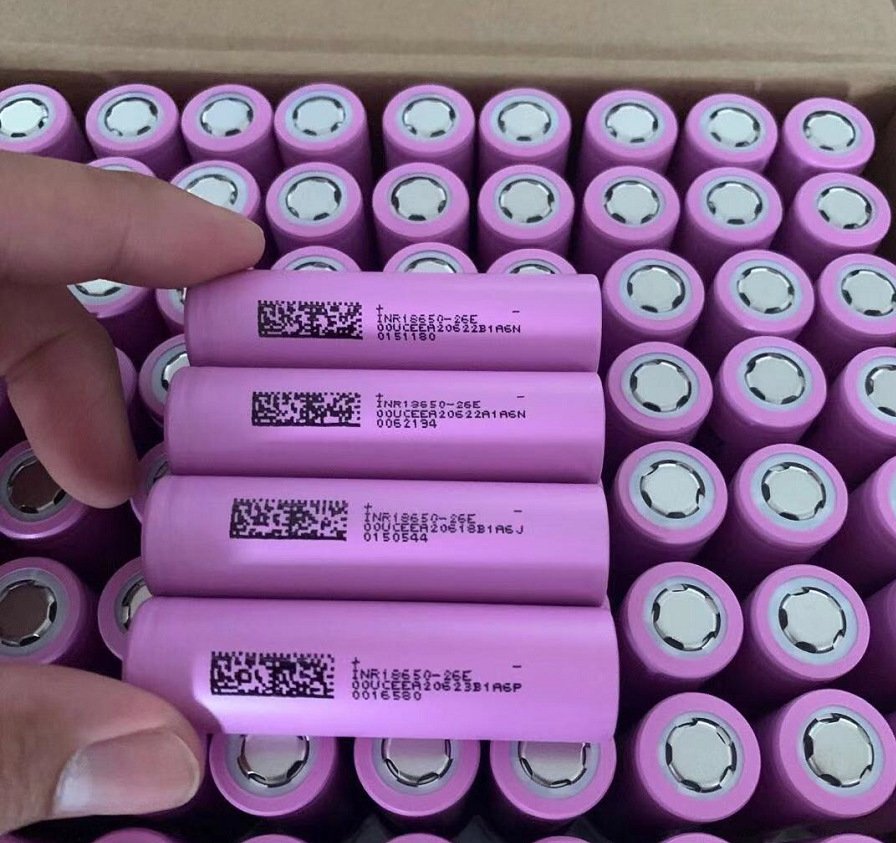
To understand why the 18650 remains relevant, one must look beyond the stainless steel can. A standard 18650 cell measures 18mm in diameter and 65mm in height. However, the performance lies within the chemistry and internal architecture.
Chemistry Matrix
The choice of cathode material dictates the cell’s behavior. In 2026, the landscape is primarily defined by three chemistries:
| Chemistry Type | Energy Density | Power Output | Cycle Life | Typical Application |
|---|---|---|---|---|
| NMC (Nickel Manganese Cobalt) | High | Medium-High | 500-1000 cycles | Consumer Electronics, E-Bikes |
| LFP (Lithium Iron Phosphate) | Medium | High | 2000-4000+ cycles | Energy Storage, Industrial Tools |
| High-Nickel (NCM 811) | Very High | Medium | 300-500 cycles | High-End EVs, Drones |
For general battery pack assembly, NMC offers the best versatility, while LFP is becoming the standard for applications where safety and longevity are non-negotiable.
Internal Structure and Safety
The “jelly roll” construction of the 18650 allows for excellent thermal management. Unlike pouch cells, the rigid steel casing acts as a heat sink and protects the internal electrodes from physical deformation. Modern 18650 cells incorporate advanced safety features such as:
- CID (Current Interrupt Device): A safety mechanism that permanently disconnects the cell if internal pressure becomes too high.
- PTC (Positive Temperature Coefficient) Thermistor: A device that increases resistance dramatically if the cell temperature or current exceeds a safe threshold, acting as a resettable fuse.
2. 2026 Manufacturing Standards: Beyond the Basics
In today’s industrial climate, a battery cell is only as good as its manufacturing pedigree. The year 2026 demands stricter adherence to quality control to mitigate the risks of thermal runaway.
Quality Control Protocols
Top-tier manufacturers now utilize AI-driven visual inspection systems during the winding and filling stages. This ensures that microscopic defects, which could lead to internal short circuits, are eliminated before the cell is sealed. Key inspection points include:
- Electrode Coating Uniformity: Variations in coating thickness can lead to lithium plating, a major cause of cell failure.
- Seam Welding Integrity: The laser welding of the top cap must be hermetic to prevent electrolyte leakage and moisture ingress.
Environmental Impact and Traceability
With increasing global regulations on carbon footprints, B2B clients are now auditing their suppliers not just on price, but on sustainability. Leading 18650 manufacturers are adopting closed-loop recycling processes for lithium and cobalt, ensuring that the cells you purchase today do not become an environmental liability tomorrow.
3. The Critical Factor: Short Lead Time Supply Chains
While technical specifications are crucial, the most significant challenge for OEMs in 2026 is supply chain volatility. A spec sheet means nothing if the product arrives late.
Why Lead Time is a Technical Specification
In the battery industry, lead time is directly correlated with inventory management and production scheduling. A delay of even two weeks can halt an entire assembly line, costing thousands of dollars per hour. Therefore, “Short Lead Time” is not just a marketing term; it is a critical technical specification for procurement.
Strategies for Rapid Fulfillment
To achieve a Complete Short Lead Time Focus, manufacturers must maintain “safety stock” of standard-grade cells. This requires a robust financial buffer and precise demand forecasting. For B2B clients, partnering with a manufacturer that operates a “Just-in-Case” (JIC) inventory model, rather than a “Just-in-Time” (JIT) model, is the key to mitigating risks.
The Role of Localized Manufacturing
Geopolitical factors have made localized manufacturing a priority. For clients in North America and Europe, sourcing from manufacturers with established logistics hubs or regional partnerships can shave weeks off the delivery schedule. This reduces dependency on ocean freight and customs bottlenecks.
4. Optimizing Your Battery Pack Design for 18650 Integration
Designing a battery pack is an exercise in systems engineering. The 18650 cell offers modularity, but the integration requires precision.
Thermal Management Systems (TMS)
Even with the robust casing of an 18650, heat dissipation is vital, especially in high-drain applications like power tools.
- Air Cooling: Suitable for low-to-medium power applications. Requires adequate spacing between cells.
- Liquid Cooling: Essential for high-power or high-energy density packs. Requires specialized cold plates and thermal interface materials (TIM).
Battery Management System (BMS) Compatibility
The BMS is the brain of the battery pack. When selecting 18650 cells, ensure that the BMS is calibrated to the specific voltage curve of your chosen chemistry (NMC vs. LFP). An incompatible BMS can lead to undercharging (reducing runtime) or overcharging (posing a safety hazard).
5. Partnering for Success in 2026
Selecting the right 18650 cylindrical lithium cell for your battery pack in 2026 requires a balance of technical rigor and logistical pragmatism. You need a cell that meets your energy density requirements, a manufacturer that adheres to the highest quality standards, and a supply chain that guarantees delivery.
For businesses looking to integrate high-performance 18650 cells into their products, the focus must shift from merely sourcing components to building resilient partnerships. By prioritizing manufacturers with a proven track record of quality and a dedicated Short Lead Time strategy, you safeguard your production schedules and ensure your product reaches the market on time.
Ready to optimize your 2026 battery supply chain?
Explore our comprehensive range of high-quality 18650 cylindrical lithium cells designed for reliability and rapid deployment. Whether you are building a prototype or scaling up for mass production, we have the solutions to meet your specific energy needs.
- Browse our full selection of Cylindrical Battery Cells: https://cnsbattery.com/products-3/cylindrical-battery-cell/
- Connect with a battery expert today: https://cnsbattery.com/contact-2/
- Discover why we are a leading choice among Battery Manufacturers in China: https://cnsbattery.com/battery-manufacturers-in-china/