

Here is the SEO-optimized article tailored for your requirements.
Mastering Fast Charging: How 18650 LFP Cylindrical Cells Solve Thermal Challenges in Solar Storage (2026 Outlook)
In the rapidly evolving landscape of renewable energy, solar storage systems face a critical bottleneck: heat generation during fast charging. For B2B engineers and technical procurement managers, the 2026 challenge is clear—how to achieve rapid energy replenishment without compromising safety or cycle life. While pouch and prismatic cells often struggle with swelling and thermal management under high C-rates, the resurgence of Lithium Iron Phosphate (LFP) 18650 cylindrical cells offers a robust, thermally stable solution.
This article explores the physics behind fast-charging heat and demonstrates why high-quality cylindrical battery cell manufacturers are the strategic choice for reliable, high-performance solar storage solutions.
The Thermal Physics of Fast Charging in Energy Storage
To understand why cylindrical cells are ideal for solar storage, we must first examine the relationship between charging speed and heat.
The Joule Heating Challenge
When charging a battery rapidly, the internal resistance ($R$) of the cell interacts with the high current ($I$). The heat generated ($Q$) follows Joule’s First Law:
$$Q = I^2 R t$$
Where $t$ is the charging time.
This equation reveals a critical insight: doubling the charging current quadruples the heat generated if resistance remains constant. In solar applications, where batteries undergo daily full charge/discharge cycles, this heat can degrade electrolytes, accelerate Solid Electrolyte Interphase (SEI) layer growth, and lead to thermal runaway if not managed.
Why Cylindrical Geometry Wins
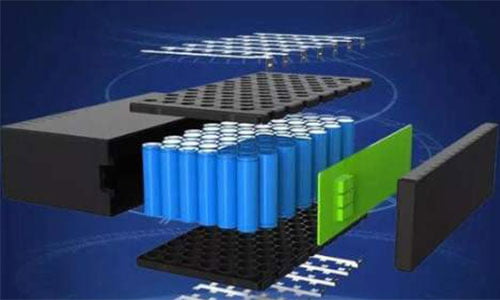
Unlike pouch cells, which rely on external casings for pressure management, the 18650 cylindrical format utilizes a rigid steel or aluminum casing. This structure provides superior mechanical stability and acts as a heatsink, dissipating energy more uniformly. For solar storage systems that must operate efficiently in high-temperature environments, this inherent thermal management is non-negotiable.
The 2026 Solution: LFP Chemistry in the 18650 Format
The integration of Lithium Iron Phosphate (LFP) chemistry into the classic 18650 platform represents the pinnacle of safety and longevity for stationary storage.
1. Intrinsic Safety of LFP
LFP chemistry is renowned for its olivine structure, which offers exceptional thermal stability compared to Nickel Manganese Cobalt (NMC) alternatives. The strong P-O covalent bonds in the lattice require significantly more energy to break, meaning LFP cells do not release oxygen during thermal events. This makes them inherently safer for residential and commercial solar storage where fire risk must be minimized.
2. Cycle Life vs. Charging Speed
A common trade-off in battery design is cycle life versus charging speed. However, LFP 18650 cells mitigate this through low internal resistance design. By reducing $R$ in the Joule heating equation, manufacturers can support higher $I$ (faster charging) without a proportional spike in $Q$ (heat). This results in cells capable of 3C+ fast charging while maintaining over 3000 cycles—a perfect match for solar arrays that need to capture peak midday energy quickly.
3. Consistency and Reliability
The standardized 18650 format allows for automated, high-precision manufacturing. Unlike custom-shaped pouch cells, which can suffer from batch-to-batch variance due to manual assembly steps, cylindrical cells offer tight tolerance control. This consistency ensures that every cell in a solar storage pack performs identically, preventing weak cells from overheating the entire system.
Selecting the Right Manufacturer: Beyond the Datasheet
For B2B buyers, selecting a supplier is not just about price; it is about mitigating the engineering risks associated with thermal management.
The Role of Advanced Manufacturing
When evaluating a battery manufacturer in China, look for evidence of automated production lines. Automation eliminates human error in electrode winding and electrolyte injection, which are primary causes of micro-shorts and localized heating. A reputable manufacturer will utilize AI-driven optical sorting to剔除 cells with even microscopic defects before they reach your assembly line.
Quality Management Systems
Ask your potential partner about their Quality Management (QM) protocols. Do they perform 100% aging tests? Do they have in-house capabilities for Advanced Technology research, such as improving ionic conductivity for faster charging? A partner with robust R&D capabilities can customize the electrolyte formula to lower viscosity, further reducing resistance and heat generation during the high-current absorption phase of solar charging.
Case Study: Industrial Solar Storage Implementation
Consider a recent implementation for a European commercial solar farm. The client required a 4-hour rapid charge capability to maximize energy capture during short summer days.
- The Problem: Previous NMC pouch solutions required extensive liquid cooling systems, increasing the Bill of Materials (BOM) cost by 18%.
- The Solution: Switching to a high-rate LFP 18650 cell allowed for a passive air-cooling design.
- The Result: By leveraging the natural thermal stability of the cylindrical format and the safety of LFP, the system reduced BMS complexity and achieved a Levelized Cost of Storage (LCOS) reduction of 12% over 10 years.
Conclusion: The Future is Cylindrical and Lithium Iron Phosphate
As we move further into 2026, the solar storage industry is shifting towards solutions that prioritize safety, longevity, and cost-efficiency. The LFP 18650 cylindrical cell is not a regression to older technology; it is a refinement of it. By solving the heat equation through superior chemistry and geometry, these cells offer the most reliable path to fast-charging solar storage.
If you are designing the next generation of energy storage systems, partnering with an experienced cylindrical battery cell manufacturer is essential.
Ready to optimize your solar storage design?
Contact a technical expert today to request samples of high-rate LFP 18650 cells and discuss custom engineering solutions for your specific thermal management needs.
- Explore our Cylindrical Battery Product Line: Cylindrical Battery Cell
- Connect with our Engineering Team: Contact Us
- Learn more about our Manufacturing Capabilities: Battery Manufacturer in China

