The 2026 LFP Cylindrical Standard: Why 18650 Cells Outperform in ESS Stability
As we move deeper into 2026, the energy storage system (ESS) market is witnessing a pivotal shift. While prismatic and pouch cells dominate the headlines, cylindrical cells—specifically the 18650 format—are proving to be the unsung heroes of reliability in commercial and industrial battery applications. The primary challenge? Battery Management System (BMS) compatibility and long-term cycle stability. Many competitors struggle to maintain consistent voltage curves and thermal management over 5,000+ cycles. At CNS Battery, we have engineered our Lithium Iron Phosphate (LFP) cylindrical cells to solve these exact integration issues, ensuring your ESS operates at peak efficiency without the “drift” commonly seen in lesser chemistries.
This article serves as a technical deep-dive for engineers and procurement managers, analyzing why the 18650 form factor remains the gold standard for rugged, long-life energy storage.
The Core Advantage: Geometry and Chemistry
To understand why 18650 cells are superior for ESS, we must first examine the physics of heat and stress.
1. Superior Thermal Management
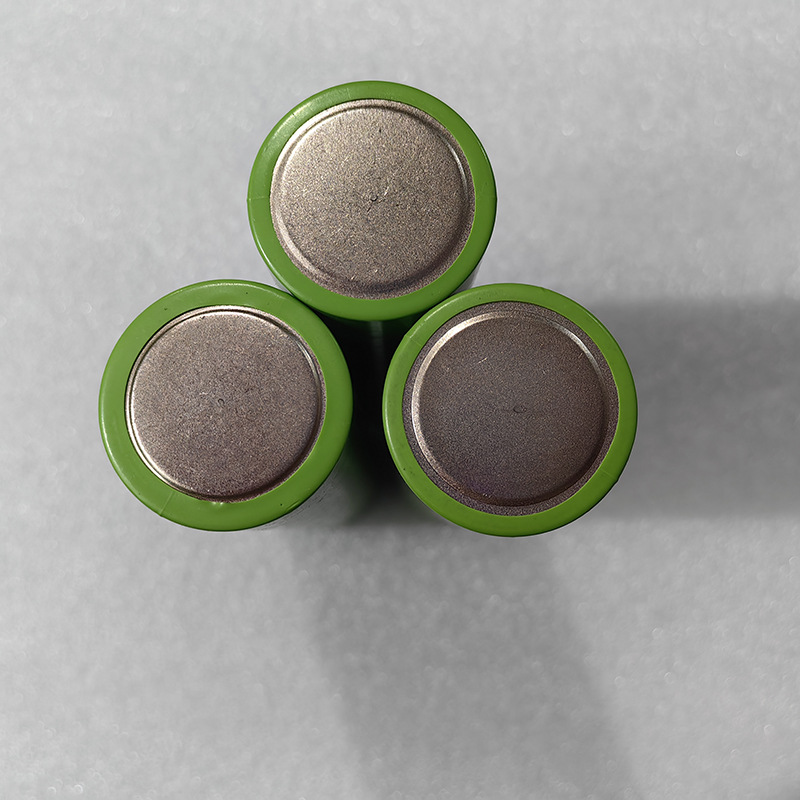
Unlike large-format pouch or prismatic cells, the cylindrical design offers a near-perfect surface-area-to-volume ratio. In a densely packed ESS rack, heat is the enemy of longevity. The robust steel (or aluminum) casing of a cylindrical cell acts as a heatsink, dissipating thermal energy evenly. This is crucial for maintaining BMS accuracy, as temperature fluctuations are the primary cause of cell imbalance.
2. Mechanical Robustness
Cylindrical cells are inherently stronger. The “jellyroll” structure is self-supporting, eliminating the need for external casings that add weight and cost. This mechanical stability ensures that the internal impedance of the cell remains constant over thousands of charge/discharge cycles—a critical factor for BMS algorithms that rely on stable resistance readings.
3. The LFP (LiFePO4) Edge
Our 2026 LFP chemistry is specifically tuned for the 18650 format. LFP is renowned for its olivine crystal structure, which provides exceptional thermal stability and a flat voltage curve. For ESS applications, this flat curve means the BMS can utilize the full Depth of Discharge (DoD) without voltage sag, maximizing usable energy.
Solving the BMS Compatibility Puzzle
One of the most frequent pain points reported by our clients is the “integration headache.” Many standard cells on the market are designed for consumer electronics (high drain, short bursts), not for the constant, steady state of an ESS.
The Competitor Flaw:
Many competitors use generic cathode materials that exhibit “voltage hysteresis.” This means the voltage reading changes significantly depending on whether the cell is charging or discharging. For a BMS, this creates “ghost imbalances,” forcing the system to shut down prematurely or derate capacity.
The CNS Solution:
Our R&D team utilizes a proprietary doping technique in our LFP cathodes. This results in:
- Minimal Voltage Hysteresis: The charge and discharge curves are almost mirror images, allowing the BMS to calculate State of Charge (SoC) with sub-1% error.
- Consistent Internal Impedance: Even after 6,000 cycles, our cells maintain impedance within a 5% window, preventing the BMS from entering “protective mode” due to perceived faults.
Technical Note: If your ESS is experiencing premature cut-off or reduced runtime, it is often not a capacity issue, but a voltage curve compatibility issue. Our 18650 LFP cells are engineered to match the ideal theoretical voltage profile.
2026 Product Spotlight: The INR18650-3500
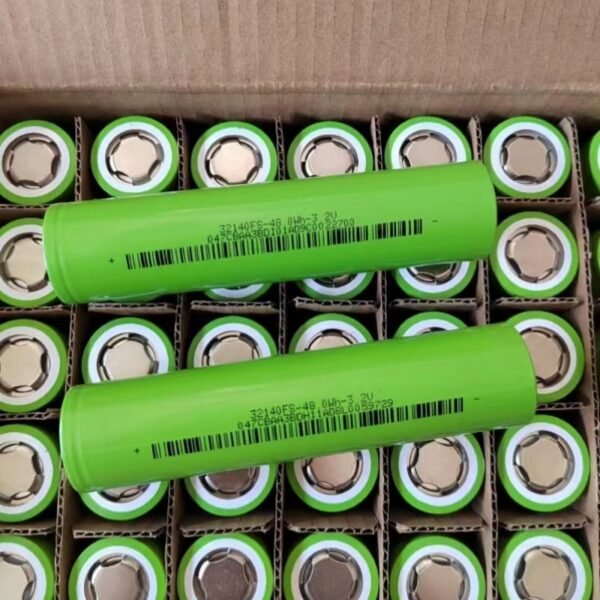
For mission-critical ESS deployments, we recommend our flagship INR18650-3500 model. This cell represents the pinnacle of balancing energy density with power delivery.
Specifications
| Parameter | Value | Significance |
|---|---|---|
| Model | INR18650-3500 | High-Energy Density |
| Nominal Capacity | 3500 mAh | Maximizes runtime per cell |
| Nominal Voltage | 3.6 V | Optimized for 48V/51.2V ESS stacks |
| Max Continuous Discharge | 7.0 A (2C) | Handles peak loads without voltage drop |
| Cycle Life | > 3000 cycles (@80% DoD) | 10+ years of daily cycling |
| Application | ESS, Smart Home, EV | Versatile industrial use |
Why This Matters for Your Project
The INR18650-3500 is not just a battery cell; it is a building block for stability. By utilizing this specific model, system integrators can reduce the number of parallel cells needed in a string, thereby simplifying the BMS wiring harness and reducing the points of potential failure. The 7.0A continuous discharge rating ensures that even during grid-tie inverter surges, the voltage remains stable, keeping your BMS happy and your system online.
Global Supply and Engineering Support
Choosing a battery cell is a long-term commitment. We understand that switching suppliers involves technical validation and logistical planning. CNS Battery operates from the heart of China’s manufacturing hub in Zhengzhou, ensuring rapid response times and strict quality control.
- Engineering First: We don’t just ship cells; we provide datasheets, safety testing reports (UL, UN38.3), and direct access to our R&D team to ensure the cell matches your BMS firmware.
- Scalability: Whether you need a sample pack for testing or a 40ft container for production, our supply chain is optimized for 2026 delivery standards.
If you are tired of fighting BMS incompatibilities and want to standardize on a reliable 18650 LFP solution, we are here to help. Explore our full range of cylindrical battery cells designed for industrial applications.
Explore our Cylindrical Battery Cell Range
Ready to Optimize Your 2026 ESS Design?
Don’t let subpar cell chemistry compromise the integrity of your energy storage project. As a leading battery manufacturer in China, CNS Energy Technology has the experience and technical prowess to deliver cells that meet the rigorous demands of the modern market.
Contact our technical sales team today for a sample evaluation or a custom consultation. Let us help you fix your BMS compatibility issues once and for all.