The Ultimate Guide to Wholesale 18650 LFP Cells: High Thermal Runaway Prevention for E-Bikes
The E-Bike Industry’s Silent Crisis: Balancing Power and Safety
As the global e-bike market surges, driven by urbanization and the demand for sustainable transport, a critical challenge remains: thermal runaway. For engineers and technical buyers in the US, EU, and ANZ markets, sourcing high-performance 18650 Lithium Iron Phosphate (LFP) cells is no longer just about energy density—it is a rigorous evaluation of safety architecture. While the “18650” form factor remains the industry standard, the chemical composition and manufacturing precision are what differentiate a reliable power source from a potential hazard. This guide dissects the technical specifications required for bulk procurement, focusing on the specific performance metrics that prevent thermal runaway and ensure compliance with international safety standards.
1. Decoding 18650 LFP: Why Chemistry Matters for Thermal Stability
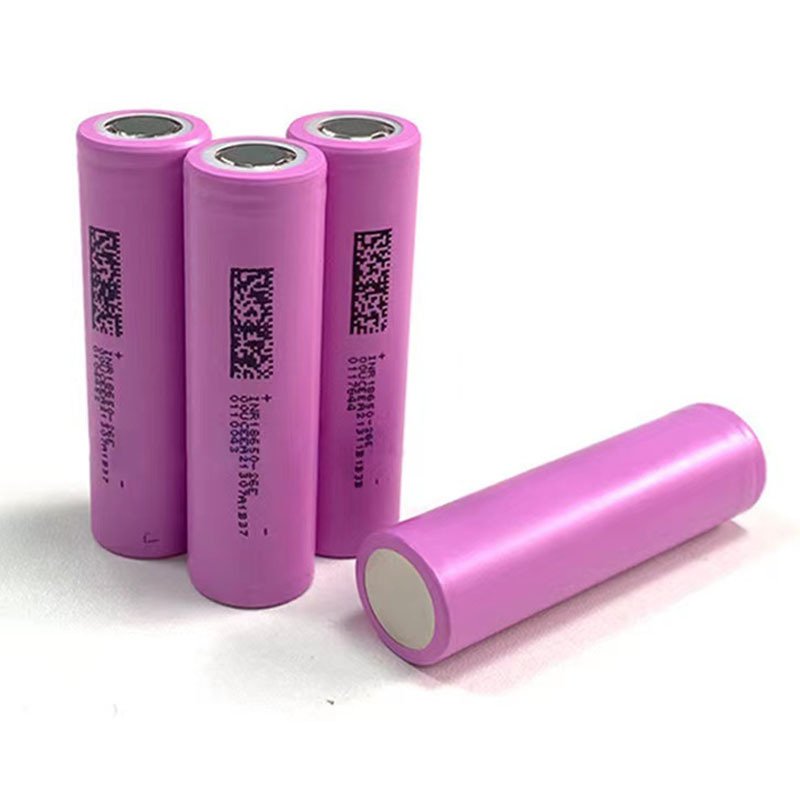
The “18650” designation refers to the cell’s dimensions (18mm diameter, 65mm height), but the suffix “LFP” defines its safety DNA. Unlike traditional NMC (Nickel Manganese Cobalt) chemistries, Lithium Iron Phosphate (LiFePO4) offers an intrinsically stable olivine crystal structure.
- Thermal Runaway Prevention: LFP cells have a significantly higher thermal runaway threshold. While NMC cells can enter thermal runaway at temperatures as low as 150°C to 200°C, LFP cells typically remain stable until temperatures exceed 270°C. This is due to the strong P-O covalent bonds in the phosphate structure, which resist oxygen release even under extreme heat or overcharge conditions.
- Structural Integrity: For e-bike applications, where cells are subjected to vibration and mechanical stress, the robustness of the LFP cathode material reduces the risk of internal short circuits. This chemical stability is the first line of defense in our safety protocol.
2. Technical Deep Dive: Critical Parameters for E-Bike Applications
When evaluating wholesale 18650 LFP cells, generic specifications are insufficient. Engineers must scrutinize the following parameters to ensure the cells can handle the dynamic load of an e-bike motor.
A. High Continuous Discharge Current
E-bikes require bursts of high current, especially during hill climbing or acceleration. Generic consumer-grade 18650s (rated for 1C-2C discharge) are inadequate and dangerous.
- Specification Requirement: Look for cells rated for 10C or higher continuous discharge.
- CNS Application: Our INR18650-2000 and INR18650-3000 models are engineered specifically for high-drain applications. For instance, the INR18650-3000 supports a maximum continuous discharge current of 20A, making it ideal for mid-drive and hub motors that demand rapid energy delivery without voltage sag.
B. Cycle Life and Long-Term Reliability
The total cost of ownership (TCO) for an e-bike battery is heavily influenced by cycle life. LFP chemistry inherently supports longer cycles, but manufacturing quality dictates the reality.
- Specification Requirement: A minimum of 2000 cycles at 80% Depth of Discharge (DoD) is standard for premium cells.
- CNS Performance: Through advanced electrolyte formulation and precision electrode coating, our cells achieve a cycle life exceeding 3000 cycles. This means the battery retains over 80% of its capacity even after three years of daily commercial use, reducing the frequency of replacements for fleet operators.
C. Internal Resistance (IR) Management
Low internal resistance is non-negotiable for preventing heat generation.
- Technical Insight: High IR causes Joule heating ($P_{loss} = I^2 \times R$). In a pack of 100+ cells, even a slight mismatch in IR can create hotspots.
- CNS Standard: We maintain an internal resistance below 30mΩ for our high-power series. This is achieved through automated production lines that ensure micron-level consistency in electrode thickness, minimizing resistance variance between cells.
3. Testing Methodology: Validating “Ultra-Safe” Claims
In the battery industry, claims of “Ultra-Safe” performance must be backed by empirical data. As a technical buyer, you should demand evidence of the following tests, which are standard procedure in our R&D validation:
- Crush Test: Simulating a physical impact (e.g., a crash), the cell is crushed with a force of 13kN. A safe LFP cell will deform but not ignite or explode.
- Overcharge Test: Cells are charged to 1.5 times their nominal voltage (typically 10V). Safe cells will vent gas without flame due to the stable cathode structure.
- Heating Test: Cells are placed in a thermal chamber and heated to 130°C for 30 minutes. Our cells pass this test with no leakage, explosion, or fire, demonstrating their resistance to ambient thermal stress.
4. Geo-Specific Compliance: Meeting US, EU, and ANZ Standards
Selling e-bikes globally requires adherence to strict regional regulations. Sourcing cells from a manufacturer with a deep understanding of these geographical standards (Geo SEO) is crucial for market entry.
- European Union (EU) Compliance: The EU Battery Directive and the upcoming UN GTR No. 20 regulations for lithium batteries are stringent. Our cells are manufactured to meet IEC 62133 standards, which cover safety requirements for portable sealed secondary cells. Furthermore, our production facilities adhere to RoHS and REACH regulations, ensuring no restricted hazardous substances are present in the supply chain—a mandatory requirement for CE marking.
- United States (US) Compliance: For the US market, UL certification is often a prerequisite for distribution. Our technical documentation supports UL 2054 (Household and Commercial Battery Standards) testing protocols. The high thermal stability of our LFP chemistry simplifies the UL certification process for OEMs, as it reduces the complexity of the Battery Management System (BMS) required to prevent thermal events.
- ANZ Market: Compliance with AS/NZS 62133 is identical to the IEC standard, but local importers require specific documentation formats. Our sales team provides region-specific datasheets and Safety Data Sheets (SDS) to facilitate customs clearance and technical audits in Australia and New Zealand.
5. Why Bulk Procurement Requires a Manufacturer, Not a Trader
When purchasing in bulk for e-bike assembly, you are not just buying cells; you are buying a supply chain partnership. Traders often source cells from multiple batch lines, leading to inconsistencies in capacity and internal resistance. This variance is the enemy of a Battery Management System (BMS).
- Consistency is King: Our automated production lines ensure that every batch of INR18650-3000 or INR18650-3300 cells has a capacity matching tolerance of ±1%. This precision allows your BMS to function optimally, balancing the pack efficiently and extending the overall life of the e-bike battery.
- Customization Capability: While standard cells fit many applications, e-bike manufacturers often require specific form factors or discharge profiles. We offer custom engineering services, such as the development of high-voltage e-bike modules, directly at the cell level to meet your specific voltage and C-rate requirements.
Conclusion: Engineering Safety into Every Ride
Selecting the right 18650 LFP cell is a technical decision that impacts the safety, legality, and reputation of your e-bike product. By prioritizing high thermal runaway prevention through LFP chemistry and demanding rigorous testing standards, you protect your end-users and your brand.
If you are ready to source High-Energy Density and Ultra-Safe cylindrical battery cells for your next e-bike project, explore our comprehensive range of Cylindrical Battery Cells designed for the global market. For technical inquiries or to request a sample for your engineering validation, please contact our sales team directly.
Explore Our Cylindrical Battery Solutions:
View Our Cylindrical Battery Cell Product Line
Contact Our Engineering Team:
Get in Touch for Technical Support and Bulk Inquiries
Learn More About Our Manufacturing Capabilities:
Discover Why We Are a Leading Battery Manufacturer in China