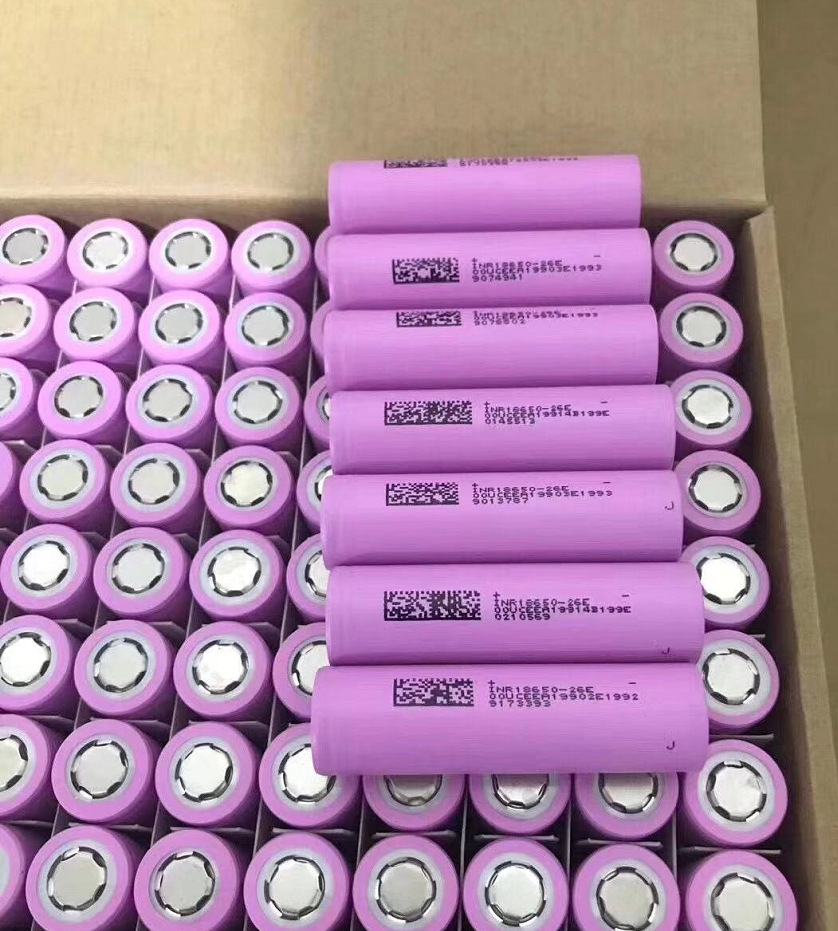
Top 5 Zero Swelling Issues Problems with 18650 Cells in E-bike Applications & Solutions Guaranteed
The electric bike (E-bike) industry is undergoing a massive transformation. As urban mobility shifts towards greener alternatives, the demand for high-performance, reliable, and safe battery packs has never been higher. At the heart of these advanced battery packs lie the cylindrical cells, specifically the 18650 format.
As a professional lithium battery engineer, one of the most persistent technical challenges I encounter in the field is cell swelling. While “Zero Swelling” is often touted as a marketing slogan, achieving it in real-world E-bike applications requires deep technical understanding and rigorous engineering. Swelling isn’t just an aesthetic issue; it compromises structural integrity, thermal management, and safety.
In this article, we will dissect the top 5 technical reasons why 18650 cells fail to achieve zero swelling in E-bike applications and provide guaranteed engineering solutions to mitigate them.
1. Incomplete Electrolyte Formation & Residual Moisture
The first and most fundamental cause of swelling occurs during the manufacturing phase, specifically the formation process.
Technical Deep Dive:
During the initial charge of a lithium-ion cell, the electrolyte decomposes on the anode surface to form the Solid Electrolyte Interphase (SEI) membrane. This is a controlled reaction. However, if there is residual moisture inside the cell (even at parts per million levels), it reacts with the Lithium Salt (LiPF6) to produce Hydrogen Fluoride (HF) and Phosphorus Pentafluoride (PF5). More critically, water electrolysis occurs: $2H_2O \rightarrow 2H_2 + O_2$. This electrolysis generates hydrogen and oxygen gases, leading to immediate and irreversible swelling.
The Solution:
Guaranteed zero swelling requires a “Dry Room” production environment with a dew point lower than -45°C and a multi-step formation process. Manufacturers must utilize high-precision vacuum sealing and extended aging periods to allow any micro-gas generation to be extracted before final sealing.
Expert Note: If a cell swells immediately after the first charge, the root cause is almost always moisture contamination or an unstable SEI formation process.
2. High-Rate Discharge and Lithium Plating
E-bikes, especially off-road or high-speed models, require cells to deliver high currents for hill climbing or rapid acceleration.
Technical Deep Dive:
When an E-bike draws a high C-rate (e.g., 10C-20C), lithium ions rush from the cathode to the anode. If the anode cannot intercalate these ions quickly enough (due to low temperature, high charge density, or insufficient porosity in the electrode), the ions turn into metallic lithium on the surface of the graphite—anode. This process is called Lithium Plating.
The reaction is: $Li^+ + e^- \rightarrow Li_{metal}$.
This metallic lithium is highly reactive. It consumes the active lithium inventory and reacts with the electrolyte, generating heat and gas (mainly CO2 and CO). This is the primary cause of “delayed swelling” observed after prolonged use.
The Solution:
To guarantee zero swelling under high load, the cell design must incorporate:
- Advanced Cathode Materials: Blended NMC (Nickel Manganese Cobalt) formulations that support faster ion diffusion.
- Optimized Anode Porosity: Graphite with tailored particle size distribution to reduce ionic diffusion resistance.
- Thermal Buffering: Integrated thermal management within the cell structure to prevent localized hot spots that accelerate plating.
3. Overcharging and Voltage Stress
In a battery pack, individual cells are connected in series. If the Battery Management System (BMS) fails or is poorly calibrated, a cell can be pushed beyond its voltage limit.
Technical Deep Dive:
The standard upper voltage limit for an NMC 18650 is 4.2V. If a cell is charged beyond 4.3V, the crystal structure of the cathode material becomes unstable. This leads to the oxidation of the electrolyte and the release of lattice oxygen from the cathode. The released oxygen reacts violently with the organic electrolyte, producing CO2 and other hydrocarbons. This exothermic reaction causes rapid swelling and is a direct precursor to thermal runaway.
The Solution:
While this is a BMS issue, the cell itself must have robust safety margins. This involves using electrolytes with high-oxidation stability additives and separators with high-temperature shutdown functions. A cell designed for E-bikes must have a “Voltage Tolerance” buffer to protect against minor BMS miscalculations.
4. Mechanical Stress and Internal Short Circuits
E-bikes are subjected to constant vibration, shock, and road debris.
Technical Deep Dive:
Mechanical stress can cause the internal jelly roll of the 18650 cell to deform. If the separator—a thin polyolefin film (usually 12-16µm thick)—is compromised, even by microscopic metal burrs (from the electrode cutting process) or dendrite growth, it results in a micro short circuit.
A micro short circuit generates intense localized heat ($Q = I^2 R t$). This heat melts the separator, causing a larger short, which generates more heat and gas. This “Avalanche Effect” leads to swelling and fire.
The Solution:
Manufacturers must utilize “Clean Room” technology to eliminate metal burrs during electrode slitting. Furthermore, the use of Ceramic Coated Separators (Al2O3) significantly enhances mechanical strength and thermal stability, preventing deformation and short circuits even under severe vibration.
5. Poor Heat Dissipation Design
Heat is the enemy of lithium-ion batteries.
Technical Deep Dive:
The cylindrical geometry of the 18650 has a lower surface-area-to-volume ratio compared to pouch cells. If the heat generated during discharge ($P = I^2 R$) is not dissipated efficiently, the internal temperature rises. High temperatures accelerate the decomposition of the electrolyte and the breakdown of the SEI layer. Every 10°C increase in temperature can double the rate of side reactions that produce gas.
The Solution:
A guaranteed zero-swelling solution requires a system-level approach. The battery pack design must incorporate aluminum heat-dissipation plates or conductive silicone pads in direct contact with the cell surface. Additionally, the cells must be spaced adequately to allow for air convection within the E-bike frame.
Conclusion: Engineering Reliability for the Future
Achieving “Zero Swelling” in E-bike 18650 cells is not a matter of luck; it is the result of strict material selection, precision manufacturing, and robust electrochemical design. As an engineer, I always recommend looking beyond the specifications sheet and examining the manufacturer’s process control.
At CNS Battery, we understand that reliability is paramount for E-bike manufacturers. We leverage automated production lines and rigorous quality management systems to ensure that every cylindrical cell leaving our factory meets the highest standards of safety and performance.
If you are looking for a battery partner that guarantees engineering excellence and zero swelling performance, explore our comprehensive range of Cylindrical Battery Cells designed for high durability and performance.
Explore our Cylindrical Battery Solutions:
Cylindrical Battery Cell Product Line
Contact our technical team today to discuss your specific E-bike application requirements:
Contact CNS Battery
Learn more about why global customers choose CNS as their trusted battery manufacturer in China:
About CNS Battery Manufacturing