The Definitive Guide to UL-Certified Lithium Batteries for Industrial Robotics
In the realm of industrial automation, the power source is not merely a component; it is the lifeblood of operational continuity. As factories transition from traditional AGV tuggers to sophisticated, AI-driven robotic arms, the demand for batteries that guarantee both high energy density and absolute safety has never been higher. For global B2B purchasers and system integrators, selecting a battery is no longer just about voltage and capacity—it is about compliance, certification, and mitigating risk. This article delves into the critical specifications required for powering industrial robots and explores why a UL-Certified cylindrical battery from a reputable China manufacturer is the strategic choice for modern Industry 4.0 applications.
Why UL Certification is Non-Negotiable in Robotics
When integrating a battery into an industrial robot, engineers face a dual challenge: maximizing runtime while ensuring the system does not become a fire hazard in a high-temperature or high-vibration environment.
The Safety Imperative
Industrial robots often operate 24/7 in environments where dust, heat, and mechanical stress are prevalent. A standard lithium-ion cell might function adequately in a controlled lab, but in a warehouse or production line, the risk of thermal runaway is magnified. This is where UL Certification becomes the gold standard.
UL (Underwriters Laboratories) is an independent safety science company whose standards are recognized globally. For the North American market, UL 2054 (for battery packs) and UL 1642 (for lithium cells) are the benchmarks. A battery that passes these rigorous tests proves it can withstand crush tests, impact tests, and nail penetration without catching fire or exploding. For a robot that might be servicing heavy machinery or transporting flammable materials, this certification is not just paperwork—it is a liability shield.
Regulatory Compliance and Market Access
For distributors and OEMs looking to sell or deploy robots in the United States, Canada, or regions that recognize UL standards, having a UL-Certified battery is mandatory for insurance underwriting and regulatory approval. Sourcing a pre-certified cell significantly reduces the time-to-market for your robotic solution, as it eliminates the need for the end manufacturer to undergo the expensive and lengthy certification process on a custom, uncertified cell.
Technical Deep Dive: Cylindrical Cells in Robotic Applications
While pouch and prismatic cells have their place, the cylindrical battery (specifically the 21700 and 18650 form factors) remains the workhorse for industrial robotics. Here is a breakdown of the technology that makes them ideal.
1. Superior Thermal Management
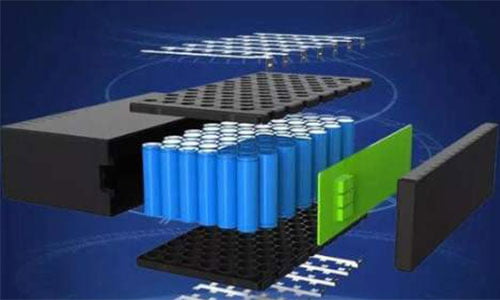
Robots generate heat. Unlike pouch cells, which have a large surface area prone to swelling, cylindrical cells have a rigid steel or aluminum casing. This structure allows for better heat dissipation along the cylindrical axis. The geometry also creates natural air channels when packed in a module, preventing hot spots that could degrade performance or trigger a thermal event.
2. High Energy Density vs. Power Density
When specifying a battery for a robot, you must decide between energy and power.
- Energy Density (Wh/kg): Crucial for mobile robots (AMRs/AGVs) where you need maximum runtime per charge.
- Power Density (W/kg): Essential for robotic arms or high-torque applications requiring instantaneous bursts of energy.
Modern 21700 cylindrical cells offer a sweet spot, providing higher energy density than the older 18650 format while maintaining the structural integrity required for high-drain applications.
3. Mechanical Robustness
The can of a cylindrical cell acts as a structural support. In a robotic application where vibration is constant, the cylindrical design resists deformation better than soft-pack pouch cells, ensuring the internal chemistry remains stable over thousands of charge cycles.
Choosing the Right Manufacturing Partner in China
China dominates the global lithium battery supply chain. However, not all “China battery manufacturers” are created equal. For industrial applications, you need a partner that functions as a true Tier-1 supplier, not just a trader.
The “Factory Gate” Audit
When evaluating a manufacturer, look for evidence of vertical integration. Can they produce the cathode and anode materials in-house? Do they have their own R&D labs for electrochemistry? A true manufacturer controls the process from raw material to finished pack. This control is vital when you need to customize a Battery Management System (BMS) specifically for your robot’s motor controller.
Quality Control: Beyond the Spec Sheet
In the industrial sector, a 1% failure rate is catastrophic. You need a manufacturer that utilizes automated production lines with 100% inline testing (CCD inspection, Hi-Pot testing). Ask for their PPAP (Production Part Approval Process) documentation. A company that exports to the EU or North America will have these processes standardized, ensuring your robots do not get recalled due to a “cheap Chinese battery” reputation.
CNS BATTERY: Powering the Future of Industrial Automation
For over two decades, CNS BATTERY has specialized in providing high-reliability cylindrical lithium cells for demanding industrial applications. Based in Zhengzhou, China, we operate as a full-cycle manufacturer, ensuring that every cell meets the stringent requirements of global robotics.
Our Core Advantages for Robotics:
- Certified Safety: We specialize in UL-Certified cylindrical cells (including 18650 and 21700 formats). Our cells undergo rigorous third-party testing to meet UL 1642 and UN38.3 standards, giving your robotic integration the safety credentials it needs for global deployment.
- High-Performance Chemistry: Our R&D team has formulated cells specifically for high-drain applications. Whether you need the high power output of our INR chemistry for robotic actuators or the long cycle life of our IFR/LFP cells for warehouse logistics, we have a solution.
- Customization Expertise: Robots are not one-size-fits-all. We offer OEM customization for both the cell chemistry and the final battery pack, including integrated BMS solutions that communicate seamlessly with your robotic controller.
Conclusion
In the competitive landscape of industrial robotics, your choice of battery defines your reputation. Cutting corners on the power source leads to downtime, safety incidents, and warranty claims. By partnering with a professional, UL-Certified manufacturer like CNS BATTERY, you gain access to the technical expertise and quality assurance needed to build robots that are not only intelligent but also safe and reliable.
Ready to power your robotic innovation with a trusted Chinese manufacturer?
Explore our full range of Cylindrical Battery Cells designed for industrial applications: https://cnsbattery.com/products-3/cylindrical-battery-cell/
Learn more about partnering with a leading Battery Manufacturer in China: https://cnsbattery.com/battery-manufacturers-in-china/
For direct technical consultation and to discuss your specific robotic application requirements, contact our engineering team today: https://cnsbattery.com/contact-2/