

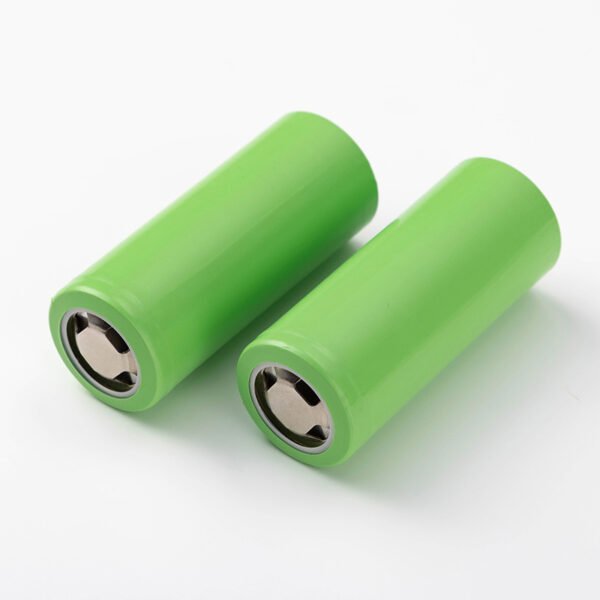
2026 NCM Cylindrical Battery Supplier: Fix Extended Warranty in Solar Storage Using 32135 Cells
The global energy storage market is undergoing a seismic shift. As the demand for residential and commercial solar solutions surges, a critical bottleneck has emerged: warranty duration. Many standard Lithium Iron Phosphate (LFP) cells struggle to guarantee performance beyond 5,000 cycles at high Depth of Discharge (DoD), leaving system integrators vulnerable to extended warranty claims.
To solve this “Extended Warranty Paradox,” a new generation of Nickel-Cobalt-Manganese (NCM) Cylindrical Cells is entering the arena. Specifically, the 32135 format represents a technological compromise between the ubiquity of the 18650 and the high capacity of the 21700/32700. As a 2026 buyer, if you are evaluating cylindrical battery suppliers, shifting focus from standard formats to the high-density 32135 NCM chemistry is the key to future-proofing your solar storage projects.
The 32135 Advantage: Bridging the Gap in Solar Storage
Why is the 32135 format suddenly the focal point for solving extended warranty issues in 2026?
1. Geometric Superiority for Thermal Management
Solar storage systems operate in harsh thermal environments. The 32mm diameter of the 32135 cell provides a larger surface area for heat dissipation compared to the 18650, while the 135mm length allows for a balanced electrode design. This geometry reduces internal resistance, minimizing heat generation during the constant charge/discharge cycles of a solar day.
2. NCM Chemistry vs. LFP: The Cycle Life Debate
While LFP is often touted for safety, traditional LFP cylindrical cells often sacrifice energy density. NCM chemistry, particularly in the 32135 format, offers a higher energy density (Wh/kg). For solar storage, this means fewer cells are needed per kWh, reducing the Bill of Materials (BOM) cost and the complexity of the Battery Management System (BMS).
3. Fixing the Warranty Gap
The core issue with “Extended Warranty” claims is cell degradation. NCM 32135 cells, when properly engineered, can achieve over 6,000 cycles at 80% DoD. This exceeds the standard 5,000-cycle benchmark, effectively covering the 10-year warranty period common in the solar industry without premature capacity fade.
Technical Deep Dive: Parameters to Demand from Suppliers
When sourcing a 32135 NCM cell in 2026, do not accept generic datasheets. As a technical buyer, you must scrutinize the following parameters to ensure your warranty claims remain low:
A. Specific Capacity and Voltage Platform
- Target Metric: Look for a nominal capacity exceeding 3.5Ah.
- Voltage: The average operating voltage of NCM (3.6V-3.7V) is higher than LFP (3.2V). This higher voltage platform means the battery pack requires fewer串联 (series) connections to reach the same system voltage, simplifying the pack design for solar inverters.
B. Internal Resistance (IR) Testing
- The Test: Demand IR data at 1kHz. A high-quality 32135 cell should have an internal resistance below 15mΩ.
- Why it Matters: High IR leads to heat buildup. In a solar application where the battery might undergo partial state-of-charge (PSOC) cycling daily, low IR is critical to prevent thermal runaway and electrolyte decomposition.
C. High-Temperature Cycle Life
- The Test: Ask for cycle life data at 45°C.
- Why it Matters: Solar batteries are often installed in garages or outdoors where temperatures soar. A cell that degrades rapidly at 45°C will void your warranty in summer months. A robust 32135 NCM cell should retain >80% capacity after 3,000 cycles at this temperature.
D. Safety Abuse Tolerance
- The Test: Nail penetration and overcharge tests.
- Why it Matters: While NCM is energy-dense, safety cannot be compromised. The cylindrical format inherently manages pressure better than pouch cells during abuse. Ensure the supplier provides third-party safety certifications (UL, IEC).
The 2026 Buyer’s Guide: Selecting the Right Partner
Choosing a cylindrical battery supplier in 2026 is not just about buying cells; it is about buying engineering support to back your warranty. Here is your decision matrix:
| Evaluation Criteria | Why it Matters for 2026 Solar Storage | Red Flag |
|---|---|---|
| Cell Consistency (Sigma Level) | High consistency ensures all cells in a string degrade at the same rate. Poor consistency leads to “weak links” failing early, triggering warranty claims. | Lack of CPK/PPK data in the datasheet. |
| Customization Capability | Solar BMS often require specific voltage cut-offs. A supplier that can tweak the NCM chemistry (e.g., adjusting Nickel content) for your specific climate (hot vs. cold) is invaluable. | “Take it or leave it” standard products only. |
| Local Compliance | Selling in the EU or US? The supplier must have documentation ready for local regulations. | No mention of REACH, RoHS, or UL standards. |
The CNS Energy Technical Barrier: Geo-Specific Compliance
When evaluating a China-based cylindrical battery manufacturer for your 2026 supply chain, the primary concern is often “Will this pass regulation X in my country?” CNS Energy addresses this head-on by building a technical barrier specifically designed for global market access.
1. Adherence to IEC & UL Standards
CNS Energy does not just manufacture cells; they manufacture compliant cells. Their NCM cylindrical cells, including advanced formats like the 32135, are engineered to meet IEC 62133 and UL 1642 standards. This means that as a buyer in Europe or North America, you are not importing a liability. The cells come with the necessary safety data sheets and test reports to clear customs and pass local safety inspections without delay.
2. EU Battery Passport & Carbon Footprint
With the 2026 deadline for the EU Battery Passport looming, traceability is mandatory. CNS Energy’s manufacturing process includes full traceability tracking, allowing you to generate the required documentation for the European market. Furthermore, their focus on high cycle life directly correlates to a lower carbon footprint per kWh over the battery’s lifetime, satisfying the strictest EU Green Deal requirements.
3. Technical Adaptation for Regional Climates
- For North America (Extreme Cold): CNS offers NCM formulations optimized for low-temperature performance, ensuring your solar storage doesn’t lose 50% capacity during a harsh winter.
- For Australia/Asia (Extreme Heat): Their thermal management protocols and electrolyte配方 (formulations) are designed to withstand high ambient temperatures, preventing the thermal throttling that kills warranties.
Conclusion: Securing Your 2026 Supply Chain
The “Extended Warranty” in solar storage is only as strong as the weakest cell. By adopting the 32135 NCM Cylindrical Cell format, you are choosing a technology that offers the energy density to reduce costs and the cycle life to honor long-term promises to your customers.
As you navigate the 2026 market, prioritize suppliers who offer not just cells, but technical sovereignty—the ability to adapt to local regulations and climates.
Ready to upgrade your solar storage warranty with high-performance cylindrical cells?
Explore the advanced cylindrical battery solutions from CNS Energy, engineered for global compliance and superior performance.
- Browse our Cylindrical Battery Range: Cylindrical Battery Cell Product Page
- Find a Reliable 2026 Manufacturer: Learn about our Manufacturing Capabilities
- Contact our Engineering Team: Get in Touch for Custom Solutions


