

Top 5 Competitive Wholesale Price Problems with 60110 Cells in UAV Applications & Solutions vs Competitors
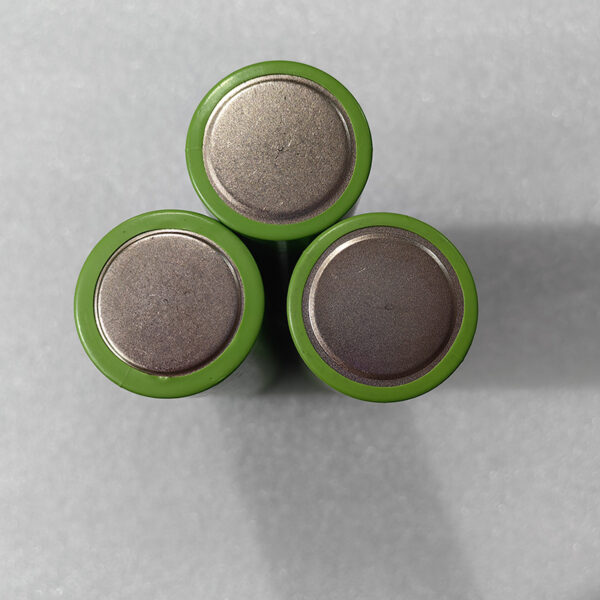
As a lithium battery industry analyst, I have closely observed the evolution of cylindrical cells in specialized applications. One segment where the cost-performance battle is fiercest is in Unmanned Aerial Vehicles (UAVs). While the industry often discusses 18650 or 21700 formats, the 60110 Flat Cylindrical Cell (also known as the “Monster Cell”) is gaining traction for high-power discharge due to its massive energy density.
However, for engineers and technical procurement managers, navigating the wholesale pricing of these cells can be a minefield. Many suppliers offer attractive quotes but compromise on the technical specifications critical for UAV safety and performance.
Based on my experience auditing battery supply chains, here are the top 5 competitive pricing problems you face with 60110 cells for UAVs, along with technical solutions and a comparison of how leading manufacturers stack up.
1. The “Capacity vs. Power” Mislabeling Trap
The Problem:
The most common pricing deception occurs in the specification sheet. Some wholesalers list “6000mAh” cells at rock-bottom prices. In reality, a true high-power 60110 cell designed for UAVs rarely exceeds 4500mAh-5000mAh. Why? Because to achieve the high discharge rates (3C, 5C, or even 10C) required for drone takeoff and maneuvering, the internal structure needs thicker electrodes and more robust current collectors. Cells labeled as 6000mAh are often “Energy” type cells masquerading as “Power” type cells. They will overheat and fail under UAV load.
The Technical Solution:
When sourcing, ignore the “mAh” hype if you need power. Look for cells specifically designated as INR (Nickel Manganese Cobalt) or IFR (Lithium Iron Phosphate, though less common in this format) with a discharge rating of at least 5C continuous. A genuine high-power 60110 should weigh significantly more than a standard cell due to the dense internal components needed for heat dissipation.
Expert Insight: In UAV applications, voltage sag under load is your enemy. A slightly lower capacity cell with a thick copper core will provide a more stable voltage curve than an over-rated “high-capacity” cell that sags immediately.
2. Cycle Life Inflation & The “B-Grade” Dump
The Problem:
UAVs require batteries that can withstand hundreds of charge-discharge cycles. However, aggressive pricing often means you are receiving “B-Grade” or “Sorting-Out” cells. These are cells that failed the manufacturer’s internal grading for capacity consistency or internal resistance. While they might work initially, their cycle life is often less than 100 cycles, leading to high replacement costs and potential in-air failures.
The Technical Solution:
Demand the Grade A certification. A genuine 60110 cell should offer >500 cycles at 1C discharge. Ask for the sorting bin specification from the factory. Reputable manufacturers like CNS Battery utilize automated production lines that ensure strict quality management, guaranteeing that every cell meets the high-energy density and long cycle life standards required for commercial applications.
3. The Hidden Cost of Poor Thermal Management
The Problem:
UAVs generate significant heat during operation. Cheap 60110 cells often use inferior separator films and electrolytes that degrade rapidly at temperatures above 60°C. While the upfront cost is low, the lack of thermal stability leads to “Thermal Runaway” risks or rapid capacity fade. Competitors might save money by skipping advanced thermal management design in the cell chemistry itself.
The Technical Solution:
Look for cells advertised with “Excellent high & low temperature cycle” capabilities. This requires advanced electrolyte formulations that remain stable under stress. In a side-by-side comparison, premium cells maintain performance in a wider temperature range, whereas budget cells become unstable, forcing you to add expensive external cooling systems to your UAV design, negating the initial cost savings.
4. Dimensional Tolerance & Module Assembly Failures
The Problem:
The 60110 is a large format cell. If the dimensional tolerances (diameter and height) are not precise, automated welding and module assembly lines face high failure rates. Cheap suppliers often have loose tolerances (e.g., Diameter variation of ±0.2mm). This leads to gaps in the battery pack, poor heat transfer, and increased resistance at the welding points, causing hotspots.
The Technical Solution:
Specify tight tolerances in your procurement contract (e.g., Diameter: 32.0±0.1mm, Height: 70.0±0.5mm). Advanced manufacturing facilities use laser measurement during production to ensure uniformity. This precision ensures that when you assemble these cells into a UAV battery system, the contact resistance is minimized, maximizing efficiency and safety.
5. The “Ultra-Safe” Certification Gap
The Problem:
Safety is non-negotiable in the sky. Many low-cost competitors skip rigorous safety certifications (like UL, UN38.3, or MSDS) or use substandard safety vents and CID (Current Interrupt Device) mechanisms. If a cell vents gas during a thermal event, a cheap cell can spray corrosive electrolyte onto the UAV’s electronics, causing a catastrophic crash.
The Technical Solution:
Verify that the cells have passed UN38.3 testing for transportation safety. A robust 60110 cell should have a reinforced steel case and a reliable CID that activates at the correct internal pressure. This isn’t just a feature; it’s a requirement for any professional UAV operation.
Head-to-Head: Premium vs. Budget 60110 Cells
To help you make an informed decision, here is a technical comparison of what you get when choosing between budget options and high-performance manufacturers.
| Feature | Budget Competitors | Premium Manufacturers (e.g., CNS) |
|---|---|---|
| True Capacity (Power Type) | Often inflated (6000mAh+), but sags under load. | Realistic rating (4500-5000mAh), stable voltage. |
| Discharge Rate | Rarely exceeds 3C; risks overheating. | Engineered for 5C-10C continuous discharge. |
| Cycle Life | < 100 cycles (B-Grade material). | > 500 cycles (Grade A, automated sorting). |
| Thermal Stability | Standard electrolyte; degrades in heat. | Advanced chemistry for high & low temp cycles. |
| Safety Mechanisms | Basic protection; risk of fire/explosion. | Reinforced case, reliable CID, UN38.3 certified. |
| Assembly Yield | Low (due to dimensional variance). | High (precision manufacturing). |
Conclusion: Partnering for Performance
Choosing a 60110 cell based solely on the lowest wholesale price is a false economy for UAV applications. The technical demands of flight—high current, thermal stress, and vibration—require a cell engineered for performance, not just capacity.
If you are an engineer or procurement manager looking for a partner that provides comprehensive cylindrical battery cells and customizable solutions without the hidden costs of failure, it is time to look beyond the spreadsheet.
We invite you to explore our range of high-performance cylindrical cells designed for the rigors of modern technology.
- View our Product Range: Cylindrical Battery Cell
- Learn about our Manufacturing Standards: Battery Manufacturers in China
For specific technical inquiries or to discuss your UAV project requirements, contact our engineering team directly.
- Contact Us: Contact Information


