

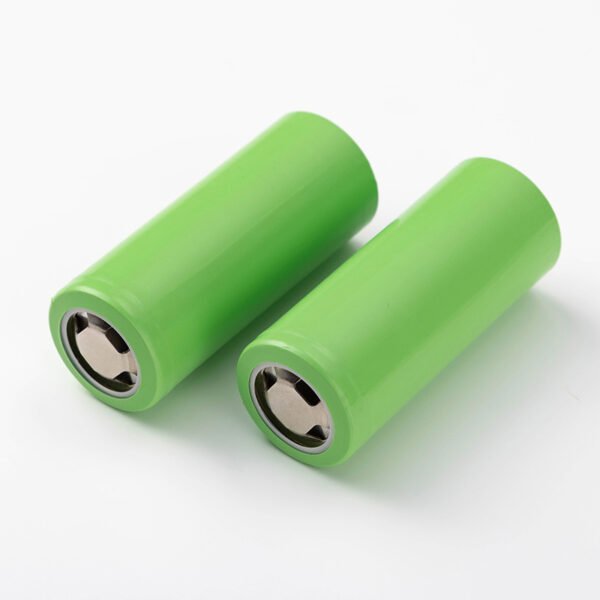
Top 5 Sample Test Report Problems with 18650 Cells in E-bike Applications & Solutions Solve Today
In the rapidly evolving landscape of micromobility, the 18650 lithium-ion battery remains the gold standard for E-bike applications. However, the transition from standard consumer electronics to high-drain electric bicycles is not without its engineering hurdles.
As a technical expert in battery systems, I have reviewed thousands of test reports. A recurring theme emerges: many failures in E-bike battery packs are not due to catastrophic manufacturing defects, but rather to mismatches in cell specifications and system design.
This article dissects the Top 5 Sample Test Report Problems encountered with 18650 cells in the field, providing actionable technical solutions and data-driven insights to solve these issues today.
🔋 Understanding the 18650 Cell: The Core of E-Bike Power
Before diving into the failures, it is crucial to understand the anatomy of the problem. The 18650 cell (named for its dimensions: 18mm diameter, 65mm height) is a marvel of engineering. In E-bike applications, these cells are rarely used solo; they are aggregated into modules.
The critical distinction lies in the chemistry:
- ICR (Cobalt): High energy density, suited for laptops.
- INR (Nickel Manganese): Balanced energy and power, the ideal choice for E-bikes due to thermal stability.
- IFR (Phosphate): High power, long life, but lower voltage.
When test reports flag “cell failure,” the root cause often lies in using a high-energy ICR cell where a high-power INR cell was required.
📉 Problem 1: Capacity Fading & Cycle Life Underestimation
The Test Report Red Flag: “Cycle life test terminated at 300 cycles (Target: 500+). Capacity drop >30%.”
One of the most common discrepancies in E-bike battery testing is the mismatch between laboratory cycle life and real-world performance. Standard test protocols often use low discharge rates (0.2C-0.5C). However, E-bikes demand high currents (1C-3C) for acceleration and hill climbing.
Technical Analysis:
Standard 18650 cells designed for laptops often use thin electrodes optimized for energy, not power. Under the high-stress environment of an E-bike, these electrodes suffer from rapid Lithium plating and Solid Electrolyte Interphase (SEI) layer growth, leading to fast capacity fade.
The Solution:
Engineers must specify 18650 cells with thicker electrodes and robust electrolyte formulations designed for high-cycle applications. A true E-bike battery requires cells engineered to withstand deep discharge cycles without structural degradation.
Expert Tip: Always verify the “Cycle Life at 2C Discharge” specification, not just the standard 0.5C rating.
⚡ Problem 2: Voltage Depression & High-Temperature Failure
The Test Report Red Flag: “Voltage dropped below BMS cutoff during peak load. Cell temperature exceeded 60°C.”
E-bikes generate significant heat. A standard symptom in test reports is “voltage depression,” where the cell voltage sags excessively under load, triggering the Battery Management System (BMS) to cut off power, leaving the rider stranded.
Technical Analysis:
This is a direct result of high Internal Resistance (IR). Standard 18650 cells have higher impedance. When an E-bike demands a sudden surge of power (e.g., starting from a stop), a high-IR cell cannot deliver the voltage, causing a “voltage crash.” Furthermore, high resistance converts electrical energy into heat, leading to thermal runaway risks.
The Solution:
Selection of low-impedance 18650 cells is non-negotiable. These cells utilize advanced conductive additives and optimized current collectors to minimize resistance. For E-bike applications, the cell must maintain voltage stability even at -20°C or +55°C operating temperatures.
⚖️ Problem 3: Module Imbalance & Capacity Mismatch
The Test Report Red Flag: “Module imbalance detected. One string discharged 20% faster than others.”
An E-bike battery pack is only as strong as its weakest cell. Test reports often highlight “module imbalance,” where the entire pack fails because one parallel group or series string degrades faster.
Technical Analysis:
This occurs due to poor binning (grading) of cells. If 18650 cells are assembled into a pack without strict matching of capacity, voltage, and internal resistance, the cells fight each other. The weaker cells are over-discharged and over-charged during every cycle, accelerating their demise.
The Solution:
Rigorous pre-assembly sorting is essential. Every cell batch destined for an E-bike battery must be tested and grouped within a tight tolerance (e.g., <1% variance in capacity and <2mΩ variance in IR). Automated production lines with strict QC gates are mandatory to prevent “bad apples” from entering the module.
🌡️ Problem 4: Thermal Runaway & Safety Hazards
The Test Report Red Flag: “Venting observed during Nail Penetration Test. High risk of fire.”
Safety is the paramount concern in E-bike applications. Test reports frequently cite failures in nail penetration, crush tests, or overcharge scenarios.
Technical Analysis:
Standard 18650 cells often lack the robust safety mechanisms required for the vibration-heavy, impact-prone environment of an E-bike. Weak CID (Current Interrupt Device) mechanisms or subpar electrolyte stability can lead to thermal runaway.
The Solution:
Utilize 18650 cells with reinforced mechanical structures. This includes:
- Thickened steel shells to resist deformation.
- Advanced separators with ceramic coatings to prevent short circuits.
- Stable electrolytes that do not combust easily.
🛠️ Problem 5: Mechanical Durability & Vibration Fatigue
The Test Report Red Flag: “Internal micro-short detected after vibration test. Welding points fractured.”
E-bikes operate on rough terrain. Standard 18650 cells are designed for static environments like data centers or living rooms, not for the constant vibration of a bicycle frame.
Technical Analysis:
Vibration causes two critical failures:
- Tab Welding Fracture: The connection between the cell and the nickel strip breaks.
- Internal Slippage: The jellyroll inside the cell shifts, causing internal shorts.
The Solution:
Mechanical robustness must be engineered into the cell and the pack. This involves laser welding with high tensile strength and potting or structural adhesives within the E-bike battery pack to dampen vibrations.
🚀 Conclusion: Engineering the Perfect E-Bike Battery
Solving the top 5 problems in 18650 cell testing requires more than just buying cells; it requires a partnership with a manufacturer that understands the specific rigors of E-bike applications.
At CNS BATTERY, we engineer solutions, not just cells. Our cylindrical battery cells are designed from the ground up to meet the specific demands of high-power applications.
Why Choose CNS BATTERY for Your E-Bike Project?
- Automated Production: We utilize fully automated production lines to ensure zero defects and perfect consistency, eliminating the “bad apple” effect in modules.
- High-Energy Density & Power: Our 18650 cells are optimized with INR chemistry to deliver the perfect balance of energy for range and power for torque.
- Ultra-Safe Design: With reinforced shells and advanced BMS integration, our cells pass the most stringent safety tests, including nail penetration and high-temperature cycles.
- Global Compliance: We adhere to international standards (UN38.3, MSDS, IEC) ensuring your E-bike battery can be shipped and sold worldwide.
Don’t let test report failures delay your product launch. Let us help you build a battery that powers the future of micromobility.
Ready to Solve Your 18650 Cell Challenges?
Contact our technical team today for a customized solution that meets the exact demands of your E-bike application.
📞 Contact Us Now
📍 Location: No.53, Science Avenue, Zhengzhou, China (A prime location for battery innovation)
🌐 Explore Our Technology: Battery Manufacturer in China
🔋 View Our Product Range: Cylindrical Battery Cell Products
✍️ Get a Quote: Contact Information


