🇦🇺 The 26650 Battery Cell: Why Australian Engineers Choose High-Density Reliability
In the harsh, high-demand energy landscapes of Australia—from remote off-grid solar farms to heavy-duty industrial tools—reliability isn’t optional; it’s a requirement. For engineers and procurement specialists navigating the Australian market, the 26650 Battery Cell represents a critical sweet spot between energy density and structural robustness.
While the global market often obsesses over the 18650 or 21700 form factors, the 26650 cylindrical cell offers a distinct engineering advantage: superior thermal management and higher single-cell capacity, making it ideal for applications where minimizing cell count (and thus Battery Management System complexity) is paramount.
This article dissects the technical architecture of the 26650, compares it against standard chemistries, and explains why sourcing from a vertically integrated manufacturer like CNS Battery ensures compliance with the rigorous safety standards required in the Australian and broader Oceania regions.
⚙️ Technical Deep Dive: The 26650 Architecture
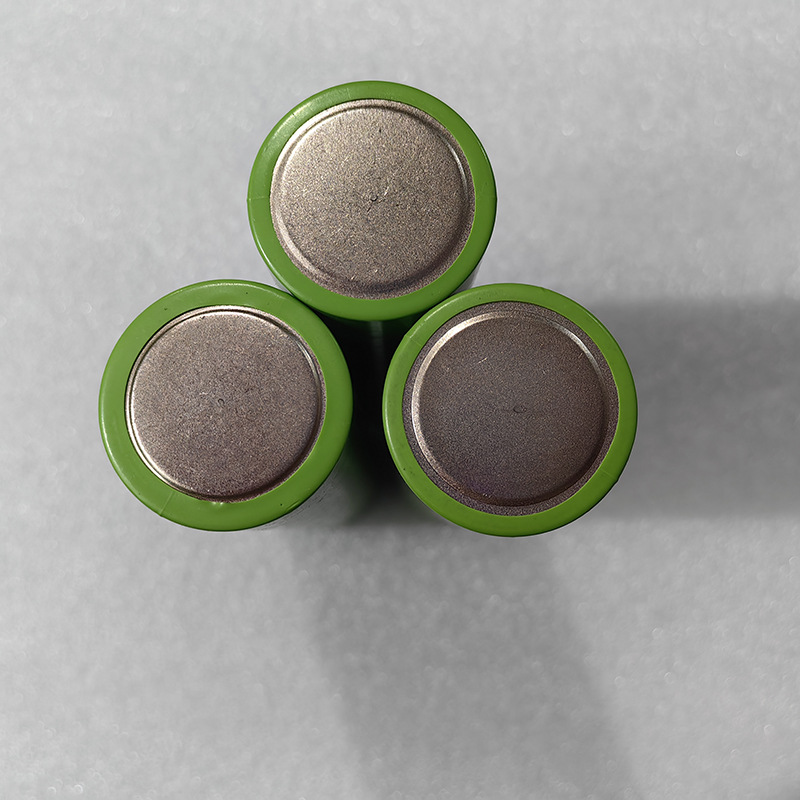
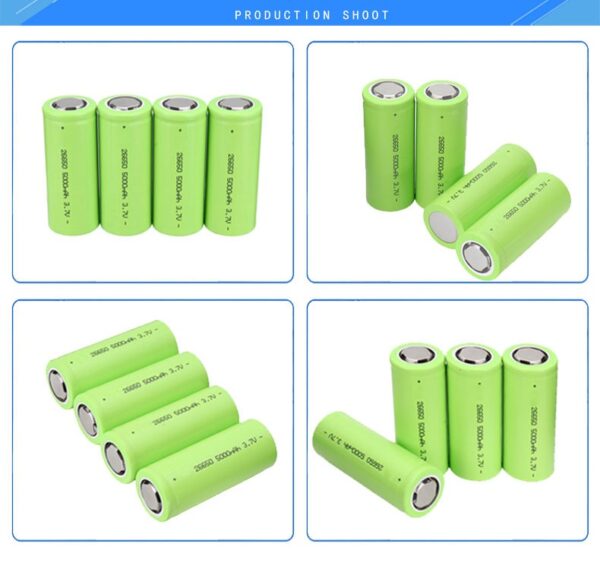
The “26650” designation refers to the physical dimensions of the cylindrical cell: 26mm in diameter and 65.0mm in length. This larger footprint compared to the 18650 allows for thicker electrodes and a higher active material loading, directly translating to higher capacity (mAh) and current handling capabilities.
Core Chemistry Profiles
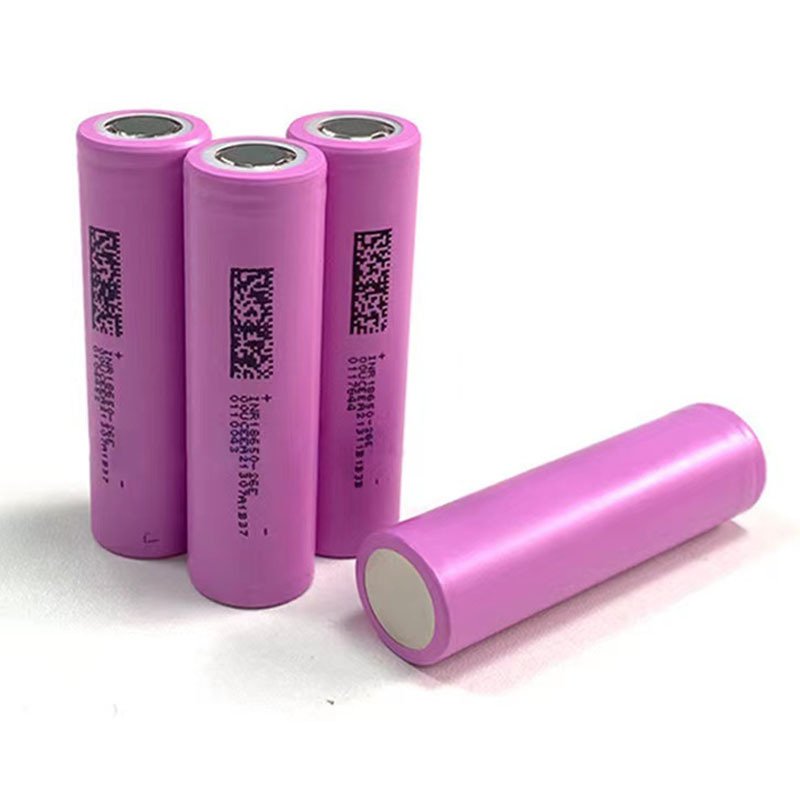
When evaluating a 26650 cell, the chemistry dictates its application. While specific 26650 models may vary, they generally fall into the same IEC 61960-3 standard profiles as their smaller cousins:
| Chemistry Code | Full Name | Typical Voltage | Best Use Case |
|---|---|---|---|
| IMR | Lithium Manganese Oxide (Li-Mn) | 3.7V | High Drain, Power Tools |
| INR | Lithium Manganese Nickel (NMC) | 3.7V | Balanced Energy/Power, Ebikes |
| IFR | Lithium Iron Phosphate (LiFePO4) | 3.2V | Extreme Safety, Long Cycle Life |
Note: While the specific 26650 datasheet is subject to project customization, the principles of cylindrical cell design remain consistent across the CNS portfolio, including our standard Cylindrical Battery Cell range.
The Physics of Size Advantage
The larger surface area of the 26650 allows for more efficient heat dissipation. In high-drain applications (such as Australian mining equipment or high-capacity UPS systems), this means the cell is less prone to thermal runaway. Furthermore, the lower cell count required for a given kWh rating simplifies the mechanical design of the battery pack, reducing the number of welds and potential failure points.
🧪 Quality Assurance: Testing the 26650 Standard
For a technical procurement officer, “in stock” means nothing without “verified quality.” At CNS Battery, our QA process for cylindrical cells like the 26650 (and our standard 18650/21700 lines) involves a battery of stress tests designed to exceed IEC and UN38.3 transportation standards.
1. The “Crush” Test (Mechanical Abuse)
We simulate physical impacts by applying a hydraulic pressure of 13kN to the cell surface. A pass result requires no fire, no explosion, and a temperature peak below 150°C. This is non-negotiable for equipment operating in sensitive environments.
2. The “Hot Box” Test (Thermal Abuse)
Cells are placed in an oven and ramped from 25°C to 300°C at a rate of 5°C/min. The cell must vent safely without detonation. This ensures safety during the extreme summer heat often found in Australian storage facilities or outdoor deployments.
3. Cycle Life Validation
We don’t just test single charges. We validate cycle life by charging and discharging cells at 1C rate in a 25°C ambient environment for over 1000 cycles. A premium 26650 should retain >80% capacity after 1000 cycles, ensuring a long operational lifespan for your equipment.
🌍 Geo-Compliance: Adapting to Australian & Global Standards
Sourcing a “China Warehouse” or “In Stock” item is convenient, but exporting it to Australia requires strict adherence to local regulations. This is where the technical barrier to entry exists.
AS/NZS 62133 Compliance
The Australian market mandates compliance with AS/NZS 62133 (Safety requirements for portable sealed secondary cells). This standard focuses heavily on the cell’s internal resistance and its ability to handle overcharge and forced discharge without failure.
CNS Battery’s manufacturing process is designed with these global geographies in mind. By utilizing automated production lines and strict Statistical Process Control (SPC), we ensure that every cell batch—whether destined for the Australian warehouse or direct export—meets the specific voltage tolerances and safety margins required by:
- Australia/NZ: AS/NZS 62133
- Europe: CE, RoHS, REACH
- North America: UL 1642 / UL 2054
The “Local Stock” Advantage for R&D
Having stock available locally (or regionally in Asia for fast shipping to Australia) drastically reduces the NPI (New Product Introduction) cycle. Instead of waiting 45-60 days for a sea freight container, engineers can receive samples or small batches within days to run their own BMS compatibility tests.
🏭 The CNS Technical Edge: Beyond the Cell
Choosing a Battery Manufacturer in China is not just about price; it is about accessing advanced R&D infrastructure. At CNS, our technical advantage lies in our vertical integration.
1. Customization Capability
The 26650 is often used in niche industrial applications. We offer customization on:
- Tab Configuration: Laser-welded nickel tabs can be positioned axially or radially to fit specific pack designs.
- Voltage Cutoffs: Adjusting the BMS communication parameters to match your specific discharge curves.
- Thermal Interface: Adding specialized sleeves for direct cold plate contact.
2. Automated Manufacturing
Human error is the enemy of battery consistency. Our production lines utilize AI-driven visual inspection systems that scan each cell at 1000+ fps to detect micro-dents or impurities. This level of automation ensures that the 26650 cells you receive are statistically identical, which is critical for maintaining balance in a multi-cell battery string.
3. Environmental Responsibility
Meeting Australian standards also means meeting environmental expectations. Our recycling program ensures that end-of-life cells are processed to recover Cobalt, Nickel, and Lithium, closing the loop on the battery lifecycle.
📬 Conclusion: Sourcing with Confidence
The 26650 Battery Cell remains a workhorse for high-reliability applications. While it may not be the most common size on the shelf, its performance characteristics make it indispensable for specific engineering challenges.
If you are an engineer or procurement manager in Australia looking to validate a supply chain, the key is to partner with a manufacturer that speaks the language of compliance as fluently as they speak the language of chemistry.
Ready to test the limits of your next design?
For technical datasheets, sample requests, or to discuss specific 26650 customization for the Australian market, contact our engineering team today. We provide the technical backbone so your innovation can power forward.