
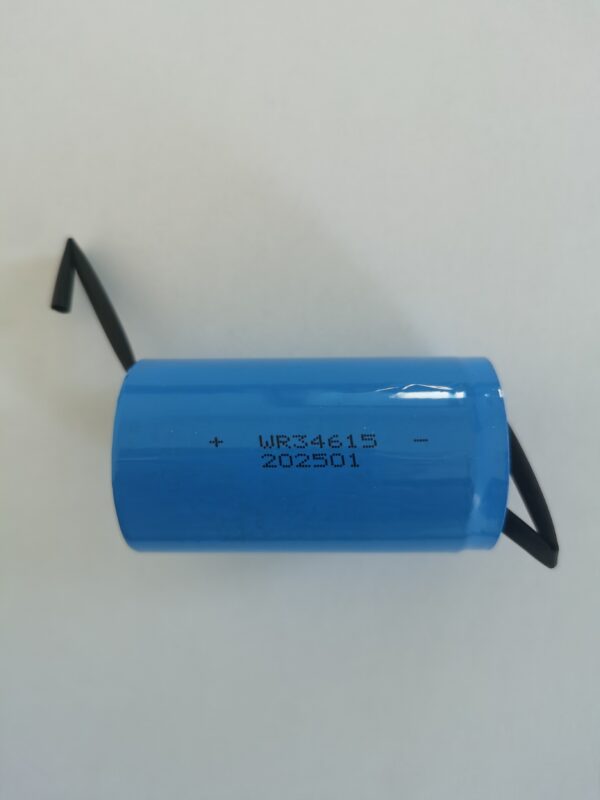
The Ultimate Power Solution for Ambulance Portable Suction Devices: Lithium-Thionyl Chloride (Li-SOCl₂) Batteries
In the high-stakes environment of emergency medical services, every second counts. Ambulance portable suction devices are critical life-saving tools, often deployed in chaotic, high-pressure situations where a patient’s airway must be cleared immediately. The reliability of these devices is not just a matter of convenience; it is a matter of life and death.
While the mechanics and ergonomics of the suction unit are vital, the often-overlooked hero is the power source. Standard alkaline or rechargeable lithium-ion batteries frequently fail in these applications due to “vampire drain” (parasitic load) or insufficient runtime. This is where Lithium-Thionyl Chloride (Li-SOCl₂) batteries become the definitive engineering solution.
As a professional primary lithium battery manufacturer, CNS Battery specializes in providing high-energy-density power solutions for critical medical and industrial applications. In this article, we will dissect why Li-SOCl₂ chemistry is the gold standard for ambulance suction pumps and how our specific battery configurations meet these rigorous demands.
Why Standard Batteries Fail in Portable Suction Units
Before diving into the solution, it is crucial to understand the technical limitations of common power sources in this specific use case.
1. The Parasitic Load Dilemma
Portable suction devices in ambulances are rarely used continuously for hours. Instead, they sit on the shelf for weeks or months, ready for instant deployment. During this standby period, the device’s internal electronics (such as pressure sensors, LED indicators, or microcontrollers) draw a small but constant current. This is known as a parasitic load.
Standard alkaline batteries suffer from high self-discharge rates and are prone to leakage when subjected to this low-level drain over long periods. Rechargeable Lithium-ion (Li-ion) batteries, while powerful, lose charge rapidly when idle and require frequent maintenance charging, which is often neglected in busy EMS environments.
2. Voltage Depression and High Current Demands
When a clinician activates a suction device, the motor demands a high current surge to create immediate vacuum pressure. Standard primary lithium batteries (like Lithium Manganese Dioxide – Li-MnO₂) have high energy density but struggle with high pulse loads. Furthermore, if the battery voltage drops below the motor’s operating threshold due to internal resistance, the device fails to start—a catastrophic failure in an emergency.
Technical Deep Dive: The Superiority of Li-SOCl₂ Chemistry
Lithium-Thionyl Chloride (Li-SOCl₂) chemistry offers a unique set of electrochemical properties that make it the only viable solution for long-term, mission-critical medical devices.
1. Unmatched Energy Density and Longevity
Li-SOCl₂ batteries possess the highest energy density of any commercially available primary (non-rechargeable) battery chemistry. This is due to the use of Lithium metal as the anode and Thionyl Chloride (SOCl₂) as both the cathode and electrolyte.
- Voltage: Nominal 3.6V (significantly higher than the 1.5V of Alkaline or 3.0V of Lithium Manganese Dioxide).
- Self-Discharge: Less than 1% per year. This allows the device to sit on the shelf for 10-15 years without losing significant capacity.
2. Overcoming Voltage Delay with Bobbin Design
One common criticism of Li-SOCl₂ cells is the “voltage delay” — a brief drop in voltage immediately after a high current is applied. However, modern medical devices often incorporate a small “keep-alive” capacitor or utilize the Bobbin construction of the cell.
The Bobbin design (as opposed to the Spiral/Jellyroll design) has a lower surface area contact between the electrodes, which reduces the chemical reaction rate during idle periods (preventing self-discharge) but allows for stable high-current pulses when required. When paired with a small parallel Lithium Manganese Dioxide (Li-MnO₂) cell or a capacitor, the Li-SOCl₂ provides the long-term “trickle” power, while the secondary cell handles the initial motor surge.
CNS Battery: Engineering the Power for Critical Care
At CNS Battery, we understand that medical device manufacturers require not just cells, but engineered systems. We provide customized Primary Battery solutions specifically designed to overcome the limitations of standard off-the-shelf batteries.
1. High Pulse Modifications
Standard Li-SOCl₂ cells are designed for low-rate applications (e.g., memory backup). For suction devices, we utilize proprietary cathode additives and electrode structuring to reduce internal impedance. This modification allows our batteries to deliver the high pulse currents required by medical suction motors without significant voltage delay.
2. Battery Management and Configuration
While Primary batteries do not require the complex Battery Management Systems (BMS) of rechargeable packs, they do require careful mechanical and electrical integration. Our engineering team works with OEMs to design battery packs that may include:
- Capacitor Integration: To handle the initial inrush current.
- PTC Devices: For safety and over-current protection.
- Custom Connectors: Ensuring a secure connection in the high-vibration environment of an ambulance.
3. Quality and Reliability
We adhere to strict quality management protocols. Every battery undergoes rigorous testing for leakage, voltage stability, and pulse performance. In the medical field, a 0.1% failure rate is unacceptable; our manufacturing processes are designed to achieve Six Sigma levels of quality.
Conclusion: Choosing the Right Partner
Ambulance portable suction devices are not consumer gadgets; they are the last line of defense against asphyxiation. Choosing the wrong battery chemistry leads to device failure, costly recalls, and, worst of all, compromised patient safety.
Lithium-Thionyl Chloride technology, when properly engineered and modified for high pulse applications, offers the only solution that guarantees power after a decade on the shelf and performance during the critical first few seconds of a rescue.
If you are an engineer, a procurement manager, or an OEM looking to integrate the most reliable power source into your next-generation medical device, do not settle for standard solutions.
Explore our range of high-performance primary lithium batteries and discover how we can customize a power solution for your specific needs. Contact our technical sales team today to discuss your project requirements or browse our Product Center to see our capabilities.
