
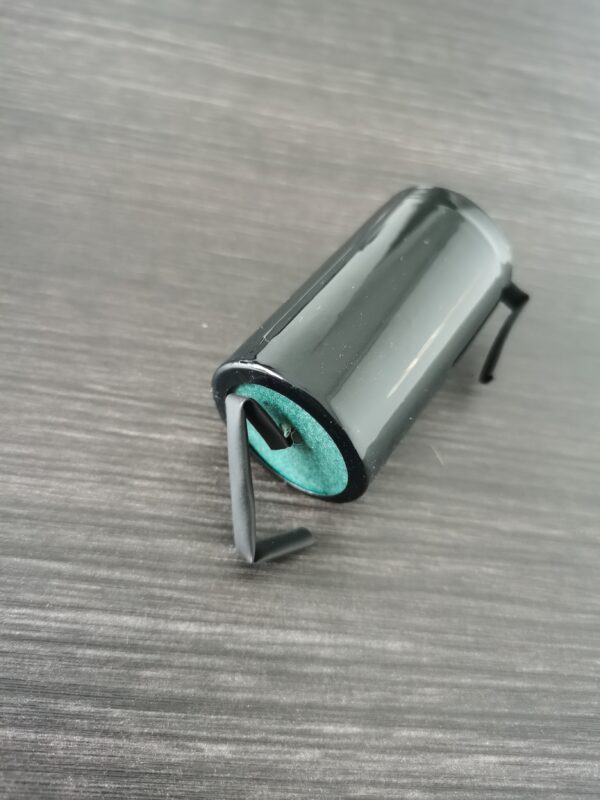
🔋 The Definitive Guide to ATEX & IECEx Certified Lithium Batteries
In the realm of industrial safety, the margin for error is zero. As a professional lithium battery engineer specializing in primary (non-rechargeable) cells, I understand that powering devices in hazardous environments requires more than just energy storage—it demands absolute safety. Whether you are designing medical implants, military communication gear, or oil and gas sensors, using a standard battery in a volatile atmosphere is a gamble you cannot afford.
This article serves as a technical deep dive into Explosion Proof Lithium Batteries, specifically focusing on the standards that matter: ATEX and IECEx. We will dissect the technology that allows lithium batteries to operate safely in flammable atmospheres and guide you on how to select the right partner for your critical application.
⚡ Why Standard Lithium Batteries Fail in Hazardous Zones
Lithium metal batteries are the gold standard for long-term, high-energy density applications. However, the very chemistry that makes them powerful—lithium reacting with electrolytes—can also be their weakness in the wrong conditions.
In a standard industrial setting, a battery is a sealed unit. But in a hazardous zone (where gases, vapors, dust, or fibers are present), a failure of the battery casing can lead to a catastrophic chain reaction. If an internal short circuit occurs, the heat generated can ignite the surrounding atmosphere.
The core challenge for engineers is this: How do you harness the high voltage and long shelf life of lithium metal (typically Lithium-Thionyl Chloride or Lithium-Sulfur Dioxide) without creating a potential ignition source?
The answer lies not just in the cell chemistry, but in the system-level protection.
🔒 The Gold Standard: ATEX & IECEx Certification
When sourcing batteries for hazardous locations, you must look for certifications, not just specifications. These are not mere labels; they are legally enforceable proofs of safety testing.
1. IECEx (International Electrotechnical Commission System for Certification to Standards Relating to Equipment for Use in Explosive Atmospheres)
This is the global benchmark. An IECEx certificate means the equipment (in this case, the battery assembly) has been tested against the IEC 60079 series of standards. For battery engineers, this involves rigorous testing for:
- Temperature Classification (T-rating): Ensuring the surface temperature never exceeds the ignition temperature of the specific gas group (e.g., IIA, IIB, IIC).
- Encapsulation: Proving that the battery cannot release sparks or hot particles even under fault conditions (like a short circuit).
- Ingress Protection (IP): Verifying the seal against dust and moisture that could compromise the cell.
2. ATEX (Atmosphères Explosibles)
Specifically for the European Union, ATEX directives (2014/34/EU for equipment and 1999/92/EC for workplace safety) are mandatory. If your device operates in a Zone 0, 1, or 2 (gas) or Zone 20, 21, or 22 (dust), the battery must carry the CE marking with the Ex symbol.
Expert Insight: Do not confuse “Intrinsically Safe” (IS) design with “Explosion Proof” housing. While both are valid, our focus here is on Encapsulation Technology. This involves potting the battery cells in a specialized thermally conductive but electrically insulating resin. This resin absorbs heat, prevents arcing, and physically contains any potential rupture.
⚙️ Technical Specifications: The “Explosion Proof” Formula
To achieve these certifications, a primary lithium battery undergoes specific engineering modifications. Here is a breakdown of the critical technical parameters that define a safe, certified solution.
The Chemistry Choice: Lithium-Thionyl Chloride (LiSOCl₂)
For long-term deployment in harsh environments, Lithium-Thionyl Chloride remains the dominant chemistry. Here is why it is preferred for ATEX/IECEx applications:
| Feature | Standard Lithium-Ion | Lithium-Thionyl Chloride (Primary) | Advantage for Hazardous Zones |
|---|---|---|---|
| Voltage | 3.6V – 3.7V | 3.6V (Nominal) | Higher voltage reduces current draw, minimizing heat generation. |
| Energy Density | High | Very High | Less physical mass required, reducing potential reaction energy. |
| Self-Discharge | ~2-5% per month | <1% per year | Remains stable for decades without maintenance. |
| Operating Temp | -20°C to 60°C | -55°C to +85°C | Operates reliably in extreme cold or heat without thermal runaway. |
| Hermetic Seal | Required | Laser-Welded Metal | Absolute gas-tight seal prevents external atmosphere ingress. |
The Safety Mechanism: Potting & Encapsulation
A raw lithium cell is not “explosion proof.” It becomes certified only when integrated into a system.
- Thermal Management: The potting compound acts as a heat sink. If the cell begins to heat up due to an internal fault, the resin dissipates the heat slowly, preventing the “thermal runaway” that leads to explosion.
- Arc Suppression: The resin fills all air gaps. Without oxygen pockets inside the housing, an electrical arc cannot sustain itself.
🏭 Applications: Where Safety is Non-Negotiable
As an engineer, you likely encounter these specific use cases where standard batteries are strictly prohibited.
1. Oil & Gas Exploration
Downhole drilling tools and sensors operate in environments filled with methane and other hydrocarbons. A single spark from a battery fault can be fatal. Our certified primary lithium batteries are designed to withstand high pressures and temperatures while maintaining an inert barrier between the cell and the explosive wellbore gases.
2. Industrial IoT & Smart Cities
Modern smart meters (gas, water, electricity) are often installed in confined spaces or underground vaults where gas leaks can accumulate. Using an uncertified battery in a gas meter is a liability. Certified batteries ensure that the communication module (often transmitting via NB-IoT or LoRa) has a power source that will never ignite a leaking gas line.
3. Military & Defense
Field-deployed electronics must function in extreme conditions. Whether it is a GPS tracker in a desert sandstorm (dust hazard) or a communication device near fuel stores, the reliability of a primary lithium cell combined with ATEX certification ensures mission continuity without safety risks.
🤝 Partnering for Safety: Your Next Steps
Selecting an explosion-proof lithium battery is not a simple off-the-shelf purchase. It requires collaboration with a manufacturer who understands the nuances of hazardous location standards.
If you are currently specifying batteries for a project that will operate in a hazardous environment, do not leave the certification to chance. You need a partner who can provide:
- Full Documentation: Complete IECEx and ATEX test reports and certificates.
- Custom Engineering: The ability to modify the battery pack dimensions and connectors to fit your specific device housing.
- Long-Term Reliability: A guarantee that the battery will last the lifetime of the device without maintenance.
Ready to secure your power source?
Contact our engineering team today to discuss your specific requirements for ATEX & IECEx Certified Lithium Batteries. We provide expert consultation to ensure your product meets global safety standards.
📞 Connect with our experts now:
Contact Us for Explosion Proof Battery Solutions
🌐 Explore our certified primary battery range:
View Primary Battery Products
