The Ultimate Guide to 18650 LFP Cylindrical Batteries for Power Tools: Performance Meets Sustainability
In the high-demand world of cordless power tools, the choice of battery chemistry is no longer just about runtime and power density. As global supply chains tighten and ESG (Environmental, Social, and Governance) regulations become mandatory rather than optional, engineers and procurement managers are shifting their focus toward Lithium Iron Phosphate (LFP) technology. Specifically, the 18650 LFP Cylindrical Battery has emerged as the gold standard for industrial applications requiring robust safety, long cycle life, and a verifiable low carbon footprint.
Unlike consumer-grade NMC (Nickel Manganese Cobalt) cells, which prioritize high energy density at the expense of thermal stability, LFP cells offer a distinct advantage in high-drain applications. This article delves into the technical specifications, thermal management benefits, and sustainable manufacturing processes that make 18650 LFP cells the superior choice for next-generation power tools.
Why LFP? Decoding the Chemistry for Industrial Use
At the heart of every industrial battery pack lies a fundamental chemical decision. Lithium Iron Phosphate (LiFePO4) differs from traditional lithium-ion chemistries in its crystal structure.
The “Olivine” Structure Advantage:
LFP utilizes an olivine crystal structure, which provides exceptional electrochemical stability. This translates directly to the field:
- Thermal Stability: LFP cells do not release oxygen when overheated, unlike NMC or Cobalt-based batteries. This makes thermal runaway—a catastrophic fire risk—virtually impossible.
- Voltage Profile: While the nominal voltage of an LFP cell is typically 3.2V (compared to 3.6V-3.7V for NMC), this lower voltage results in less heat generation during high-current discharge, which is critical for power tools that operate at high C-rates.
For engineers designing tools for the construction or manufacturing sector, this means fewer warranty claims related to battery swelling or fires and a safer product for end-users.
Technical Deep Dive: The 18650 Form Factor
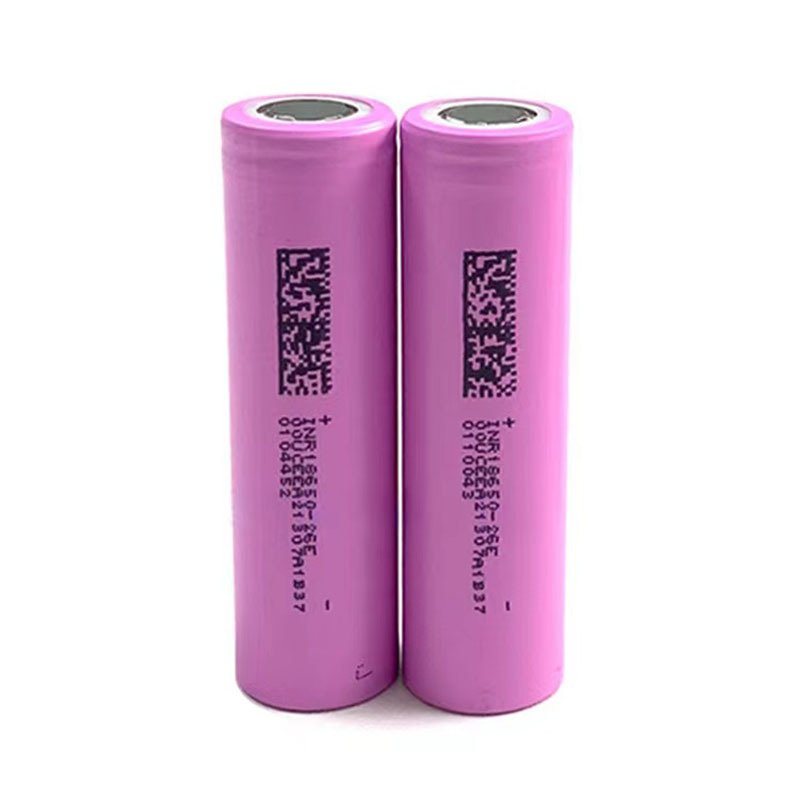
The 18650 designation refers to the physical dimensions of the cell: 18mm in diameter and 65mm in length. While this format has been around for decades, modern LFP iterations have been optimized for high power.
Key Specifications for Power Tool Design:
When sourcing cells, look for the following parameters to ensure compatibility with heavy-duty tool motors:
- High Discharge Rates: Industrial LFP cells are engineered to handle continuous discharge currents of up to 15C or 20C. For an 18650 cell with a capacity of 2.5Ah, this equates to a continuous output of 37.5A to 50A.
- Cycle Life: A standard NMC 18650 might last 500-800 cycles before dropping to 80% capacity. A high-quality LFP 18650 can achieve 2,000 to 3,000 cycles, effectively doubling the lifespan of the battery pack.
- Consistency: The cylindrical format allows for superior heat dissipation compared to pouch cells, and the rigid steel casing provides mechanical stability during vibration—a common stressor in power tool environments.
Expert Tip: When designing a Battery Management System (BMS) for LFP packs, remember that the voltage curve is very flat. Accurate State of Charge (SoC) calculation requires a BMS with advanced Coulomb counting, as voltage-based estimations are unreliable with LFP chemistry.
Sustainability: The Carbon Footprint Factor
Today’s procurement decisions are heavily influenced by the environmental impact of the supply chain. The manufacturing location and process of your battery cells directly affect your Scope 3 emissions.
The “China Factory Direct” Dilemma:
Sourcing directly from Chinese manufacturers offers significant cost advantages, but it often raises questions about energy sources and labor practices. However, the landscape is changing rapidly. Leading factories are now transitioning to renewable energy sources to meet the carbon footprint requirements of EU and US clients.
Key Sustainability Metrics:
- Localized Production: Sourcing from a factory in Zhengzhou, for example, reduces logistical emissions compared to shipping cells from Europe or America to the final assembly point in Asia.
- Recyclability: LFP chemistry is inherently more recyclable than cobalt-rich chemistries. The iron and phosphate components are non-toxic and have established recycling streams.
- Longevity = Less Waste: By choosing a cell with a 3,000-cycle life, you are effectively reducing the number of battery packs that end up in landfills over the lifetime of a tool fleet by 60-70%.
Selecting the Right Manufacturer: Beyond the Datasheet
Finding a reliable China Factory Direct Supplier requires looking beyond the glossy marketing brochures. As a technical buyer, you need to verify the manufacturer’s R&D capabilities and quality control processes.
What to Look for in a Supplier:
- Automated Production Lines: Manual assembly introduces variability. Look for suppliers utilizing fully automated lines with laser welding and vacuum sealing to ensure cell-to-cell consistency.
- Safety Testing Facilities: A reputable manufacturer should have in-house chambers for overcharge, short circuit, nail penetration, and crush tests.
- Customization Capabilities: While the 18650 is a standard size, the internal chemistry can be tweaked. A good supplier should offer customization for specific discharge curves or low-temperature performance.
CNS BATTERY: A Case Study in Industrial Supply
For instance, manufacturers like CNS BATTERY, located in Zhengzhou, China, exemplify the modern direct-supply model. They specialize in cylindrical cells, including high-power LFP variants suitable for power tools. By operating as a direct factory supplier, they eliminate middlemen, allowing for competitive pricing without compromising on the R&D needed to meet international safety standards (such as UL or IEC certifications). Their focus on automated production ensures that each batch of 18650 cells meets the strict tolerances required for industrial battery packs.
Conclusion: The Future of Cordless Power
The transition to 18650 LFP technology is not just a trend; it is a technical evolution driven by safety and sustainability mandates. For power tool manufacturers, the choice is clear: adopt LFP to future-proof your products against rising safety regulations and consumer demand for eco-friendly hardware.
When sourcing these components, prioritize suppliers who are transparent about their carbon footprint and offer the engineering support necessary to integrate these cells into robust, long-lasting tool systems.
Ready to upgrade your power tool battery packs?
Explore the full range of Cylindrical Battery Cells engineered for industrial performance and sustainability. Visit our product center to find the perfect 18650 LFP solution for your next design iteration.
Explore Our Cylindrical Battery Range
Need technical specifications or a quote?
Contact our engineering team directly for support on custom solutions and factory-direct pricing.
For more insights on selecting the right Battery Manufacturer in China, visit our comprehensive guide on industrial battery supply chains.