

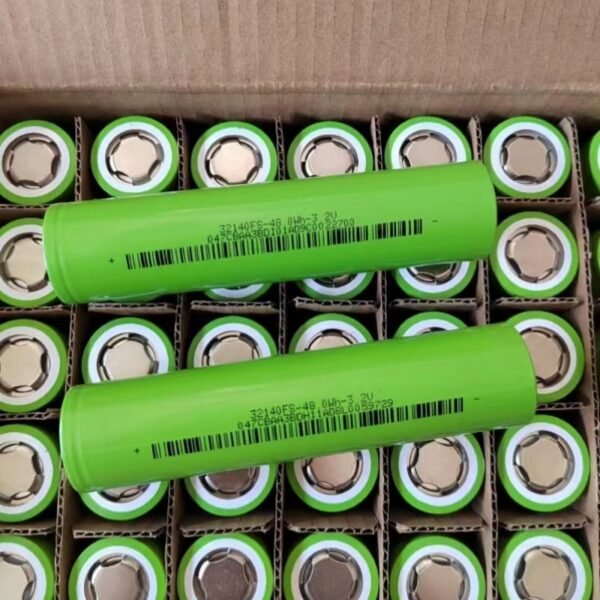
The 33135 Battery Cell: High-Density Power for Telecom & Industrial Applications
In the rapidly evolving landscape of energy storage, cylindrical lithium-ion batteries remain a cornerstone for industrial, commercial, and telecommunications applications. While the industry often discusses standard formats like the 18650 or 21700, there is a growing demand for specialized, high-capacity cells capable of supporting heavy-duty infrastructure. This article delves into the technical specifications and application advantages of high-performance cylindrical cells, focusing on their critical role in modern power systems.
Understanding Cylindrical Cell Nomenclature & Technology
Before analyzing specific high-capacity models, it is essential to understand the IEC 61960 standard nomenclature used for lithium-ion cells. The alphanumeric code provides immediate insight into the cell’s physical characteristics.
The format is typically [Chemical System][Shape][Dimensions].
- Chemical System Prefixes:
- I = Lithium-ion (typically referring to oxide-based cathodes like NMC or LCO).
- L = Lithium Polymer (though often used interchangeably with I in industrial contexts).
- N = Nickel-based (often used in conjunction with I for NMC chemistry).
- M = Manganese-based (e.g., IMR for Lithium Manganese Oxide).
- F = Iron-based (e.g., IFR for Lithium Iron Phosphate).
- S = Silicon-based anodes (e.g., ISR for high-energy density cells).
- Shape: “R” denotes a round (cylindrical) cell.
- Dimensions: The numbers indicate physical size in millimeters. For example, an 18650 cell is 18mm in diameter and 65.0mm in height. Similarly, a 32700 cell is 32mm in diameter and 70.0mm in height.
The Evolution from 18650 to 32700: Power Density Scaling
The lithium-ion industry has witnessed a clear trend toward larger form factors to achieve higher energy density and lower system costs (Cost per kWh). This evolution is driven by the “Square-Cube Law,” where volume (and thus energy storage capacity) increases faster than surface area.
- The 18650 Era: The industry standard for decades, widely used in consumer electronics, power tools, and early electric vehicles. While reliable, their smaller size results in a higher ratio of inactive materials (cans, caps, and welds) to active materials, increasing the cost per kWh in large battery packs.
- The 21700 Transition: With a 45% increase in volume over the 18650, the 21700 format reduces the number of cells required in a pack by approximately 30%. This improves pack-level energy density and simplifies Battery Management System (BMS) complexity.
- The 32700 (and 33135) Advancement: Representing the next generation of high-capacity storage, cells in the 32mm diameter category (such as the 32700 or the specialized 33135 format) offer even greater volumetric efficiency. These cells are specifically engineered for applications requiring massive energy throughput and long cycle life, such as Energy Storage Systems (ESS) and Telecom Base Stations.
Technical Analysis of High-Capacity Cylindrical Cells
High-capacity cylindrical cells, such as those in the 32mm diameter family, are distinct from their smaller counterparts due to their internal architecture and thermal management capabilities.
1. Structural Robustness and Pressure Tolerance
Cylindrical cells are renowned for their mechanical strength. The “jellyroll” winding process creates a structure with high isotropic strength. Larger cells like the 32700 maintain this robustness while housing significantly more active material. This structural integrity is vital for Telecom applications where batteries may sit idle for long periods but must deliver full power instantly during a grid failure.
2. Thermal Management and Surface-to-Volume Ratio
A critical engineering challenge in larger cells is heat dissipation. Unlike pouch cells, which can utilize large flat surfaces for cooling, cylindrical cells rely on radial heat transfer. High-end manufacturers utilize advanced electrolyte formulations and optimized electrode designs to minimize internal resistance (IR). For instance, cells designed for Telecom Base Stations often utilize IFR (Iron Phosphate) or INR (Nickel Manganese Cobalt) chemistries due to their superior thermal stability compared to standard Cobalt Oxide (ICR) batteries. The larger size of a 32700 cell actually allows for thicker electrode coatings, which can be engineered to reduce resistance and heat generation during high-rate discharges typical in backup power scenarios.
3. Electrode Engineering and Tab Design
To handle the high currents required for Telecom backup, advanced cells utilize sophisticated tabbing designs. Multi-tab configurations or “Laser-Notched” electrodes reduce the electron pathway length within the jellyroll. This engineering reduces impedance, allowing the cell to deliver high power without significant voltage sag. For a 33135 Battery Cell, this means maintaining voltage stability even under the heavy load demands of a cellular transmission tower during a power outage.
Applications in Telecom and Industrial Sectors
Telecom Base Stations and industrial applications have unique requirements that high-capacity cylindrical cells are perfectly suited to address:
- Deep Cycle Requirements: Unlike consumer electronics that discharge from 100% to 0% occasionally, Telecom batteries often undergo partial state-of-charge (PSOC) cycling daily. High-capacity cells are engineered with thick, robust electrodes that resist degradation during deep discharge cycles.
- Longevity and Calendar Life: Base stations are often located in remote or hard-to-access areas. Maintenance costs are high, necessitating batteries with a lifespan exceeding 10 years. Advanced cylindrical cells achieve this through stable chemistries (such as Lithium Iron Phosphate) and hermetic sealing techniques that prevent electrolyte dry-out.
- Scalability: The modular nature of cylindrical cells allows engineers to design battery packs ranging from 48V/100Ah units for small cells to massive MW-scale storage units for central offices by simply aggregating more cells.
Selecting the Right Partner for Industrial Power
When sourcing cylindrical lithium-ion batteries for critical infrastructure, technical specifications are only one part of the equation. Reliability, supply chain stability, and customization capability are paramount.
CNS BATTERY stands as a leading Battery Manufacturer in China, specializing in high-performance cylindrical cells. With a focus on “Every battery is a masterpiece of craftsmanship,” CNS Energy provides comprehensive solutions ranging from standard 18650 and 21700 cells to specialized high-capacity formats suitable for Telecom Base Stations.
Their product range includes cells optimized for High-Energy Density and Long Cycle Life, manufactured in a fully automated production environment to ensure Ultra-Safe operation. Whether you require a standard configuration or a custom-designed 33135 Battery Cell solution for a specific industrial application, CNS BATTERY offers the R&D capability and quality management systems to meet global standards.
For engineers and procurement managers seeking reliable, high-density power solutions, exploring the full spectrum of cylindrical battery technology is the first step toward optimizing your energy storage system.
To consult with a specialist or request a datasheet for your specific application, visit our Product Center or Contact Us directly.


