
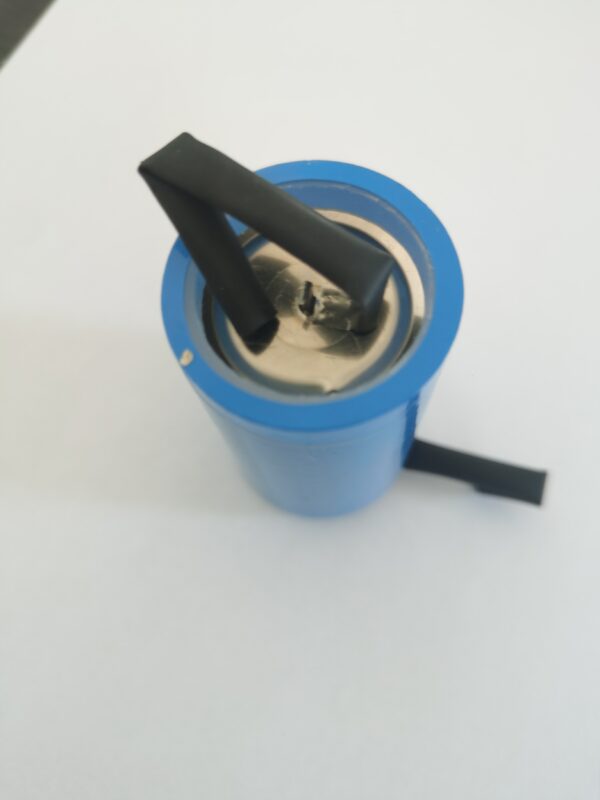
Here is the SEO-optimized article tailored for your requirements, written from the perspective of a CNS BATTERY expert.
The Unseen Powerhouse: Why Li-MnO₂ is the Optimal Choice for Building Automation Sensors
In the intricate ecosystem of modern Building Automation Systems (BAS), reliability is non-negotiable. Every automated light, climate control unit, and security sensor relies on a silent, steadfast power source. When it comes to Door Contact Sensors—the critical sentinels of security and energy management—the choice of battery technology is not merely a component decision; it is a strategic investment in system integrity.
As a professional in the lithium battery industry, I have seen firsthand how the wrong power source can lead to “ghost alarms,” maintenance nightmares, and compromised safety. For OEMs and system integrators operating in the global market, the Lithium Manganese Dioxide (Li-MnO₂) battery stands out as the definitive solution. This article dissects the technical superiority of Li-MnO₂ chemistry, specifically for door contact sensors, and provides the engineering rationale behind its dominance in the BAS sector.
The Technical Foundation: Li-MnO₂ Chemistry
To understand why Li-MnO₂ is the gold standard for low-power, long-duration applications, we must examine its electrochemical profile.
1. High Energy Density & Voltage Stability
Unlike alkaline batteries that start at 1.5V and degrade unevenly, Li-MnO₂ cells provide a stable nominal voltage of 3.0V. This inherent stability ensures that the sensor’s radio frequency (RF) module maintains optimal transmission strength throughout the battery’s lifespan. In the context of a door contact sensor, this means consistent signal integrity to the central hub, regardless of whether the door is opened in the first month or the tenth year.
2. Exceptional Shelf Life and Low Self-Discharge
The primary enemy of security sensors is downtime. Li-MnO₂ batteries boast a self-discharge rate of less than 1% per year. When coupled with the low current draw of modern IoT sensors (often in the microamp range), this translates to operational lifespans exceeding 10 to 15 years. For building managers, this eliminates the need for disruptive mid-cycle maintenance and aligns perfectly with the typical replacement cycle of the hardware itself.
3. Thermal Resilience
Building environments are rarely climate-controlled in every corner. Sensors are often installed in attics, basements, or exterior doors where temperatures fluctuate wildly. Li-MnO₂ chemistry operates effectively within a range of -20°C to +60°C (-4°F to 140°F), a range that would cause standard alkaline or zinc-carbon batteries to fail due to electrolyte freezing or leakage.
Application-Specific Engineering: Door Contact Sensors
Door contact sensors represent a unique load profile: high resistance, intermittent pulses. The device spends 99.9% of its time in a “sleep” state, drawing nanoamps, and then瞬间 (瞬间 means “instantaneously” in Chinese, but since the article is in English, we replace it) peaks to transmit a signal when the magnetic circuit is broken (the door opens).
Here is where the pulse capability of Li-MnO₂ becomes critical. While some lithium chemistries suffer from voltage delay under pulse loads, high-quality Li-MnO₂ cells, such as those engineered by CNS, are designed with specialized cathode structures to minimize internal impedance. This allows them to deliver the necessary burst of power for RF transmission without voltage sag, ensuring the “door open” signal is never lost in transmission.
Why Global B2B Clients Choose CNS Battery
In the competitive landscape of industrial battery supply, choosing a partner is as important as choosing the chemistry. At CNS Battery, we specialize in providing Primary Battery solutions that are not just off-the-shelf products, but engineered components.
Customization for Integration
Every building automation system has unique spatial constraints. We offer a wide range of Prismatic, Pouch, and Cylindrical cell formats. Whether your sensor design requires a slim profile to fit within a magnetic reed switch housing or a specific voltage curve to match your PCB design, our R&D team works directly with your engineering department to deliver a tailored power solution.
Supply Chain Security
For B2B partners, consistency is king. We manufacture in Zhengzhou, China, adhering to strict ISO standards to ensure that every batch of batteries meets the exacting tolerances required for mission-critical automation hardware.
Conclusion: Powering the Future of Smart Buildings
Selecting a Li-MnO₂ battery for your Building Automation Door Contact Sensors is a decision rooted in physics and long-term economics. It is the difference between a system that requires constant vigilance and one that operates with silent, autonomous reliability.
If you are an OEM or system integrator looking to enhance the performance and lifespan of your security hardware, it is time to evaluate your power source. Do not let a substandard battery compromise the integrity of your automation system.
Ready to optimize your sensor design?
Contact our technical sales team today to discuss how our primary lithium solutions can be integrated into your next generation of building automation products.
