
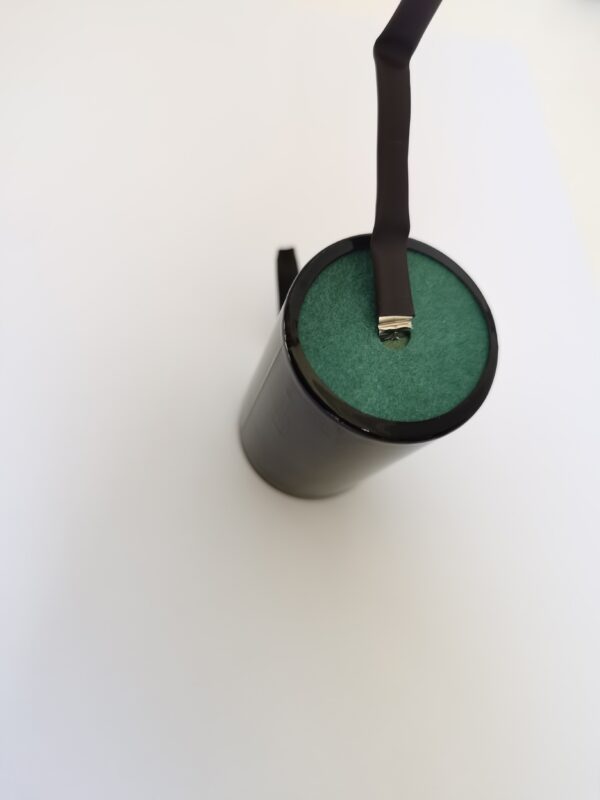
Tadiran TL-5101 Li-SOCl₂ Battery Replacement for Water Meters: The Ultimate Guide to Long-Lasting Utility Power
In the demanding world of Automatic Meter Reading (AMR) and Advanced Metering Infrastructure (AMI), the Tadiran TL-5101 has long been the gold standard. As these legacy batteries reach end-of-life or become scarce, utility managers and design engineers face a critical challenge: finding a drop-in replacement that maintains the system integrity of millions of deployed water meters without compromising on the 20+ year lifespan these applications require.
At CNS Battery, we understand that replacing a primary lithium battery isn’t just about swapping cells; it’s about ensuring the continued reliability of critical infrastructure. This guide serves as a comprehensive technical resource for sourcing, replacing, and upgrading Tadiran TL-5101 equivalents, specifically focusing on the Lithium-Thionyl Chloride (Li-SOCl₂) chemistry that powers smart cities globally.
Why the Tadiran TL-5101 is the Benchmark for Smart Water Meters
The Tadiran TL-5101 is not just a battery; it is a specific engineering solution designed for the unique pulse-drain requirements of water metering.
The Chemistry: Lithium-Thionyl Chloride (Li-SOCl₂)
To understand why the TL-5101 is so difficult to replace, one must grasp the underlying electrochemistry. This battery utilizes a Lithium anode and a Thionyl Chloride (SOCl₂) cathode. This chemistry offers the highest energy density of any commercially available primary battery system.
This reaction provides a nominal voltage of 3.6V and an incredibly flat discharge curve, meaning the voltage remains stable for the vast majority of the battery’s life, only dropping sharply when the energy is depleted. This characteristic is vital for water meters, as it allows the electronics to function optimally until the very last moment of the battery’s life cycle.
The Design: Bobbin-Type Construction
Unlike general-purpose lithium batteries, the TL-5101 uses a “Bobbin” type construction. In this design, the anode and cathode are wound in a tight spiral, maximizing the internal volume for active materials while minimizing the space taken by the current collectors.
This construction is crucial because it results in an extremely low self-discharge rate—less than 1% per year. For a water meter sealed underground or in a basement, this translates to a theoretical service life of over 25 years, which is why utilities originally chose this specific cell.
Identifying the Need for Replacement
If you are reading this, you are likely facing one of two scenarios regarding your Tadiran TL-5101 stock:
- End-of-Life Management: Your deployed meters are reaching the 15-20 year mark, and the batteries are beginning to deplete. You need a replacement strategy to avoid data blackouts.
- Supply Chain Disruption: Tadiran batteries have faced global supply constraints and allocation issues. You need a reliable, readily available alternative to keep your manufacturing lines moving.
In either case, the solution lies in finding a battery with identical physical dimensions and equivalent electrochemical performance.
The CNS Battery Solution: Equivalent Performance, Global Supply
When searching for a Tadiran TL-5101 replacement, you cannot simply use any 3.6V lithium battery. You need a specific Bobbin-type Li-SOCl₂ cell. CNS Battery specializes in these high-reliability primary cells, offering a direct technical alternative for water meter applications.
Technical Specifications Comparison
To ensure a seamless transition, we have engineered our primary lithium cells to match the rigorous standards set by the TL-5101. Below is a direct comparison of the critical parameters engineers must verify:
| Parameter | Tadiran TL-5101 Standard | CNS Battery Equivalent Standard | Significance |
|---|---|---|---|
| Chemistry | Lithium-Thionyl Chloride (Li-SOCl₂) | Lithium-Thionyl Chloride (Li-SOCl₂) | Ensures high energy density and low self-discharge. |
| Nominal Voltage | 3.6V | 3.6V | Compatibility with existing meter voltage regulators. |
| Construction | Bobbin Type | Bobbin Type | Essential for low self-discharge (<1%/year) and long life. |
| Capacity | ~2.1 Ah (dependent on load) | ~2.1 Ah (dependent on load) | Matches the energy requirements for 20+ year deployments. |
| Dimensions | Diameter: 27.8mm, Height: 50.3mm | Diameter: 27.8mm, Height: 50.3mm | Ensures a true “drop-in” replacement without housing redesign. |
Why Bobbin-Type Matters for Water Meters
Many manufacturers use a “Jellyroll” construction for high-drain applications. However, for water meters, which typically draw micro-amps in sleep mode and short pulses for data transmission, the Bobbin-type construction is non-negotiable.
The Bobbin design has a higher internal impedance compared to Jellyroll cells. While this might seem like a disadvantage, it is actually a safety feature for low-drain devices. It prevents the thermal runaway that can occur if a low-impedance (Jellyroll) cell is short-circuited in a low-drain application. More importantly, it allows for the massive energy storage required to last two decades in a compact AA-sized format.
Addressing Common Technical Challenges
The Passivation Layer and Voltage Delay
One of the most common issues engineers face when replacing or testing Li-SOCl₂ batteries is passivation. When a Lithium-Thionyl Chloride battery sits idle, a thin film of Lithium Chloride (LiCl) forms on the anode. This is normal and actually protects the cell.
The Challenge: When a load is first applied, this film must be broken down, causing a temporary voltage drop (voltage delay). If the meter draws a high pulse current immediately upon startup, the voltage might sag below the cutoff voltage of the regulator, causing a system reset.
The CNS Solution: Our R&D team works closely with meter manufacturers to analyze the pulse voltage characteristics of our cells. We ensure that our batteries can handle the specific pulse profiles of your AMR/AMI modules. If you are experiencing “brown-out” resets during peak pulses, we can provide detailed pulse voltage curves to validate the compatibility of our cells with your specific load profile.
Pulse Current Capability
Water meters don’t just sit in sleep mode; they wake up to transmit data. This transmission requires a pulse of current, often ranging from 100mA to 300mA, depending on the radio module (LoRa, NB-IoT, or Sigfox).
The Tadiran TL-5101 was designed to handle these pulses. Our equivalent batteries are rigorously tested to ensure they can deliver these pulses without significant voltage depression. We recommend verifying the maximum continuous and pulse current ratings with our technical datasheets to ensure your specific radio module is supported.
How to Source and Replace Your Batteries
If you are currently facing a shortage of Tadiran TL-5101 cells or need to service aging infrastructure, CNS Battery offers a viable path forward.
1. Verification and Sampling
Before committing to a full-scale replacement, it is essential to test the cells in your specific environment. We offer sample units for evaluation. You should test for:
- Open Circuit Voltage (OCV): Should read approximately 3.6V.
- Pulse Performance: Simulate the meter’s wake-up and transmission cycle.
- Temperature Range: Ensure the cell performs at the minimum and maximum temperatures your meters experience (typically -55°C to +85°C for Li-SOCl₂).
2. Customization Options
While we offer standard cells that match the TL-5101 footprint, we also understand that some water meters require specific modifications. We offer customization services including:
- PTC Devices: For added safety against short circuits.
- Welding Tabs or Leads: For specific connection requirements within the meter housing.
- Custom Labels: To meet your specific branding or tracking needs.
3. Technical Support and Documentation
Replacing a battery in a certified utility device requires rigorous documentation. We provide full Material Safety Data Sheets (MSDS), technical datasheets, and certificates of compliance to facilitate your engineering change order (ECO).
Secure Your Supply Chain Today
The reliability of your water metering network depends on the reliability of the power source within them. With the Tadiran TL-5101 becoming increasingly difficult to source, transitioning to a robust, high-quality alternative is no longer optional—it is a necessity for maintaining operational continuity.
At CNS Battery, we combine the technical expertise of Lithium-Thionyl Chloride chemistry with the manufacturing capacity to support global utility demands. Whether you are managing a legacy replacement project or designing the next generation of smart meters, our team is ready to ensure your power solution is as enduring as the infrastructure it supports.
Ready to ensure uninterrupted power for your water meters? Explore our full range of primary lithium solutions designed for the utility sector.
Explore our Primary Battery Solutions
Contact our engineering team today for a technical consultation and sample request.
