

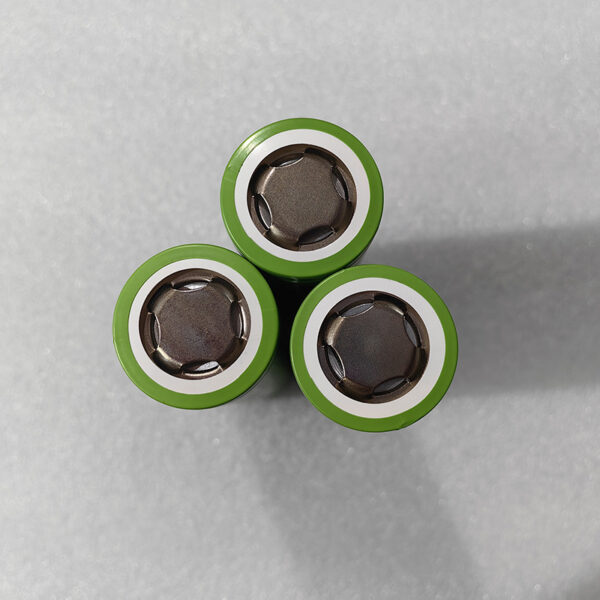
The 60110 Battery Cell: Industrial Storage Powerhouse
In the rapidly evolving landscape of industrial energy storage, the 60110 battery cell has emerged as a pivotal solution for engineers and technical procurement managers seeking high-density power in a cylindrical format. As the demand for robust, scalable energy storage grows across North America and Europe, understanding the technical nuances of this specific form factor is critical. This article serves as a comprehensive technical deep-dive into the 60110 cell, analyzing its structural advantages, performance metrics, and its specific role within the global supply chain, particularly regarding compliance with stringent EU and US safety standards.
Understanding the 60110 Cylindrical Architecture
The nomenclature “60110” follows the standard lithium-ion naming convention, where the digits represent the cell’s physical dimensions. Specifically, the “60” denotes a diameter of approximately 60mm, while the “110” indicates a height of 110mm. This places the 60110 firmly in the category of “large format” cylindrical cells, bridging the gap between the ubiquitous 21700 cells and the massive prismatic modules.
Structural Mechanics and Thermal Management
Unlike pouch cells, which require external clamping pressure, or prismatic cells that can suffer from internal stress during thermal cycling, the cylindrical design offers inherent mechanical stability. The 60110 utilizes a jellyroll (windings) architecture that provides excellent resistance to thermal runaway propagation. The steel or aluminum casing acts as a robust heat sink, allowing for efficient radial heat dissipation—a critical factor in high-current industrial applications where thermal management is paramount.
Technical Specifications and Performance Metrics
When evaluating the 60110 for industrial deployment, engineers must scrutinize the following parameters to ensure system reliability.
Energy Density and Capacity
The volumetric efficiency of the 60110 is significantly higher than smaller cylindrical cells (like the 18650 or 21700) due to the reduced ratio of inactive packaging materials (steel casing, caps) to active materials (cathode, anode, electrolyte). While specific capacities vary based on the chemistry (NMC, LFP, or NCA), the 60110 typically offers a capacity range suitable for high-voltage stacks, reducing the total number of cells required in a Battery Management System (BMS) and thereby simplifying the mechanical design of the rack.
Discharge Characteristics
Industrial applications often require high continuous discharge rates. The 60110 is engineered to handle high C-rates (often exceeding 1C-3C continuous) without significant voltage sag. This is achieved through low internal resistance design and optimized electrolyte formulations that facilitate rapid lithium-ion transport.
Cycle Life and Durability
For industrial storage, longevity is non-negotiable. The 60110 architecture is designed for deep cycle applications. Under standard test conditions (25°C, 100% DOD), these cells are engineered to retain over 80% of their initial capacity after thousands of cycles, making them a cost-effective solution for applications like Uninterruptible Power Supplies (UPS) and off-grid solar storage.
Quality Assurance and Testing Methodologies
To ensure the 60110 meets the rigorous demands of industrial use, a battery of standardized tests must be conducted. These tests are not merely suggestions but are mandatory for certifications like UL (US) and CE (EU).
- Accelerated Life Testing (ALT): Cells are subjected to elevated temperatures and voltages to simulate years of operation in a compressed timeframe. This predicts the end-of-life characteristics.
- Mechanical Stress Testing: This includes crush tests, nail penetration tests, and vibration tests. The cylindrical steel can of the 60110 must demonstrate that it does not rupture or ignite under mechanical abuse.
- Environmental Chambers: Testing across a wide temperature gradient (-20°C to +60°C) ensures the electrolyte does not freeze or degrade prematurely.
Regulatory Compliance: EU and US Standards
For technical procurement managers operating in the US and EU markets, sourcing a 60110 cell that meets local regulations is a legal and safety imperative. The industrial battery market is heavily scrutinized for safety and environmental impact.
European Union (EU) Directives
The EU Battery Directive and the newer Battery 2023/1542 regulation emphasize sustainability and safety. A compliant 60110 cell must have:
- Low Heavy Metal Content: Adherence to RoHS standards.
- Carbon Footprint Declarations: Manufacturers must provide a lifecycle analysis of the cell’s CO2 emissions.
- Recycling Efficiency: The cell design must allow for easy disassembly and material recovery.
United States (US) Standards
In the US, the focus is primarily on fire safety and electrical standards.
- UL 1642/UL 62133: These are the benchmark safety standards for lithium cells. The 60110 must pass rigorous overcharge, short circuit, and forced discharge tests to receive this certification.
- Proposition 65 (California): The cell must not contain chemicals known to the state of California to cause cancer or reproductive harm without a clear warning.
The CNS BATTERY Advantage in Industrial Supply Chains
When sourcing the 60110 form factor, it is essential to partner with a manufacturer that possesses the vertical integration necessary to guarantee quality. CNS BATTERY stands as a leading lithium-ion cylindrical battery manufacturer in China, offering comprehensive solutions tailored for the global market.
CNS BATTERY’s R&D capabilities allow for the customization of cylindrical cells to meet specific voltage and capacity requirements for industrial storage. By leveraging automated production lines and adhering to strict quality management systems, CNS ensures that every cell batch is consistent, reducing the engineering overhead for system integrators.
As the industry moves towards more sustainable and efficient energy storage, the 60110 battery cell represents a significant step forward. Its balance of high energy density, mechanical robustness, and thermal stability makes it an ideal candidate for the next generation of industrial applications.
Ready to integrate the 60110 into your next industrial design? Explore the full range of cylindrical battery cells and request a technical datasheet.
Explore Our Cylindrical Battery Range
For specific inquiries regarding EU or US regulatory compliance and technical specifications, our engineering team is available to assist global customers.
Reference: Battery Manufacturers in China – Industry Overview
Learn More About Our Manufacturing Capabilities

