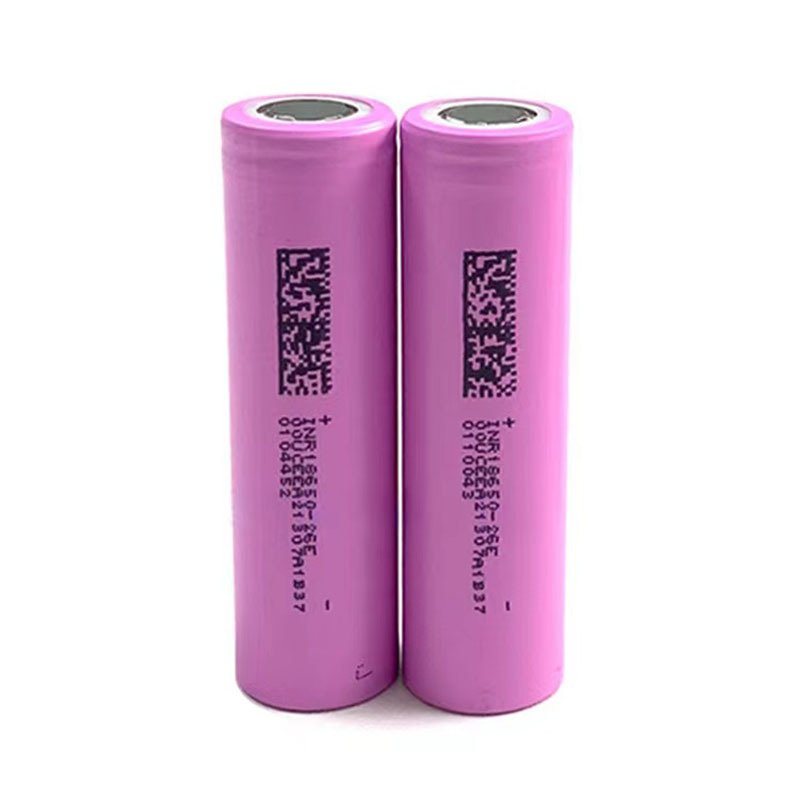
The 2026 Engineer’s Blueprint: Selecting 18650 LFP Cells for E-Bikes with Minimal Capacity Fade
The e-bike industry in 2026 is defined by a singular pursuit: longevity. As urban infrastructure demands reliable micro-mobility and enthusiasts push for longer range, the battery chemistry has shifted decisively. Lithium Iron Phosphate (LFP or LiFePO4) has become the gold standard for 18650 cells, not for its raw energy density, but for its unrivaled cycle life and thermal stability.
As a technical consultant, I am often asked: “How do we guarantee minimal capacity fade in a 2026 e-bike platform?” This guide strips away the marketing hype to dissect the physics of fade, the engineering of modern 18650 LFP cells, and the rigorous testing protocols required to meet EU and US safety standards.
The Physics of Fade: Why LFP Dominates 2026
Capacity fade is the gradual loss of a battery’s ability to hold a charge. In the context of e-bikes, this is often caused by Solid Electrolyte Interphase (SEI) layer growth, lithium plating, and electrolyte oxidation.
Why 18650 LFP is the Minimal Fade Solution:
Unlike NMC (Nickel Manganese Cobalt) chemistry, LFP operates on a different crystal structure. The key advantage lies in the olivine structure of the cathode. During the charge/discharge cycle (lithium ion intercalation/de-intercalation), the volume change in LFP is less than 1%. This “zero-strain” characteristic means the crystal lattice does not expand and contract violently, drastically reducing mechanical stress on the electrode.
In 2026, this translates to a typical cycle life of 2000-3000 cycles (or more) while retaining 80% of the initial capacity—a benchmark that NMC cells struggle to match in high-heat e-bike environments.
Technical Deep Dive: Parameters for Minimal Fade
To achieve minimal fade, you cannot simply choose “LFP.” You must specify the correct cell architecture. Here is the technical breakdown of what to look for in a 2026 18650 LFP cell.
1. Voltage Profile & Energy Density Trade-offs
LFP cells have a nominal voltage of 3.2V, compared to 3.6V-3.7V for traditional 18650s. This means you need more cells in series to achieve the same pack voltage. However, this lower voltage is a feature, not a bug. It reduces the stress on the electrolyte, slowing down the degradation process.
2. Thermal Management Coefficient
E-bike motors generate significant heat. A cell designed for minimal fade must have a low internal resistance (IR). High IR leads to heat buildup during high C-rate discharges (common in e-bikes). Look for cells with IR values under 20mΩ to ensure that energy is transferred to the motor, not wasted as heat degrading the chemistry.
3. The Cathode Additive Matrix
Modern 2026 LFP cells often use carbon coating or doping with elements like Vanadium or Niobium. This enhances the otherwise poor electrical conductivity of pure LFP, ensuring uniform current distribution across the electrode, which prevents “hot spots” that accelerate fade.
Testing Methodology: Proving Minimal Fade in the Lab
You cannot trust a datasheet alone. In 2026, engineers must validate capacity retention through standardized stress tests. Here is the protocol I recommend for any e-bike cell procurement:
Step 1: High-Temperature Cycling (HTC)
Operate the cell at 45°C to 60°C (simulating an e-bike battery pack on a hot day) at a 1C discharge rate.
- Goal: The capacity retention after 500 cycles should be >90%.
Step 2: Dynamic Stress Test (DST)
Simulate real-world riding with variable current pulses (0.5C to 3C) rather than constant current.
- Goal: Measure the increase in DC resistance. A rise of less than 15% after 1000 cycles indicates a robust SEI layer.
Step 3: Calendar Aging Simulation
Store fully charged cells at 60°C for 3 months.
- Goal: This accelerates chemical degradation. Look for less than 20% capacity loss to confirm “minimal fade” claims.
CNS Battery: Engineering 18650 LFP Cells for Global Compliance
When sourcing 18650 LFP cells for e-bike applications, the manufacturer’s adherence to local regulations is non-negotiable. At CNS Battery, we engineer our cylindrical cells specifically to meet the divergent safety landscapes of the EU and the US.
EU Market: Beyond CE and UN38.3
For the European market, compliance is about safety and sustainability.
- Safety: Our 18650 LFP cells exceed UN38.3 transportation testing, ensuring they are safe for shipping and use within EU borders.
- Mechanical Integrity: We design our cells to pass the IEC 62133 crush and nail penetration tests. The robust steel casing of our 18650 format physically contains any potential thermal events, protecting the rider.
US Market: UL Standards and Supply Chain Resilience
The US market demands rigorous safety certification and supply chain transparency.
- UL Certification: Our manufacturing processes are built to support UL 2054 (Household and Commercial Batteries) certification for the final pack assembly. This is critical for market entry.
- Technical Barrier: We utilize proprietary electrolyte formulations that pass the UL 1642 abusive testing, including high-current abuse and vibration testing specific to American road conditions.
Technical Note: The “Minimal Fade” characteristic of our LFP chemistry is further enhanced by our automated production lines, which ensure a capacity sorting tolerance of ±0.5%. This tight binning prevents cell imbalance within the e-bike pack, which is a primary cause of premature system-level failure.
Conclusion: The 2026 Procurement Strategy
Selecting an 18650 LFP cell for e-bikes in 2026 is not just about buying a battery; it is about purchasing a warranty of performance. By understanding the physics of the olivine structure and demanding rigorous thermal testing, you can guarantee minimal capacity fade for your end-users.
As an engineer, I prioritize partners who speak the language of compliance as fluently as they speak the language of chemistry. If you are designing an e-bike platform for the global market and require cells that meet the specific technical barriers of the EU or US, partnering with a manufacturer that understands these nuances is essential.
Ready to engineer your e-bike battery for 2026 longevity? Explore our range of high-cycle-life cylindrical cells designed for minimal fade, or contact our technical team for a datasheet deep dive.