
Here is the professional, SEO-optimized article tailored for your requirements.
How to Select a Lithium Battery for Automotive ECU Backup Power
The Critical Role of the “Black Box” Battery
In the automotive industry, the Engine Control Unit (ECU) is often referred to as the vehicle’s brain. However, this critical system relies on a small, often overlooked component to maintain its memory and calibration settings when the main engine is off: the backup battery.
Selecting the wrong backup battery can lead to catastrophic failures, including loss of transmission calibration, immobilizer errors, or even the complete failure of the instrument cluster. For automotive engineers and procurement managers, choosing the right lithium technology for this specific application is not just about power; it is about long-term reliability, safety, and maintaining the vehicle’s “memory” for the entire service life of the car.
This guide will walk you through the technical specifications and selection criteria necessary to choose the optimal lithium battery for your Automotive ECU Backup Power needs.
1. Understanding the Technical Requirements
Unlike consumer electronics, automotive ECUs operate in harsh environments. The backup battery must function reliably for 10 to 15 years without maintenance.
Voltage Stability: The 3.0V Standard
Automotive ECUs are typically designed around a specific voltage threshold. Most modern ECUs require a stable 3.0V supply to maintain memory.
- Why Lithium? Lithium batteries (specifically Lithium Manganese Dioxide, Li-MnO₂) are the industry standard for this application. They provide a nominal voltage of 3.0V, which perfectly matches the ECU’s requirement.
- Avoid Voltage Mismatches: Do not use 3.6V or 3.7V Lithium-Ion batteries unless the ECU circuit explicitly includes a voltage regulator. A direct connection of a high-voltage Li-ion cell can fry the ECU’s memory chip.
Current Drain: Microamps Matter
The backup current draw is usually in the microamp (µA) range. However, the battery must provide a small pulse of current when the vehicle is first turned on to initialize the system.
- Pulse Performance: Ensure the battery you select has a low internal impedance to handle these startup pulses without voltage drop.
2. Why Primary Lithium Batteries are Superior for ECU Backup
When evaluating options, you might consider rechargeable Lithium-Ion (Li-ion) versus Primary Lithium (non-rechargeable).
For ECU backup, Primary Lithium batteries are almost always the superior choice. Here is why:
- Calendar Life: Primary Lithium cells have a shelf life and operational life of 10-15 years. Rechargeable Li-ion batteries degrade significantly faster (typically 3-5 years) due to chemical aging, even if they are not cycled.
- Temperature Resilience: ECUs are often located on the engine bay firewall or transmission hump. Primary Lithium cells can operate reliably in temperatures ranging from -40°C to +85°C.
- Safety: Primary Lithium cells are chemically more stable than their rechargeable counterparts. They do not require complex Battery Management Systems (BMS) for simple backup applications, reducing the risk of thermal runaway in a confined space.
3. The “Memory Effect” and Self-Discharge
One of the most critical factors in ECU battery selection is the self-discharge rate.
If a vehicle is parked for an extended period (e.g., in a port, dealership, or during owner holidays), the backup battery must retain enough charge to “wake up” the ECU.
- Low Self-Discharge: High-quality Primary Lithium batteries exhibit an annual self-discharge rate of less than 1%. This means that after 10 years, the battery should still retain over 90% of its original capacity.
- No Memory Effect: Unlike older Nickel-Cadmium (NiCd) batteries, Lithium batteries do not suffer from memory effect. They maintain their capacity regardless of charge/discharge cycles.
4. Form Factor and Mechanical Design
The physical integration of the battery into the ECU housing is crucial for mass production and reliability.
Coin Cell vs. Cylindrical
- CR2032 / Coin Cells: These are common in low-cost applications. However, they have limited capacity (typically 200-240mAh) and are prone to vibration loosening in automotive environments.
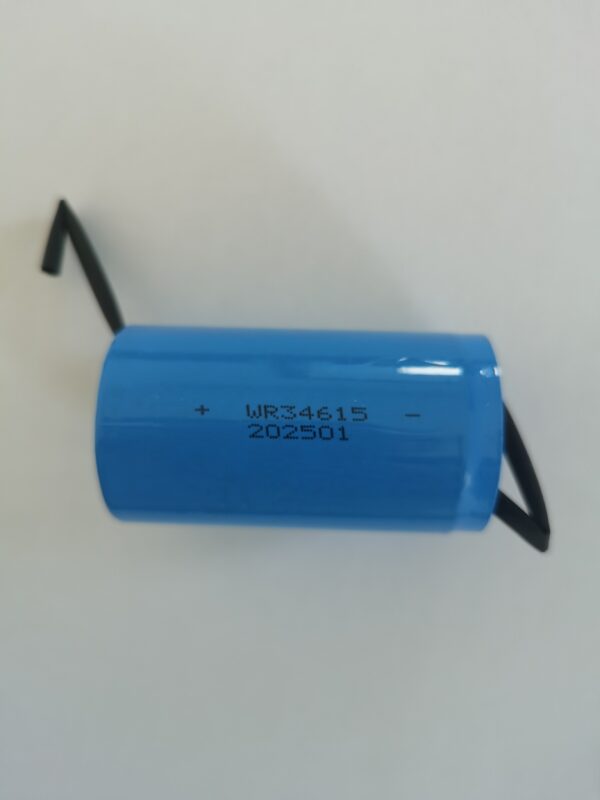
- Cylindrical (CR123A, etc.): For higher reliability, cylindrical cells offer better mechanical stability and higher capacity. They are often soldered or held in place with robust spring contacts.
Vibration Resistance
Automotive standards (such as ISO 16750) demand high resistance to mechanical shock and vibration. The battery holder design must prevent the cell from rattling, which can cause intermittent contact and data corruption.
5. Quality Assurance and Supply Chain Stability
Selecting a battery is not just a technical decision; it is a supply chain decision.
Automotive production lines cannot afford to stop because of a battery shortage. When sourcing your Lithium ECU Backup Power solution, consider the following:
| Feature | Importance for ECU |
|---|---|
| AEC-Q200 Compliance | Ensures the component meets automotive stress test requirements. |
| Traceability | Batch-level traceability is mandatory for automotive recalls. |
| Longevity | The battery chemistry must match the vehicle’s lifecycle (10+ years). |
Partnering with a Reliable Manufacturer
Selecting the right Lithium battery for your Automotive ECU Backup Power is a complex process that requires deep technical expertise and rigorous quality control.
At CNS BATTERY, we specialize in providing high-reliability Primary Lithium solutions designed specifically for the harsh automotive environment. Our cells are engineered to withstand extreme temperatures and vibrations while maintaining the critical memory of your vehicle’s ECU for its entire lifespan.
If you are currently designing an ECU system or looking to source a replacement battery for an existing platform, our team of engineers can help you select the optimal chemistry and form factor.
Contact us today to discuss your specific technical requirements and ensure your automotive electronics have the reliable backup power they deserve.
Contact CNS BATTERY for ECU Backup Solutions
Explore our range of Primary Lithium Battery products to find the perfect fit for your automotive application.
