
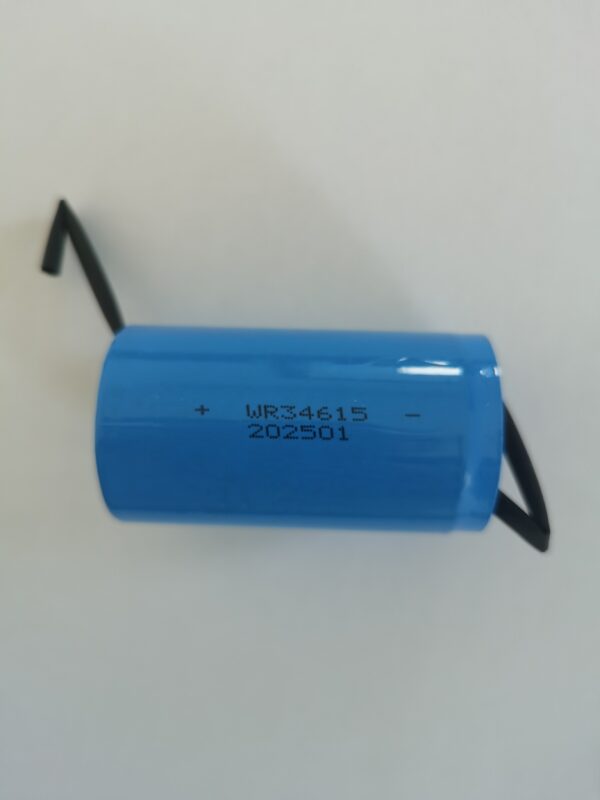
3C Continuous Discharge Li-S Battery for UAVs: Powering the Next Generation of Drones
Unmanned Aerial Vehicles (UAVs) are no longer just a novelty; they are a critical tool across industries, from precision agriculture to industrial inspection. However, the primary bottleneck limiting their operational scope remains the same: energy density. As a professional lithium battery manufacturer specializing in primary lithium cells, we understand that the relentless pursuit of longer flight times and lighter payloads requires a fundamental shift in chemistry. Enter the Lithium-Sulfur (Li-S) battery.
In this article, we will dissect why the 3C continuous discharge Li-S battery is emerging as the superior choice for high-performance UAVs, analyzing its technical advantages over conventional Lithium-ion (Li-ion) and Lithium Polymer (LiPo) systems.
The Energy Density Imperative
To appreciate the value of a 3C Continuous Discharge Li-S Battery for UAVs, one must first understand the physics of flight. Every gram of weight a drone carries dictates its energy consumption. Traditional Lithium-ion batteries, while reliable, are reaching their theoretical energy density limits (typically 150-250 Wh/kg). In contrast, Lithium-Sulfur technology operates on a completely different electrochemical principle.
The theoretical specific energy of a Li-S cell is approximately 2600 Wh/kg, a figure that dwarfs current lithium-ion technology. While practical commercial cells do not reach this theoretical maximum due to engineering constraints, they still achieve practical energy densities significantly higher than their cobalt-based counterparts. This translates directly into flight time: for the same weight, a Li-S battery can provide substantially more energy, or for the same capacity, it weighs significantly less.
Technical Deep Dive: Why 3C Discharge Matters
When specifying a battery for a UAV, engineers often look at the “C” rating, which represents the discharge rate relative to the battery’s capacity.
- Understanding the 3C Rating: A 3C discharge rate means the battery can deliver three times its rated capacity in amperes. For example, a 5Ah (5000mAh) cell rated at 3C can safely provide 15A of continuous current. For UAVs, this is the “sweet spot.” While racing drones might require 50C-100C bursts, commercial and industrial drones typically operate in a sustained hover or cruise mode, rarely exceeding a continuous draw of 3C to 5C. Designing a battery specifically for 3C continuous discharge allows engineers to optimize the cell structure for maximum energy storage rather than maximum power density, further enhancing the weight-to-energy ratio.
- The Chemistry: Li-S batteries use a Lithium metal anode and a Sulfur-based cathode. Unlike Li-ion, which relies on intercalation (inserting ions into a crystal structure), the Li-S reaction involves the conversion of sulfur into lithium sulfide. This conversion process allows for the storage of more lithium ions per unit mass.
- Weight Advantage: Sulfur is not only abundant and low-cost, but it is also much lighter than the transition metal oxides (like Cobalt or Nickel) used in standard cathodes. Combined with the light weight of the Lithium metal anode, this results in a cell that is fundamentally lighter.
Overcoming Traditional Challenges
It is crucial to address the “elephant in the room” regarding Li-S technology: cycle life. Lithium-Sulfur batteries are primarily primary cells (non-rechargeable) in their high-energy density configurations, or they face significant cycle life limitations if designed as secondary (rechargeable) cells due to the “polysulfide shuttle” effect.
However, for specific UAV applications, this is not a drawback but a strategic advantage. Consider the following scenarios where a primary lithium cell is ideal:
- Military & Surveillance Drones: Where mission duration is critical, and the weight of a charging system or the bulk of multiple LiPo batteries is prohibitive.
- Single-Use or Low-Cycle Logistics Drones: For delivering medical supplies over vast distances where the battery might be recycled after a set number of missions rather than recharged hundreds of times.
- High-Altitude Platforms: Where every gram saved on battery weight allows for more scientific instrumentation.
By focusing on the 3C continuous discharge profile for these applications, manufacturers can deliver a product that maximizes flight duration without the unnecessary overhead of thousands of charge cycles.
Safety and Thermal Management
Safety is paramount in aerial applications. Lithium metal anodes are often viewed with caution due to dendrite formation in rechargeable scenarios. However, in a well-engineered primary discharge configuration (discharging only, not recharging), the risks associated with dendrites are mitigated.
Furthermore, Sulfur is chemically stable and non-toxic compared to heavy metal oxides. In the event of a crash or puncture, Li-S cells generally exhibit less violent thermal runaway reactions compared to high-energy-density Li-ion cells. This inherent safety profile makes them suitable for operations over populated areas or sensitive environments.
Conclusion: The Future of UAV Propulsion
The shift towards 3C Continuous Discharge Li-S Batteries represents a convergence of material science and practical engineering. While they may not replace rechargeable Lithium Polymer batteries for consumer weekend flyers, they are the undisputed champions for industrial, commercial, and defense applications where “time over target” is the primary metric of success.
If you are an engineer or a procurement manager looking to push the boundaries of your UAV’s performance, exploring primary lithium solutions is no longer optional—it is essential.
Ready to optimize your UAV’s power system?
For detailed technical specifications and custom design consultations regarding high-energy-density primary lithium batteries, visit our Product Center or contact our engineering team directly via our Contact Page.
