

Top 5 Sample Test Report Problems with 18650 Cells in EV Applications & Solutions OEM Custom Solutions
The lithium-ion battery market, particularly the cylindrical cell segment, is the undisputed powerhouse of the modern electrification era. As an industry veteran, I’ve witnessed the evolution of battery technology firsthand. While the cylindrical format—specifically the 18650, 21700, and 32700 series—dominates applications ranging from consumer electronics to electric vehicles (EVs), the path to perfection is fraught with engineering hurdles.
For Original Equipment Manufacturers (OEMs) and EV designers, the “Top 5 Sample Test Report Problems” often encountered during the prototyping phase are not just technical glitches; they are the critical checkpoints that separate a reliable product from a liability. In this article, we will dissect these common failure points and explore how advanced OEM Custom Solutions, like those developed at CNS Battery, provide the necessary engineering to overcome them.
The Anatomy of an 18650 Cell: Why Geometry Matters
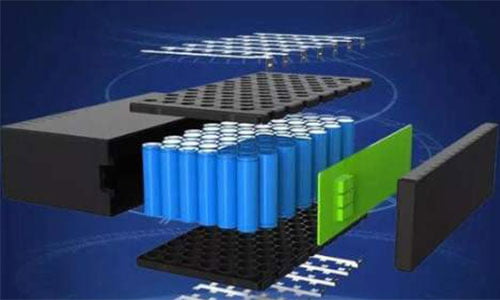
Before diving into the failure modes, it is essential to understand the foundational technology. The 18650 lithium-ion battery is named for its dimensions: 18mm in diameter and 65mm in length. These compact powerhouses are renowned for their high energy density and long cycle life. However, when scaled up to form the battery packs required for EVs, the thermal and mechanical behavior of these cells becomes exponentially more complex.
At CNS Battery, our R&D focuses on mitigating these complexities at the cell level. We provide comprehensive cylindrical battery cells and customizable solutions designed to meet the rigorous demands of global customers. Whether it is the standard 18650 or the larger 21700 format, our engineering philosophy revolves around “Every battery is a masterpiece of craftsmanship.”
Common 18650 Battery Models and Specifications
| Model | Typical Capacity (Ah) | Nominal Voltage (V) | Max. Continuous Discharge | Key Application |
|---|---|---|---|---|
| IMR18650-1300 | 1.3 Ah | 3.7 V | 3.9 A | E-Bikes, Power Tools |
| INR18650-2600 | 2.6 Ah | 3.7 V | 3C | EVs, Energy Storage |
| INR18650-3500 | 3.5 Ah | 3.6 V | 7 A | Smart Home, E-Bikes |
(Note: For a complete list of specifications and custom configurations, please refer to our product catalog.)
Problem 1: Thermal Runaway and Heat Dissipation
The most critical issue found in test reports is thermal management. In an EV application, hundreds or thousands of 18650 cells are packed together. If one cell overheats, it can trigger a chain reaction.
- The Failure: During high-rate discharge tests (simulating uphill climbing or rapid acceleration), standard cells often show hotspots. The rigid cylindrical geometry creates air gaps between cells, making heat transfer inefficient.
- The Engineering Solution: Advanced OEM solutions focus on thermal interface materials (TIMs) and structural adhesives. At CNS, we utilize cells with ultra-safe chemistry (such as our INR series) that have higher thermal stability. Furthermore, our custom modules integrate liquid cooling channels that snake around the cylindrical cells, ensuring that heat is wicked away efficiently, preventing the dreaded thermal runaway.
Problem 2: Vibration Fatigue and Mechanical Stress
EVs operate in harsh environments. Road vibrations are a silent killer of battery integrity.
- The Failure: Standard 18650 cells use rigid metal casings. In test reports, we frequently see failures at the weld points between the cell cap and the can, or internal micro-fractures in the electrode layers caused by constant shaking.
- The Engineering Solution: This requires a holistic Mechanical BMS (Battery Management System) approach. Our OEM Custom Solutions include bespoke module designs that use shock-absorbing brackets and potting compounds. By encapsulating the cells in a resilient matrix, we ensure that the mechanical stress is absorbed by the structure, not the delicate electrochemistry inside the cell.
Problem 3: Inconsistent Cell-to-Cell Performance
No two batteries are exactly alike. This variance, known as “binning,” is a major headache for pack assemblers.
- The Failure: During long-cycle life testing, test reports often highlight “weak cells” that degrade faster than their neighbors. In a series circuit (required for high-voltage EVs), one weak cell can drag down the entire string, leading to premature pack failure.
- The Engineering Solution: Strict Quality Management at the manufacturing level is non-negotiable. CNS Battery employs automated production lines that sort cells with micron-level precision. For OEMs, we offer “graded cell matching,” where every cell in a specific EV pack is selected from the exact same performance bin, ensuring uniform voltage and capacity curves throughout the lifespan of the vehicle.
Problem 4: High-Rate Discharge Capacity Fading
EVs demand power, not just energy. Delivering that power without degrading the cell is a delicate balance.
- The Failure: Under continuous high-current draw (e.g., maintaining highway speeds), standard 18650 cells often exhibit rapid voltage drop and capacity fading in the first 500 cycles.
- The Engineering Solution: This is where chemistry selection is paramount. While standard cells might use NMC111 or older chemistries, our solution for EV OEMs involves high-nickel NMC or specialized Power-type 18650s (like our ISR series). These cells feature optimized electrode formulations that reduce internal resistance, allowing for fast charging and high discharge rates without sacrificing cycle life.
Problem 5: Safety Hazards Under Abuse Conditions
Safety is not an afterthought; it is the first line of defense.
- The Failure: Nail penetration tests, overcharge tests, and short-circuit tests often reveal that standard cells vent violently or even explode when subjected to physical damage (like a car crash).
- The Engineering Solution: Our Ultra-Safe design philosophy incorporates multiple layers of protection. We utilize Ceramic Coated Separators (CSS) that shut down ion flow at high temperatures, and our cells feature robust Current Interrupt Devices (CID) and burst discs. In our custom OEM modules, we integrate these cells with fire-retardant encapsulants, ensuring that even in the worst-case scenario, the hazard is contained.
The Path Forward: From Standard to Custom
The transition from using generic “off-the-shelf” 18650 cells to implementing OEM Custom Solutions is the hallmark of a professional EV manufacturer. It is not enough to simply buy cells; you must engineer a system where the cell, the module, and the battery management system act as one cohesive unit.
At CNS Battery, we understand that every EV application is unique. Whether you are building a high-performance electric motorcycle or a robust electric scooter, our engineering team works closely with your R&D department to tailor the perfect cylindrical cell solution.
If you are facing challenges with your current battery test reports or are looking to design a new EV powertrain from the ground up, do not settle for standard solutions. Explore the possibilities of custom cylindrical battery cells and let us help you build a masterpiece.
Contact CNS Battery today to consult with our experts and receive a customized solution for your next-generation EV project.
- Explore our Cylindrical Battery Cell Range: https://cnsbattery.com/products-3/cylindrical-battery-cell/
- Learn more about our Manufacturing Capabilities: https://cnsbattery.com/battery-manufacturers-in-china/
- Get in Touch: https://cnsbattery.com/contact-2/


