Here is the SEO-optimized article tailored for an international B2B audience, written from the perspective of a professional lithium battery industry expert.
The Ultimate Guide to the 32800 Battery Cell for Forklift Applications
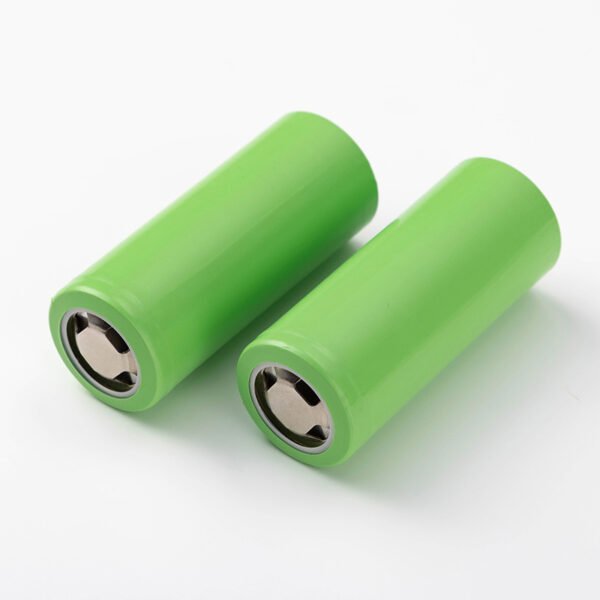
In the demanding world of material handling and industrial logistics, forklift manufacturers and fleet operators are constantly seeking power solutions that balance longevity, safety, and total cost of ownership. While the industry often discusses standard formats like the 18650 or 21700, a new generation of cylindrical cells is rapidly gaining traction in heavy-duty applications. The 32800 Battery Cell represents a significant evolution in cylindrical technology, offering a compelling alternative to traditional prismatic or pouch cells for electric forklifts.
As a professional in the lithium battery sector, I have observed a shift where engineers are looking beyond the standard “18650” or “21700” formats for high-drain industrial use. This article will dissect the technical specifications of the 32800 format, explain why it is becoming the preferred choice for forklift OEMs, and provide a comparative analysis against its predecessors.
Understanding the 32800 Format: Beyond the Numbers
Before diving into the forklift application, it is crucial to decode what “32800” actually means. In the standardized naming convention for lithium-ion cylindrical cells, the digits are not arbitrary model numbers but physical dimensions.
- The Nomenclature: The first two digits represent the diameter in millimeters, and the middle three digits represent the length in millimeters. The final “0” signifies that it is a cylindrical shape.
- The Math: Therefore, a 32800 cell has a diameter of 32mm and a length of 80mm. This is notably larger than the ubiquitous 18650 (18mm x 65mm) and the newer 21700 (21mm x 70mm).
Technical Comparison: 18650 vs. 21700 vs. 32800
| Feature | 18650 Cell | 21700 Cell | 32800 Cell |
|---|---|---|---|
| Dimensions | 18mm x 65mm | 21mm x 70mm | 32mm x 80mm |
| Typical Capacity | 1.5Ah – 3.5Ah | 4.0Ah – 6.0Ah | 6.0Ah – 8.0Ah+ |
| Internal Resistance | Higher (Requires more cells in parallel) | Moderate | Low (Excellent for high current) |
| Thermal Management | Requires complex BMS and cooling | Good | Excellent (Lower surface temp) |
Why the 32800 is Ideal for Forklift Applications
Forklifts present a unique set of challenges for battery technology. Unlike consumer electronics or even standard passenger EVs, forklifts often require high torque for lifting, operate in dusty environments, and ideally need “opportunity charging” during breaks rather than long overnight charging cycles.
Here is why the 32800 format outperforms older technologies in this specific niche:
1. Reduced Pack Complexity and BMS Load
When building a battery pack for a forklift, which typically requires 48V or 80V systems with hundreds of amp-hours, the number of cells matters significantly. Using a 32800 cell means you need far fewer individual units compared to 18650s to achieve the same capacity. Fewer cells translate to:
- Simplified Welding: Less spot welding required during manufacturing.
- Lower BMS Stress: A Battery Management System has fewer nodes to monitor, increasing overall system reliability.
- Reduced Failure Points: Every cell connection is a potential point of failure; larger cells minimize this risk.
2. Superior Thermal Stability
Industrial forklifts generate significant heat during operation. The 32800 format has a lower surface-area-to-volume ratio compared to smaller cells. This means that during high-drain operations (such as lifting heavy loads), the core temperature remains more stable, and the surface temperature is lower. This characteristic is vital for preventing thermal runaway in a busy warehouse environment.
3. High Discharge Rates
Modern electric forklifts require instantaneous high current for hydraulic systems and traction motors. The robust internal structure of the 32800 allows for high continuous discharge rates (often exceeding 15C or more) without significant voltage sag. This ensures consistent performance even when the battery is partially depleted.
Technical Specifications and Chemistry
When sourcing a 32800 battery cell for forklift use, the chemistry is paramount. While Lithium Nickel Manganese Cobalt Oxide (NMC) is common for energy density, for heavy industrial use, Lithium Iron Phosphate (LiFePO4) variants are often preferred.
- Nominal Voltage: Typically 3.2V (for LFP chemistry) or 3.6V/3.7V (for NMC).
- Cycle Life: A high-quality 32800 cell designed for industrial use should exceed 3,000 cycles at 80% Depth of Discharge (DoD).
- Safety: The larger can size allows for thicker steel walls, providing better mechanical protection against vibration—a critical factor in forklift applications.
Industry Trends and Future Outlook
The market is currently witnessing a transition. Many Chinese battery manufacturers in China are pivoting towards these larger cylindrical formats because they offer a “sweet spot” between the manufacturing maturity of cylindrical cells and the energy density requirements of industrial machinery.
For procurement managers and design engineers, this means that supply chains are stabilizing around this format. It is no longer a niche product but a standardized component that offers significant cost-per-watt-hour advantages over older technologies.
Conclusion: Powering the Next Generation of Material Handling
The 32800 Battery Cell is not just a larger battery; it is an engineering solution designed to meet the rigorous demands of modern electric forklifts. By offering higher capacity, better thermal management, and reduced system complexity, it allows OEMs to build more reliable and efficient machines.
If you are evaluating power solutions for your next forklift design or fleet upgrade, moving to a 32800 platform could be the key to reducing maintenance costs and increasing uptime.
Ready to upgrade your industrial power source? As a leading Battery Manufacturer in China, we specialize in high-performance cylindrical cells, including the robust 32800 format designed for heavy machinery. We invite you to explore our comprehensive range of industrial-grade solutions.
Explore Our Cylindrical Battery Cell Catalog
For specific technical inquiries or custom design requirements for forklift applications, our engineering team is ready to assist.