

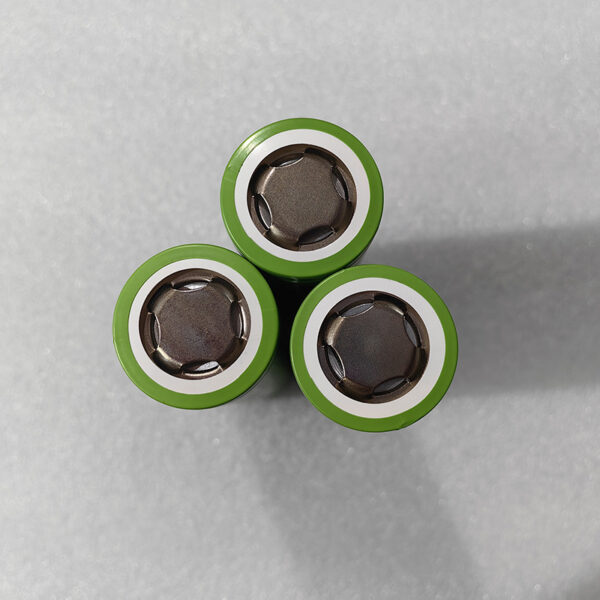
The 60110 Cylindrical Battery: Decoding the Technical & Economic Value for E-Bike OEMs
In the high-stakes world of electric mobility, the shift from traditional 18650 cells to larger format cylindrical batteries is no longer a trend—it is a technical necessity. For OEMs and engineers designing the next generation of E-bikes, Energy Storage Systems (ESS), and high-power tools, the 60110 lithium-ion cylindrical battery represents a quantum leap in energy density and thermal management.
As a senior technical blogger and industry insider, I have analyzed the global supply chain shifts. The core question for procurement managers today isn’t just about performance, but about “Total Cost of Ownership” (TCO). How do you achieve maximum range and durability while minimizing the Battery Management System (BMS) complexity and manufacturing cost? The answer often lies in the physical dimensions and chemistry of the cell.
This article dissects the technical architecture of the 60110 format, compares it against the industry-standard 21700 cells, and provides a roadmap for engineers and buyers looking for guaranteed competitive wholesale pricing from China, specifically tailored for the rigorous demands of the European and American markets.
What is the 60110 Battery? (The “Monster Cell”)
While the 18650 (18mm x 65mm) and 21700 (21mm x 70mm) formats are well-known, the 60110 (sometimes referred to as 32110 or 35110 depending on diameter) is part of the “Jumbo” cylindrical cell family. Based on the data available from leading Chinese manufacturers, this format typically scales to a diameter of 32mm-35mm and a length of 110mm.
- Physical Advantage: The larger volume allows for a significant increase in active material loading without the structural complexity of Pouch or Prismatic cells.
- Engineering Logic: According to the formula for cylindrical cell capacity ($C \propto \pi r^2 h$), increasing the radius has a more dramatic effect on volume (and thus capacity) than increasing height. Moving from a 21mm diameter (21700) to a 32mm diameter (60110) theoretically increases the cross-sectional area by over 200%, allowing for capacities exceeding 6000mAh to 7000mAh in a single can.
Technical Deep Dive: Why 60110 is Replacing 21700 in High-Power Apps
For E-bike OEMs, the choice between 21700 and 60110 is a battle between manufacturing legacy and thermodynamic efficiency.
1. Thermal Management & Power Density
One of the primary challenges in high-C-rate applications (like E-bikes) is heat dissipation. The 60110 format offers a superior surface-area-to-volume ratio compared to smaller cells when stacked in a pack.
- Heat Dissipation: Larger cells have thicker casings, but the internal resistance per Watt-hour is often lower. This means less heat is generated per unit of energy delivered during high-torque acceleration.
- Vibration Resistance: The robust steel or aluminum casing of a cylindrical cell makes the 60110 ideal for the harsh vibration environments of two-wheelers, outperforming pouch cells in mechanical durability.
2. BMS Simplification and Cost Reduction
Every cell in a Battery Pack requires monitoring by the BMS. By using a 60110 cell with 3x the capacity of a 21700 cell, you reduce the number of cells in parallel.
- Wiring Complexity: Fewer cells mean fewer welding points and simpler busbar layouts.
- Pack-Level Cost: Although the individual cell cost might be higher, the reduction in structural brackets, wiring, and BMS channel count often results in a lower $ per kWh at the pack level.
3. Cycle Life and Depth of Discharge (DoD)
The 60110 format, particularly when utilizing Lithium Iron Phosphate (LFP) or advanced NMC chemistries, demonstrates exceptional cycle life. With wall thicknesses optimized for safety, these cells can withstand deep discharge cycles essential for long-range E-bikes. Data suggests that jumbo cylindrical cells can maintain >80% capacity after 2000 cycles, making them a reliable choice for commercial E-bike fleets.
Testing Methodology: Validating “Wholesale” Quality
When sourcing “wholesale” batteries, especially for safety-critical applications, price should never be the sole metric. As a technical buyer, you must demand test data on the following parameters to avoid “capacity fraud” (where cells are rated higher than they perform):
- Actual Capacity Test (0.2C Discharge): Verify that the cell meets the 6000mAh+ claim under standard laboratory conditions.
- Internal Resistance (IR) Screening: High IR leads to voltage sag under load. For a 60110, IR should typically be below 15mΩ for high-power variants.
- Thermal Imaging Under Load: Run the cell at 5C-10C discharge rates and monitor surface temperature. A well-designed 60110 should not exceed 60°C under sustained heavy load.
- Dimensional Tolerance: The “110” length requires precise engineering in the pack housing. Tolerances should be within ±0.5mm to ensure proper compression and expansion management.
Geo-Compliance: Bridging the China Supply Chain to Global Markets
Purchasing from a Chinese wholesale supplier requires more than just a low price; it requires regulatory alignment. The European Union and the United States have stringent requirements for battery safety and carbon footprint.
- Safety Standards: Ensure your supplier adheres to UN38.3 for transport and IEC 62133 or UL 1642/2580 for cell safety. The 60110 format must pass nail penetration, crush, and overcharge tests.
- Chemical Compliance: For the EU market, adherence to RoHS (Restriction of Hazardous Substances) and upcoming Battery Passport regulations is mandatory.
- Logistics: A reputable Chinese manufacturer will have the infrastructure to handle large-volume LCL (Less than Container Load) or FCL (Full Container Load) shipments compliant with IMDG (International Maritime Dangerous Goods) codes.
Why CNS Battery is the Strategic Choice for E-Bike OEMs
Finding a “Guaranteed Competitive Wholesale Price” means partnering with a manufacturer that balances automation with technical R&D. At CNS Battery, we are not just a parts supplier; we are a technical partner based in Zhengzhou, China.
Our Cylindrical Battery Cell lineup includes the high-capacity formats essential for E-bikes. We understand that OEMs need more than just cells; they need validation.
- Technical Validation: We provide full test reports (Datasheets, MSDS, UN38.3) for every batch, ensuring your product meets local safety laws.
- Customization: Whether you need a specific tab configuration for the 60110 format or a定制 BMS integration, our R&D team works directly with your engineers.
- Competitive Edge: By leveraging our automated production lines and large-scale material procurement, we pass the savings directly to you, ensuring your E-bike remains price-competitive in the global market.
Conclusion
The 60110 cylindrical battery is the future of high-energy-density storage for E-bikes. By understanding the technical superiority of the format and the importance of Geo-compliance, engineers and buyers can make informed decisions that save costs without sacrificing safety.
If you are ready to optimize your E-bike design with high-performance cylindrical cells and secure a competitive wholesale price, contact CNS Battery today. We are here to support your transition to the next generation of battery technology.
Connect with our technical sales team to request samples and pricing:
Contact CNS Battery Sales Team
Explore our full range of Cylindrical Battery Cells:
View Cylindrical Battery Products
Learn more about partnering with a leading Chinese Battery Manufacturer:
About CNS Battery Manufacturing

